
What a San Diego vanity replacement typically costs
A straightforward bathroom vanity replacement cost San Diego homeowners can plan for is often about $1,800–$5,500 installed when the cabinet, countertop, sink, and faucet remain in the existing location. A larger double vanity, premium stone top, damaged wall repair, or relocated water and drain lines can move planning costs into the $6,000–$12,000-plus range. These are planning ranges, not a quote: product quality, access, existing conditions, and the exact scope all affect the final number. For comparison, This Old House’s vanity replacement guide explains how vanity size, material, and installation affect the total; the San Diego examples below also separate plumbing changes and finish repairs.
The most affordable projects reuse the existing plumbing layout and work with a readily available 30–36-inch vanity. Costs rise when a room needs custom sizing, a new double-sink layout, tile or flooring repairs, electrical changes, or broader moisture remediation. The best estimate separates materials, installation, plumbing, and finish repairs so you can compare like for like.

Cost breakdown: cabinet, top, fixtures, and labor
Pricing references vary because some include only the vanity package, while others include removal, installation, plumbing connections, delivery, repairs, and permit-related work. A useful budget starts by identifying every component rather than relying on one advertised cabinet price.
Stock vanities are usually the value choice. They come in standardized widths and finishes, making them practical when the existing opening, plumbing, and storage needs line up. Semi-custom options broaden cabinet finishes, door styles, and organizational accessories. Custom vanities cost more but can solve odd alcoves, shallow clearances, historic-home walls, or a need for precise drawer placement around plumbing.

Two San Diego vanity budget examples
Small 30–36-inch single vanity
A compact hall bath or powder room can be a relatively contained project. For example, a $650 stock cabinet, $500 integrated top and sink, $250 faucet, $1,200 installation and connection allowance, plus $400 for removal, touch-up drywall, and disposal produces a planning total of about $3,000. Choosing a separate quartz top, undermount sink, premium fixture, or new backsplash can raise that total quickly.
Small rooms can still be demanding. Tight door swings, baseboard removal, uneven floors, and narrow access may add labor despite the modest cabinet size. Measure not only the wall width, but also the door path, toilet clearance, drawer projection, and outlet locations before ordering.
60-inch double vanity
A 60-inch double vanity usually carries a larger materials and labor allowance. Example math might include a $1,800 semi-custom cabinet, $1,500 quartz top with two sinks, $600 for two faucets, $2,200 for installation and plumbing connections, and $900 for backsplash and minor floor or wall patching. That creates a planning budget near $7,000 before major plumbing relocation or specialty finishes.

When plumbing is the budget driver
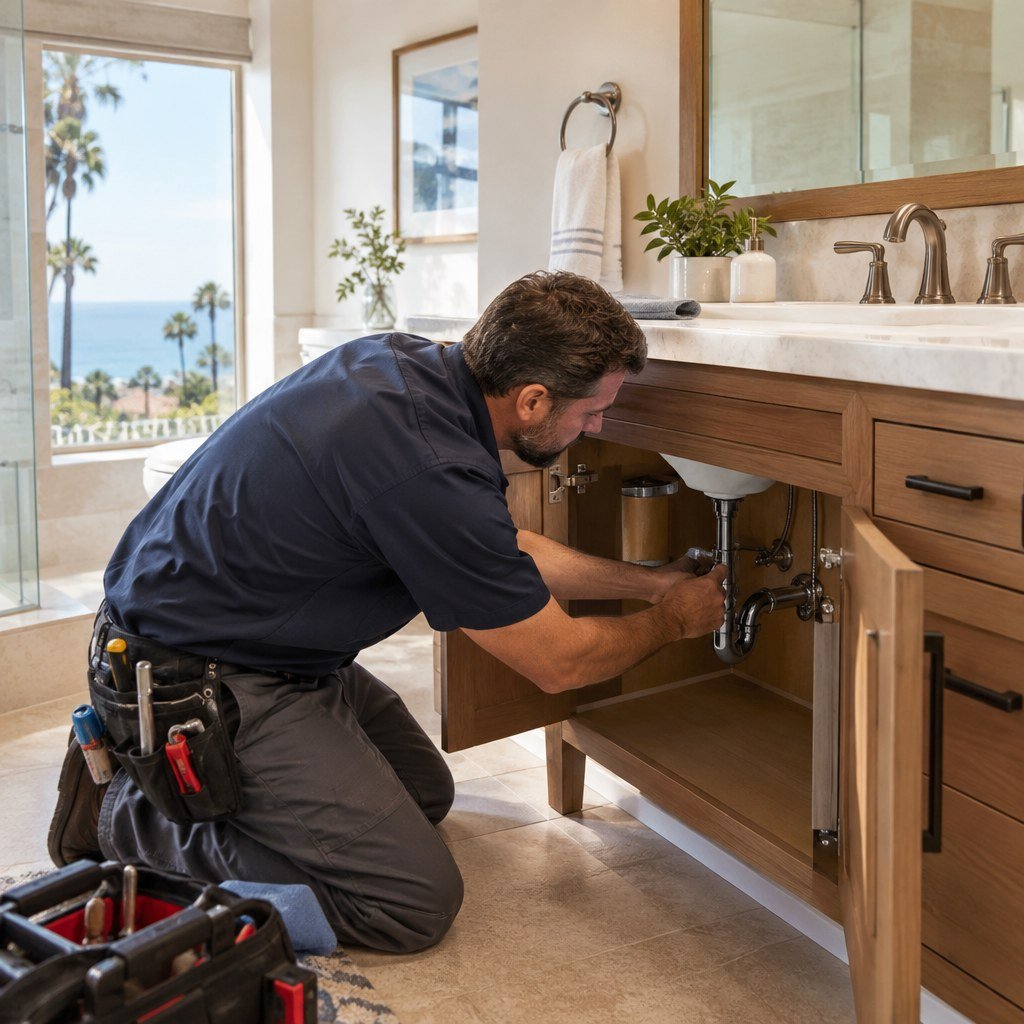
Keeping the sink directly over the existing drain and supplies is one of the clearest ways to control vanity replacement costs. Disconnecting and reconnecting exposed shutoff valves and a trap is very different from moving a drain inside a wall, converting one sink to two, or changing a wall-mounted faucet height.
Relocation may require opening drywall or tile, modifying framing, extending water lines, adjusting the drain slope, and repairing finished surfaces afterward. In a slab-on-grade home, drain changes can be especially consequential. A site visit is the right time to determine whether a desired layout is simple, invasive, or impractical.
Permits and the line between replacement and remodeling
A direct vanity swap may be a finish-level update, but permit requirements depend on the work performed and the property location. Plumbing alterations, electrical changes, structural repairs, or expanded bathroom work may trigger review and inspection requirements. For properties within the City of San Diego, review the City of San Diego Development Services permit information before work begins. Requirements differ outside City jurisdiction, including other municipalities and unincorporated areas.
Scope becomes a bathroom remodel when the vanity project expands into moving fixtures, changing walls, replacing substantial tile or flooring, updating wiring, repairing extensive water damage, or redesigning the room layout. At that point, coordinating trades and sequencing matters more than treating the vanity as a stand-alone purchase.

Common surprises to budget for
- Flooring gaps: A smaller or differently shaped vanity may reveal unfinished flooring or discoloration.
- Wall damage: Removing an old backsplash can pull paint, drywall paper, or tile from the wall.
- Out-of-level surfaces: Cabinets and stone tops need a stable, level base for proper door and drawer operation.
- Hidden moisture: Staining, swollen cabinet bottoms, or soft drywall may point to an old leak needing repair.
- Lead times: Custom cabinets, specialty tops, and matching fixtures may affect the project schedule.
None of these items is guaranteed to occur, but discussing them early helps create a realistic contingency. Photos of the current vanity, adjacent flooring, plumbing inside the cabinet, and room access give an estimator a stronger starting point.
A practical replacement process
Start with measurements and a wish list: width, depth, sink count, storage needs, countertop preference, faucet style, and whether plumbing will stay put. Next, select products that fit the room and confirm dimensions before ordering. A professional review can identify drain conflicts, required backing, wall conditions, and finish repairs.
During installation, the old vanity is removed, walls and floors are evaluated, the new cabinet is leveled and secured, and the top, sink, faucet, and plumbing connections are completed. Final work typically includes caulking, adjustment of doors and drawers, cleanup, and testing for leaks. If tile, electrical, or relocation work is involved, those steps are coordinated earlier in the sequence.
Ready to define your vanity scope?
Schedule a free project-estimate appointment to discuss cabinet options, surfaces, plumbing, and site conditions. This books a meeting; a written estimate follows review of the project, not an instant online quote.
Frequently asked questions
Is it cheaper to replace only the vanity top?
It can be, particularly when the cabinet is sound, the new top fits correctly, and plumbing remains compatible. However, an old cabinet with swelling, poor drawer function, or an unsuitable footprint may make a complete replacement the better long-term value.
Can a single-sink vanity become a double vanity?
Possibly, but the cabinet width, countertop space, drain location, supply lines, and local requirements all matter. Adding a second sink is usually more than a simple cabinet swap because plumbing and countertop fabrication may change.
Should I buy the vanity before getting an estimate?
Choose a general style and budget first, but confirm dimensions, plumbing compatibility, delivery access, and installation requirements before placing a nonreturnable order. This is especially important for floating, custom, or stone-topped vanities.
What is the best way to compare proposals?
Compare the written scope, not just the total. Check whether each proposal includes demolition, haul-away, cabinet installation, countertop template and installation, sink and faucet connections, plumbing modifications, wall repair, backsplash, flooring patches, permits, and cleanup.
The bottom line
A bathroom vanity replacement can be a focused upgrade or the first stage of a larger remodel. Keeping the footprint and plumbing in place usually protects the budget; custom cabinetry, premium surfaces, and relocated drains increase it. Define the scope carefully, allow for concealed conditions, and request a written estimate that clearly identifies what is included before committing to materials or construction.