

Flooring Installation San Diego
The right flooring can completely change how a home looks and feels.
Whether you’re replacing outdated floors, remodeling several rooms, or updating your entire home, choosing the right material means balancing style, durability, comfort, maintenance, and budget.
This guide covers some of the most popular flooring options for San Diego homes and what to consider before starting your project.
Find the Right Flooring for Your Home
There isn’t one flooring material that’s best for every room.
A busy family room may need something durable and easy to clean, while a bedroom may benefit from a warmer, softer finish. Kitchens, bathrooms, entryways, and outdoor-connected spaces often need materials that can better handle moisture and everyday wear.
The goal is to choose flooring that looks great while also fitting how you actually use your home.
Popular Flooring Options in San Diego
Luxury Vinyl Plank Flooring
Luxury vinyl plank (LVP) has become a popular choice for homeowners who want the appearance of wood with easier maintenance.
Modern LVP is available in a wide range of colors, plank sizes, textures, and wood-look finishes.
Why homeowners choose LVP:
Water-resistant and waterproof options
Easy to maintain
Comfortable underfoot
Available in many wood-look styles
Works well throughout much of the home
Often more affordable than natural hardwood
LVP can work especially well in kitchens, living rooms, bedrooms, hallways, and open-concept spaces.
Hardwood Flooring
Hardwood brings natural warmth and character to a home and can work with everything from traditional interiors to modern California-style spaces.
Popular choices include oak, maple, walnut, and engineered hardwood.
Benefits of hardwood flooring include:
Timeless appearance
Natural texture and character
Wide variety of stains and finishes
Can complement many remodeling styles
Potential for refinishing depending on the product
Proper installation and subfloor preparation are especially important for maintaining a clean, consistent finished appearance.
Tile Flooring
Tile is durable, easy to clean, and available in an enormous range of colors, sizes, patterns, and textures.
It is particularly useful in areas where moisture resistance matters.
Common applications include:
Bathrooms
Kitchens
Laundry rooms
Entryways
Mudrooms
Indoor/outdoor transition areas
Large-format tile can create a clean contemporary appearance, while stone-look and patterned tiles can add more character.
Laminate Flooring
Laminate can provide the look of hardwood at a more accessible price point.
Today’s laminate products offer far more realistic textures and finishes than older generations of laminate flooring.
It can be a practical option for:
Bedrooms
Living rooms
Offices
Hallways
Rental properties
Budget-conscious remodels
Water-resistant laminate options are also available, although product specifications should always be considered when choosing flooring for moisture-prone areas.
Flooring Replacement & Installation
Installing new floors often involves more than simply placing new material over the existing surface.
Depending on the home and flooring type, a flooring installation project may include:
Removing existing flooring
Inspecting the subfloor
Leveling uneven areas
Repairing damaged subfloor sections
Moisture preparation
Installing underlayment
Installing the new flooring
Replacing baseboards or trim
Adding transitions between rooms
Good preparation can make a major difference in how the finished flooring looks and performs.
Choosing Flooring for an Open-Concept Home
Using the same flooring across connected areas can make a home feel larger, cleaner, and more cohesive.
This is especially effective in open layouts connecting the:
Kitchen → Dining Area → Living Room → Hallways
Continuous flooring reduces visual breaks and helps different spaces feel like part of one larger design.
For homeowners remodeling several rooms at once, choosing flooring early can also make it easier to coordinate cabinets, countertops, wall colors, fixtures, and furniture.
Flooring & Interior Upgrades
New flooring is often one of the biggest visual changes you can make to an interior, but combining it with a few additional upgrades can transform the entire space.
Consider pairing new flooring with:
New baseboards and trim
Interior painting
Updated lighting
New interior doors
Accent walls
Built-in shelving
Updated stair finishes
Modern hardware and fixtures
Even relatively simple interior improvements can make new flooring feel like part of a complete remodel rather than a standalone project.
What Affects Flooring Installation Cost?
The cost of flooring installation in San Diego can vary considerably depending on the project.
Important factors include:
Flooring material
Total square footage
Existing flooring removal
Subfloor condition
Floor leveling
Installation method
Room layout
Stairs
Baseboards and trim
Material pattern or design
Furniture or appliance movement
A straightforward installation over a well-prepared surface will usually be less complicated than a project requiring demolition, subfloor repairs, leveling, or detailed custom layouts.
For the most accurate pricing, homeowners should get a project-specific estimate based on their home and flooring choice.
Choosing the Right Flooring
Before selecting flooring based only on appearance, think about how the room is actually used.
For Busy Households
Consider durable, lower-maintenance materials such as luxury vinyl plank, tile, or high-quality laminate.
For Kitchens
Look for flooring that can handle spills, frequent cleaning, and heavy foot traffic.
For Bathrooms
Moisture resistance should be one of the biggest considerations. Tile and appropriate waterproof flooring products are common choices.
For Bedrooms
Comfort, warmth, and appearance may be more important than extreme durability.
For Living Areas
LVP, hardwood, engineered wood, laminate, and tile can all work depending on the look you’re trying to create.
For Homes With Pets
Scratch resistance, moisture resistance, ease of cleaning, and surface texture are worth considering before choosing a material.
Planning a Larger Interior Remodel?
Flooring is often easiest to coordinate when it is considered as part of the overall remodeling plan.
If you’re also updating a kitchen, bathroom, living area, walls, lighting, doors, or other interior finishes, planning those improvements together can help create a more consistent final design.
It can also help prevent newly installed flooring from being damaged or removed during another phase of construction.
Flooring Design Ideas & Inspiration
There isn’t one “right” flooring style.
Your home can feel bright and coastal, warm and natural, clean and contemporary, or modern and dramatic.
Use these ideas as inspiration and combine the colors, textures, and interior details you like to create a home that feels like your own.
Light Coastal Oak
Light natural wood tones can make rooms feel bright, relaxed, and spacious while pairing especially well with white walls and California-inspired interiors.
Warm Natural Hardwood
Medium wood tones bring warmth and character to living rooms, dining spaces, bedrooms, and traditional or transitional interiors.
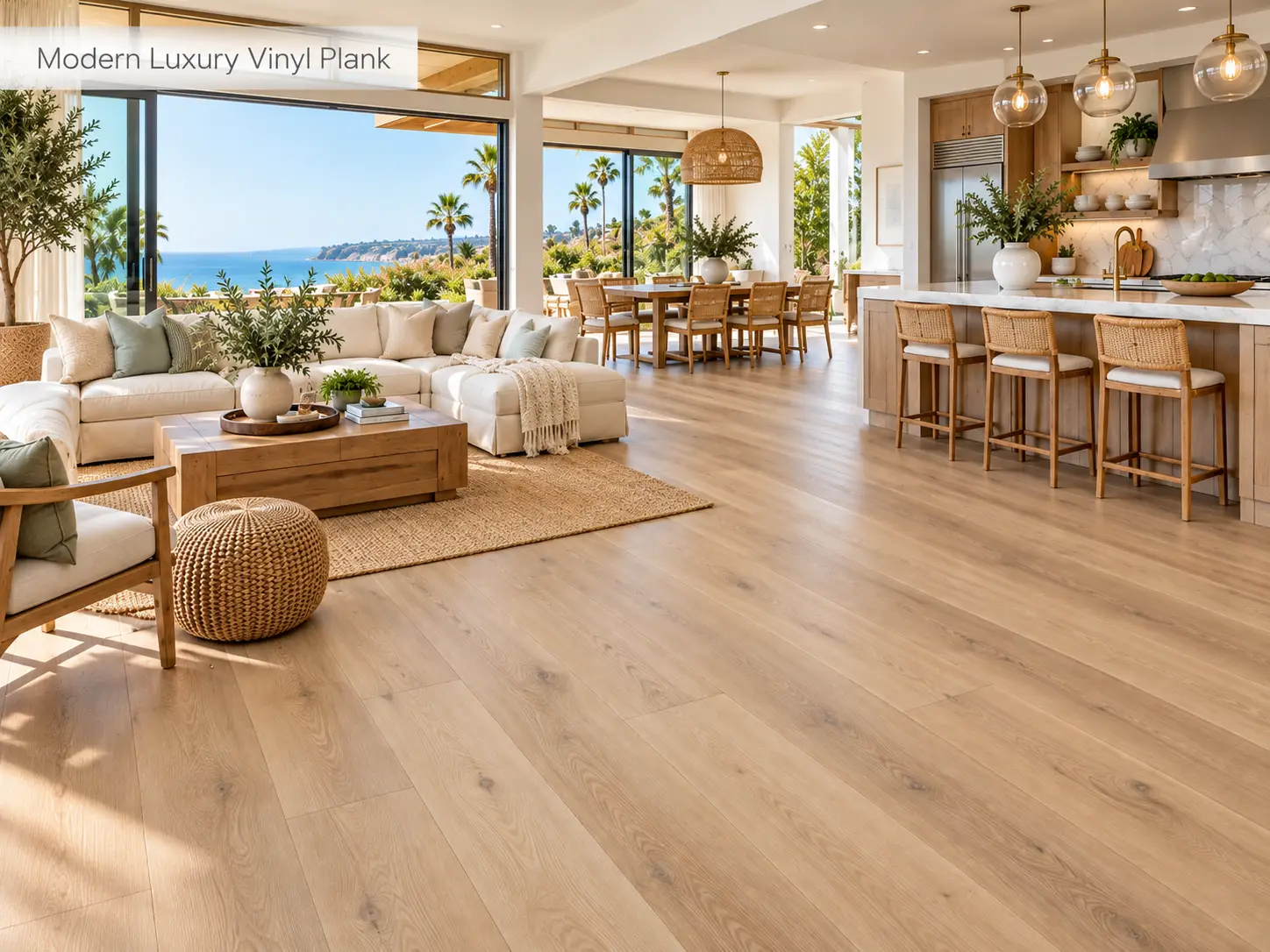
Modern Luxury Vinyl Plank
Wide-plank LVP can create a clean, modern appearance while offering a practical option for busy households and larger open-concept spaces.
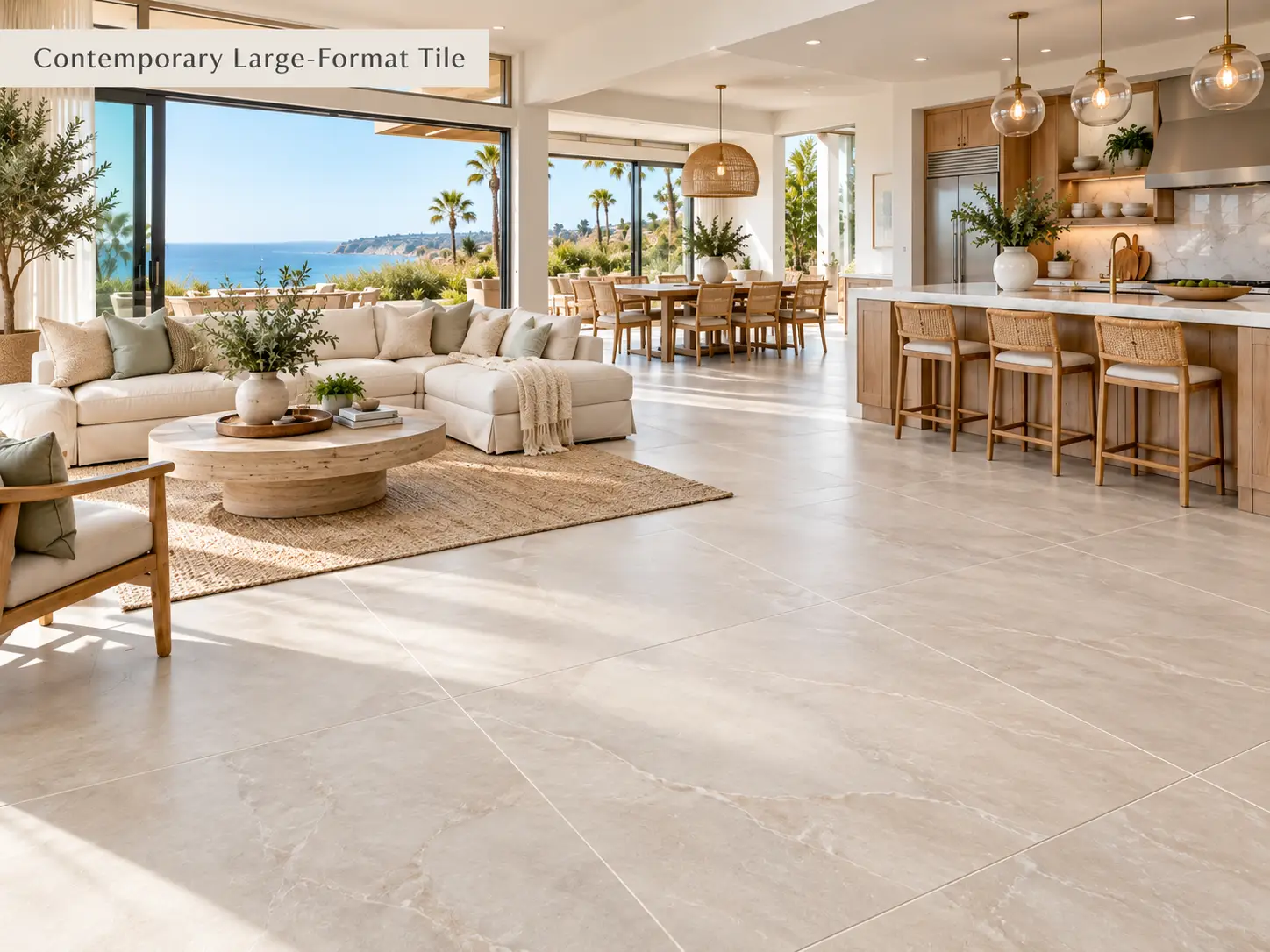
Contemporary Large-Format Tile
Large-format tile creates fewer visual breaks and can give kitchens, bathrooms, entryways, and modern living areas a sleek finished appearance.


Ready to Update Your Floors?
Thinking about flooring installation in San Diego?
Explore your options for LVP, hardwood, tile, laminate, flooring replacement, and interior upgrades and find a solution that works for your home, style, and budget.
Get a free, no-obligation remodeling quote and start planning your flooring project.
Get Your Free Flooring Installation Quote →
Flooring costs, installation requirements, product performance, timelines, and other project details can vary depending on the property, materials, existing conditions, and location. We work to keep our information current, but homeowners should verify current requirements and obtain project-specific estimates before beginning construction.