What does garage door replacement cost in San Diego?
In San Diego, a complete garage door replacement commonly deserves a planning range of about $2,000–$10,800+ installed in 2026. This public-market estimate includes typical combinations of a new door, labor, and, when selected, an opener; it is not this site’s quote. Basic single-door projects generally sit near the low end. Large double doors, custom designs, premium insulation, specialty hardware, difficult access, structural corrections, or opener changes can approach or exceed the upper end. An in-person inspection is the only reliable way to price your opening, equipment, and finish work.
This guide addresses replacement of the garage door and its operating system, not a garage conversion or ADU project. A new door can improve daily use, curb appeal, and separation between garage and house. The smart approach is to compare complete scopes rather than chase a single advertised door price.
What drives the installed price?
The door itself is only one line item. Installed cost changes with opening size, material, insulation, design, hardware, removal, and the condition of the existing system. San Diego homes also vary widely: a detached alley garage, a coastal property, and a newer tract home may need very different solutions. A clear estimate separates product selections from site work, so you can see what is essential, optional, or unknown until inspection.
Door size, design, and material
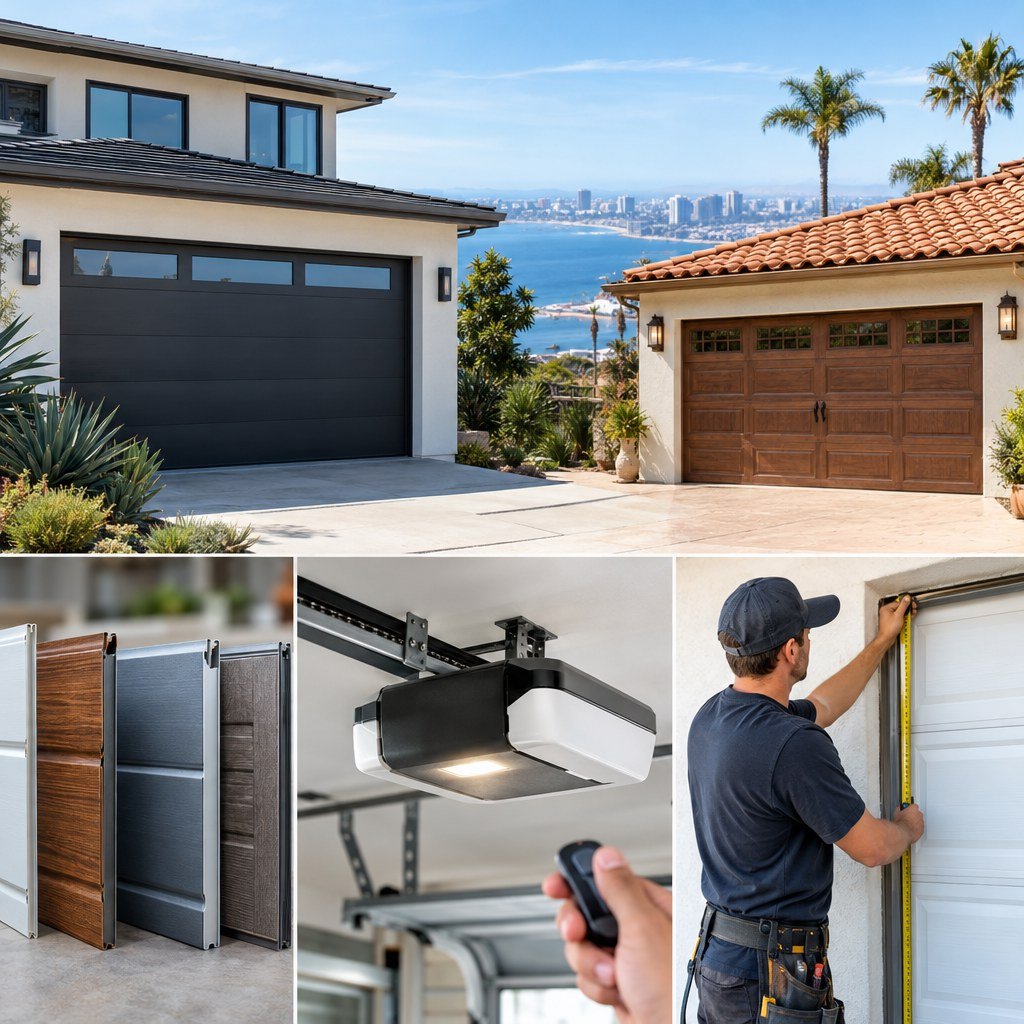
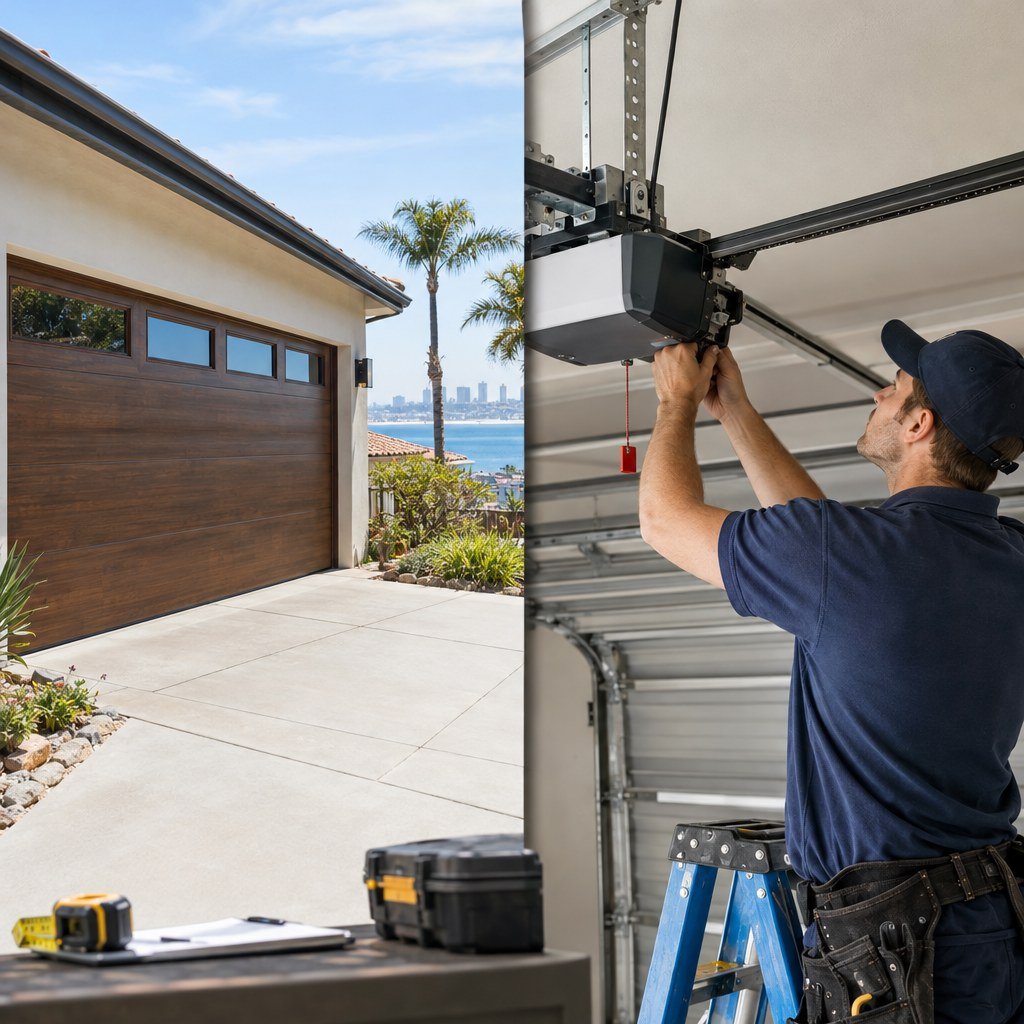
Single doors use less material and often require less hardware than double doors, but exact width and height still matter. Standard-looking openings may conceal nonstandard dimensions. Steel is widely chosen for durability and value. Wood can deliver a traditional appearance but needs more upkeep. Composite offers a wood-like look with lower maintenance, while aluminum and glass suit contemporary façades but can raise product cost.
Insulation, exposure, and appearance details
Insulated doors are commonly compared by R-value, which describes resistance to heat flow. A higher value is not automatically the best purchase; consider whether the garage is attached, used as workspace, or exposed to strong afternoon sun. Coastal air and wind exposure can also affect material and hardware choices. Windows, decorative hardware, quiet rollers, upgraded seals, and custom colors add scope. Ask whether a selected door is suitable for the site rather than assuming every model performs the same.
Door, opener, and installation: what each includes
A useful proposal treats the door, opener, and installation as related but distinct choices. Reusing a working opener may reduce the immediate total, yet an older unit may not suit a heavier insulated door or may lack current convenience features. Conversely, replacing an opener without addressing worn door components can leave the system poorly balanced.
The door package
Confirm the door sections, insulation level, windows, finish, tracks, rollers, hinges, springs, cables, and weather seal included in the price. Springs and tracks are not minor details: they must be correctly sized and installed for the door’s weight and travel. If the jambs are damaged or the opening is out of square, framing, trim, or stop-molding work may be additional.
The opener package
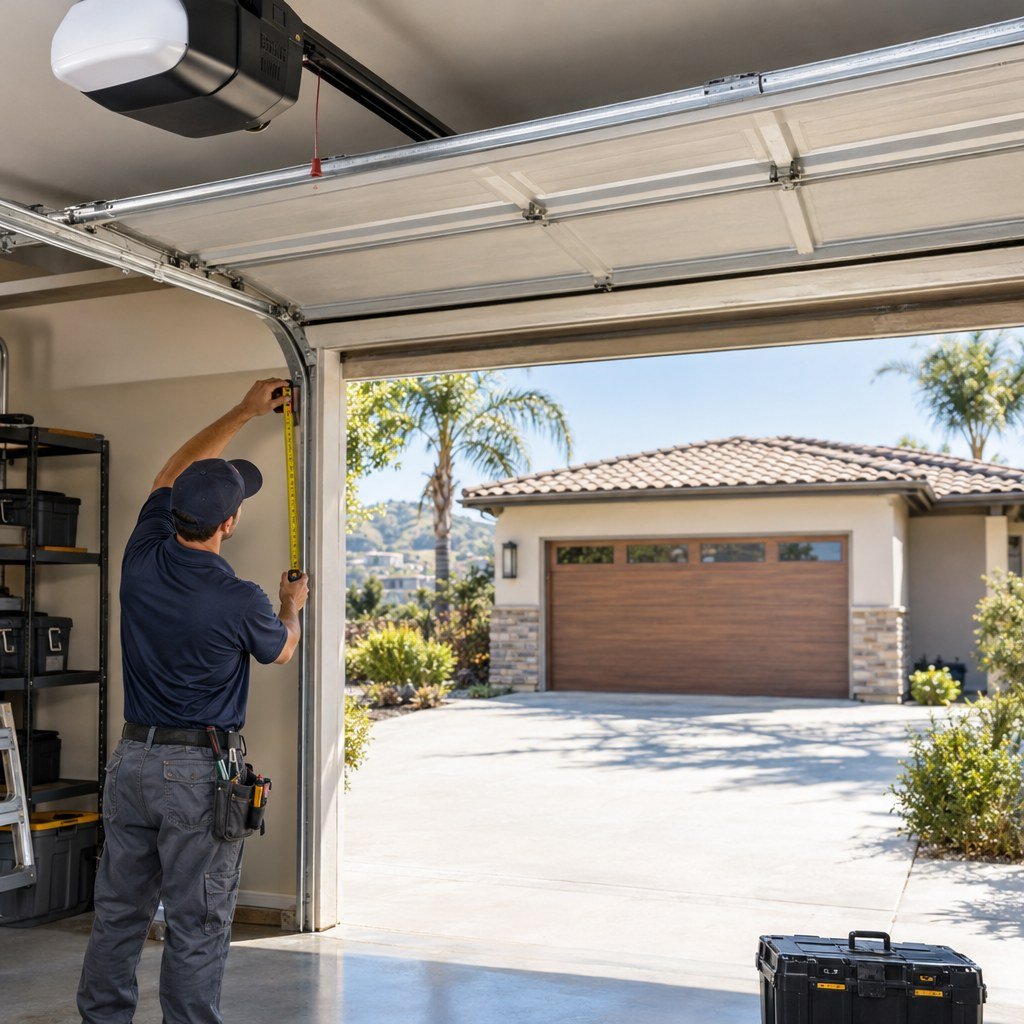
An opener estimate should identify the drive type, horsepower or comparable lifting rating, remote controls, wall control, battery backup if chosen, smart connectivity, and any required electrical work. Compatibility matters more than brand labels. The installer should verify door balance, rail clearance, headroom, mounting points, and safety sensors. Photo eyes must be properly aligned and tested; they are a basic safety component, not an optional cosmetic add-on.
Labor, removal, and hidden scope
Installation commonly includes taking down the old door, hauling it away, assembling the new system, setting spring tension, aligning tracks, connecting or programming the opener, and testing reversal functions. Confirm disposal instead of assuming it is included. Restricted access, damaged concrete, ceiling obstructions, old wiring, drywall repairs, or a need to modify framing can change labor. When the opening or structure changes, check the applicable jurisdiction and official City of San Diego permit guidance before work begins.
Replacement or repair: make the right call
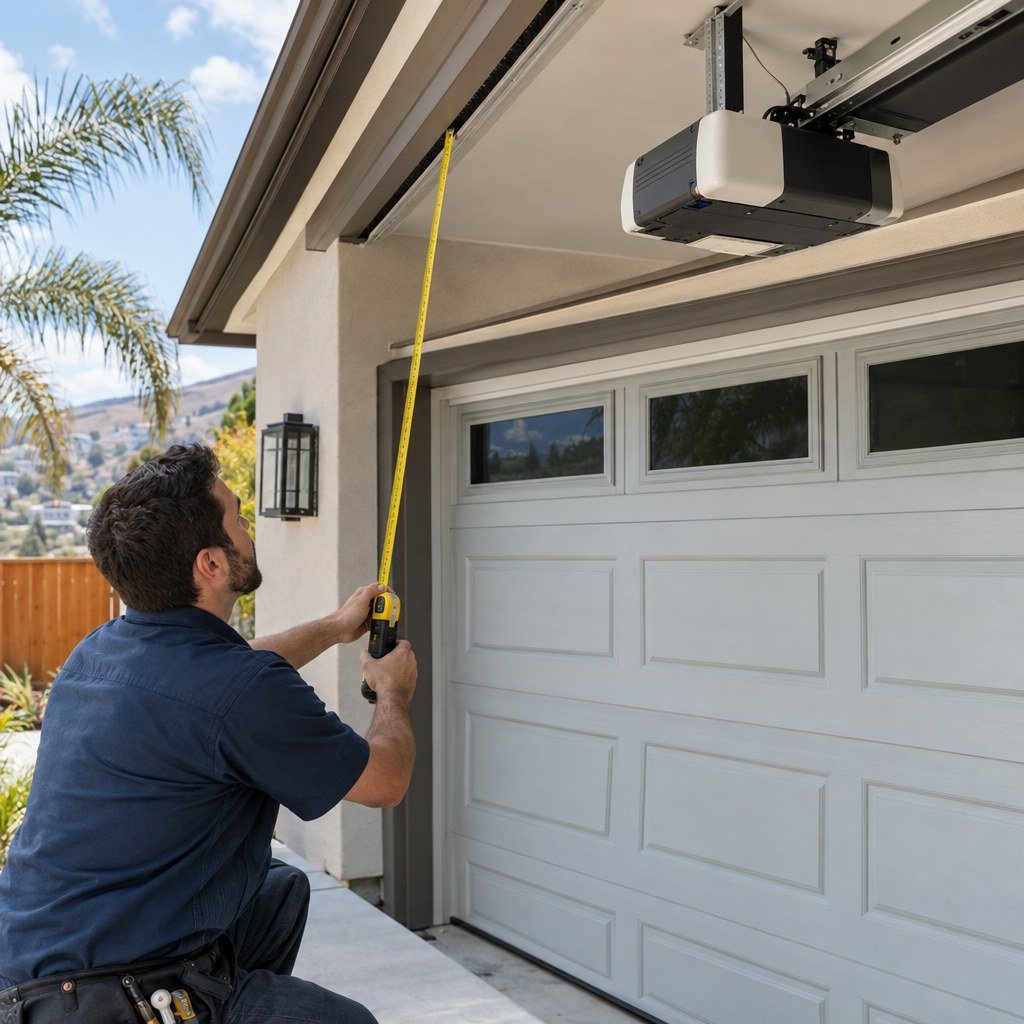
Repair is often sensible when the door is sound and the problem is limited: a damaged roller, sensor issue, remote failure, worn seal, or isolated hardware adjustment. Replacement becomes more compelling when panels are extensively damaged, corrosion is spreading, the door is repeatedly unreliable, parts are unavailable, or the system no longer meets your needs. A broken spring alone does not automatically mean the door must be replaced, but spring work is dangerous and should be evaluated professionally. Do not operate a door with a failed spring, frayed cable, or visibly compromised track. Compare the likely repair scope with the remaining life, appearance, insulation, and safety of the whole assembly.
How to compare written estimates
The lowest total is not necessarily the lowest cost after installation. Create an apples-to-apples comparison before approving work. Each contractor should inspect the opening or clearly state assumptions. A vague allowance can be reasonable for concealed damage, but it should explain what triggers an added charge and how approval will be handled.
Read warranty documents carefully. Separate manufacturer coverage for the door, finish, hardware, and opener from the installer’s workmanship warranty. Also ask who handles a callback if the door needs adjustment after settling in. Written answers reduce surprises and make competing scopes easier to compare.
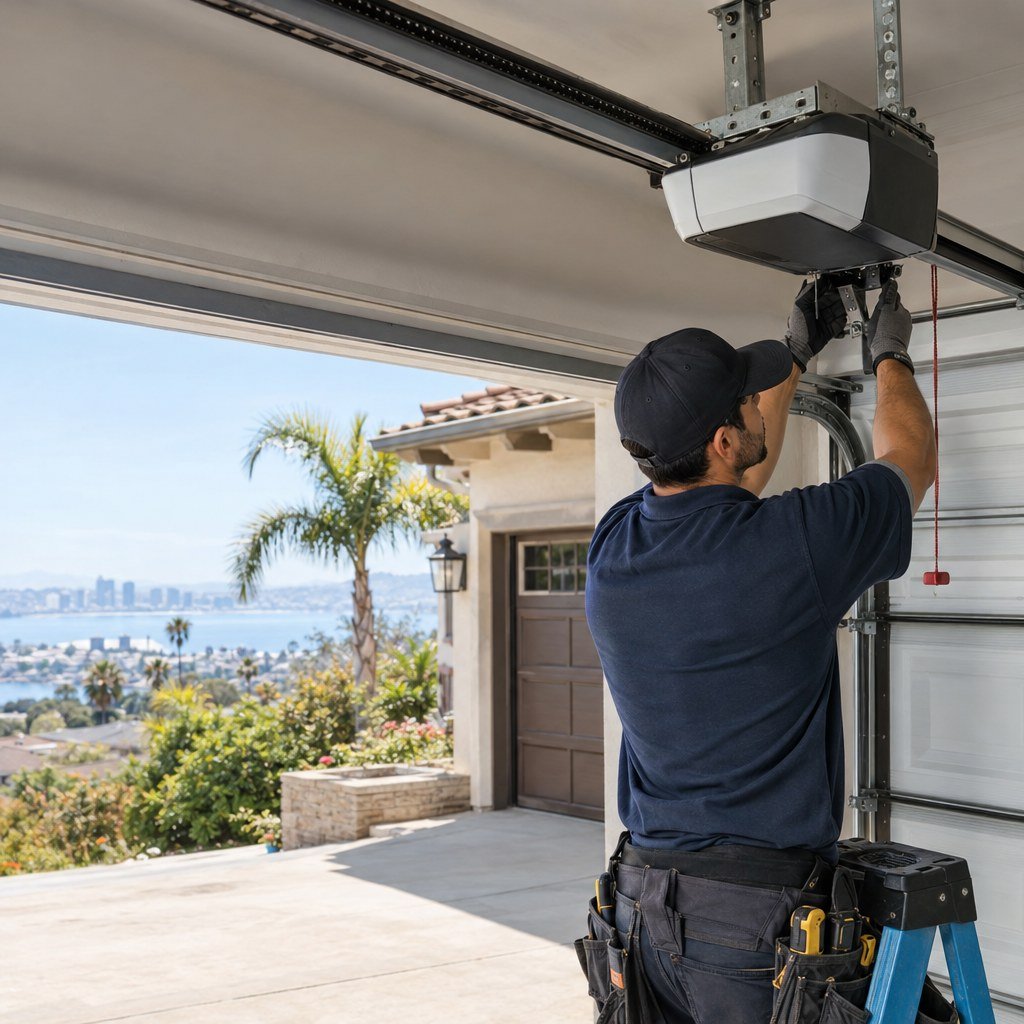
Prepare for an accurate San Diego quote
A site visit moves the conversation from broad planning range to a project-specific recommendation. Before scheduling, gather a few facts and photographs. This saves time, helps identify compatibility issues, and lets you explain priorities such as quieter operation, better insulation, a particular style, or a target completion window.
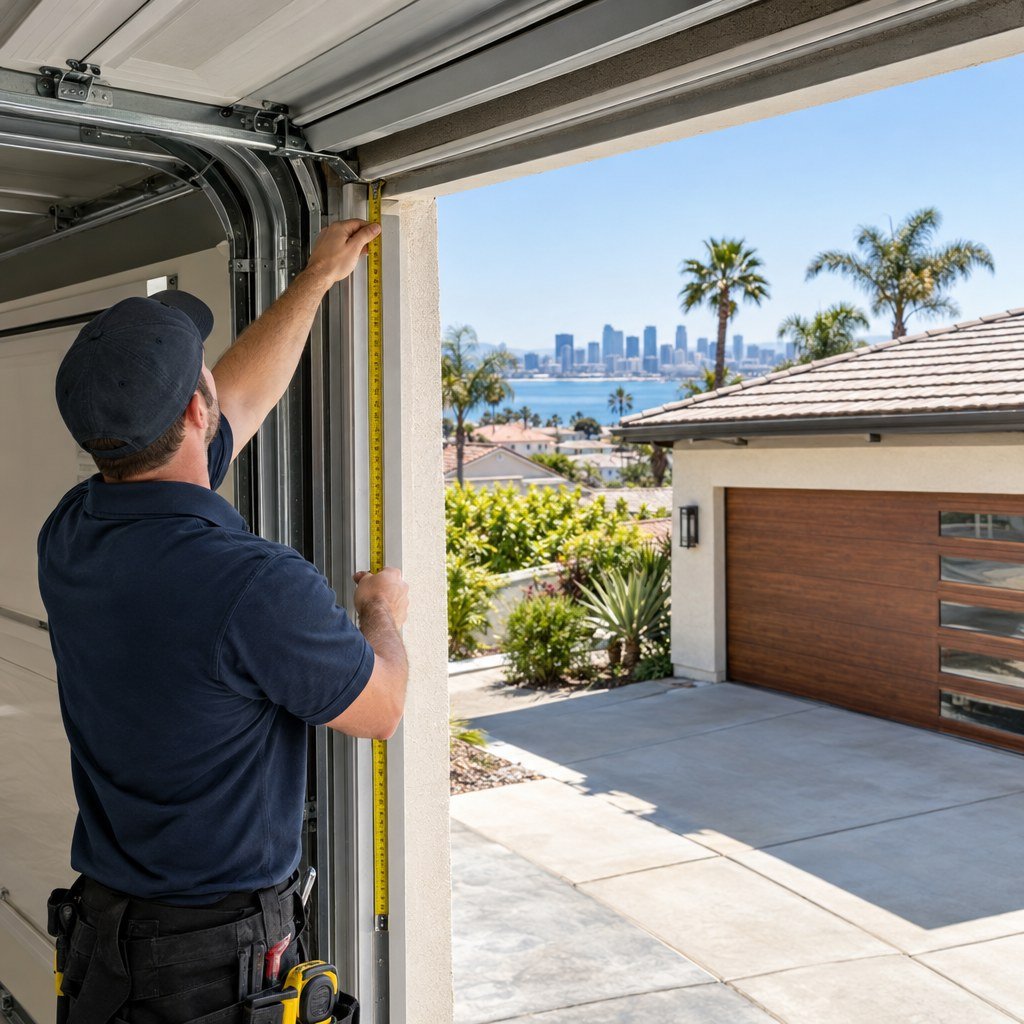
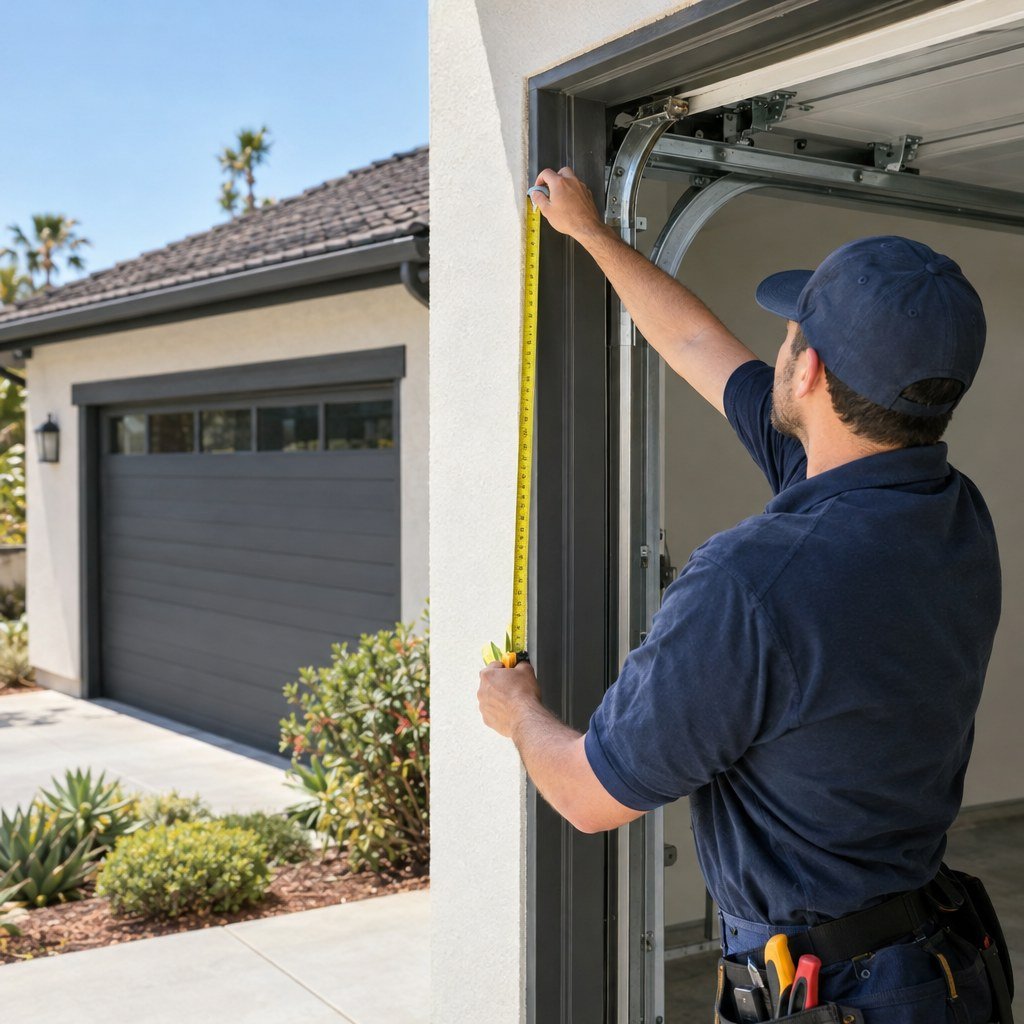
- Measure the clear width and height of the opening, then note headroom and side room.
- Photograph the inside, outside, tracks, springs, ceiling, opener, and any damage.
- Record whether the garage is attached, insulated, used for work, or exposed to coastal conditions.
- Share desired materials, window layouts, colors, smart features, and whether opener replacement is included.
- Flag sticking, noise, gaps, water entry, damaged framing, or electrical concerns.
Common San Diego replacement scenarios
These examples illustrate scope, not fixed pricing. Final cost depends on measurements, selections, condition, access, and any work discovered during inspection.
Basic single door
A practical steel door with standard hardware may fit a straightforward opening. It remains near the lower planning range when framing, tracks, and opener arrangements are usable.
Insulated attached garage
An insulated door can be worth evaluating when the garage adjoins living space or functions as a workshop. Higher insulation, sealing, and quieter hardware usually expand scope.
Custom double door
A wide opening with windows, a premium finish, decorative hardware, and opener replacement can move quickly toward the high end. Structural or trim changes can push the final amount higher.
Frequently asked questions
Does every replacement require a permit?
No. A like-for-like replacement may be treated differently from work that changes the opening, framing, structural components, or electrical system. Permit requirements depend on the applicable jurisdiction and project scope. Review the City of San Diego permit guidance and confirm the plan for your address before starting; other local jurisdictions may have different requirements.
Can I keep my existing opener?
Possibly, if it is compatible, safe, adequately rated, and in good condition. Have the installer test balance and confirm mounting, rail, controls, safety sensors, and expected performance with the new door.
How long should I wait to replace a damaged door?
Do not wait if the door cannot close securely, has a broken spring or cable, binds in the tracks, or creates a safety concern. Secure the area and arrange professional assessment promptly.
Plan your replacement with confidence
Garage door replacement is most successful when the door, operating system, site conditions, and finish details are evaluated together. Use the public planning range as a starting point, then insist on a written scope that identifies exactly what will be supplied, installed, tested, removed, and warranted. That process makes it easier to choose a solution that suits your home rather than a number that only looks attractive at first glance.
Request a free in-person project estimate
Schedule an appointment-based, free project estimate to discuss measurements, door choices, opener options, and installation details at your home. This is an in-person appointment, not an online instant quote, so the recommended scope can reflect the actual opening and conditions.