
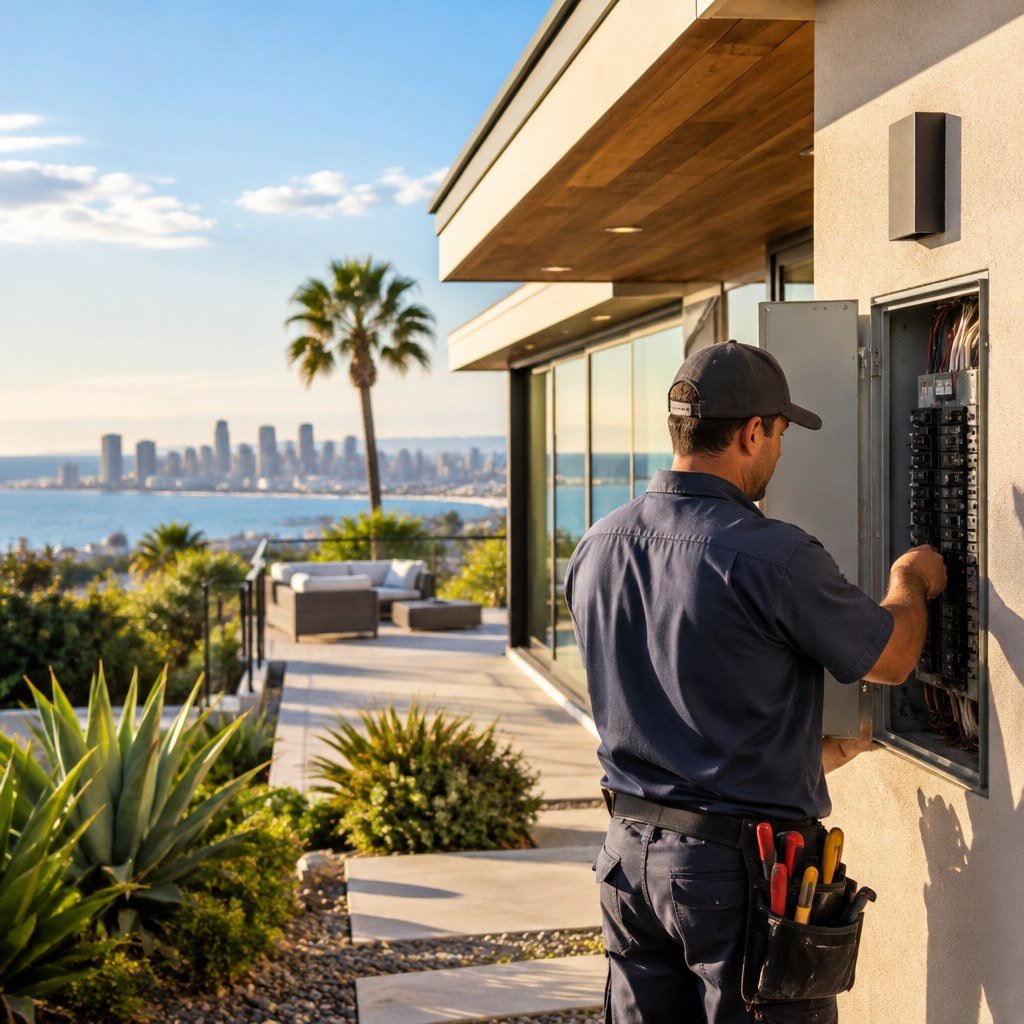
What does an electrical panel upgrade cost in San Diego?
For most homeowners, the electrical panel upgrade cost San Diego projects require before a remodel falls into a broad planning range of roughly $3,000 to $12,000 or more. A straightforward panel replacement may sit near the lower end, while a full 100A-to-200A service upgrade, utility work, meter changes, trenching, repairs, or difficult access can push the total higher. As a narrower national baseline, HomeGuide lists about $1,400–$2,800 for upgrading a 100-amp panel to 200 amps. The broader San Diego planning band here allows for work that can extend beyond the panel itself, such as meter or service changes, utility coordination, access, and repairs.
Those are planning ranges, not a quote. Electrical scope depends on the home’s existing service, the remodel design, panel location, equipment availability, permit requirements, and site conditions. The most useful first step is a licensed electrician’s load calculation and field review before construction drawings are finalized.
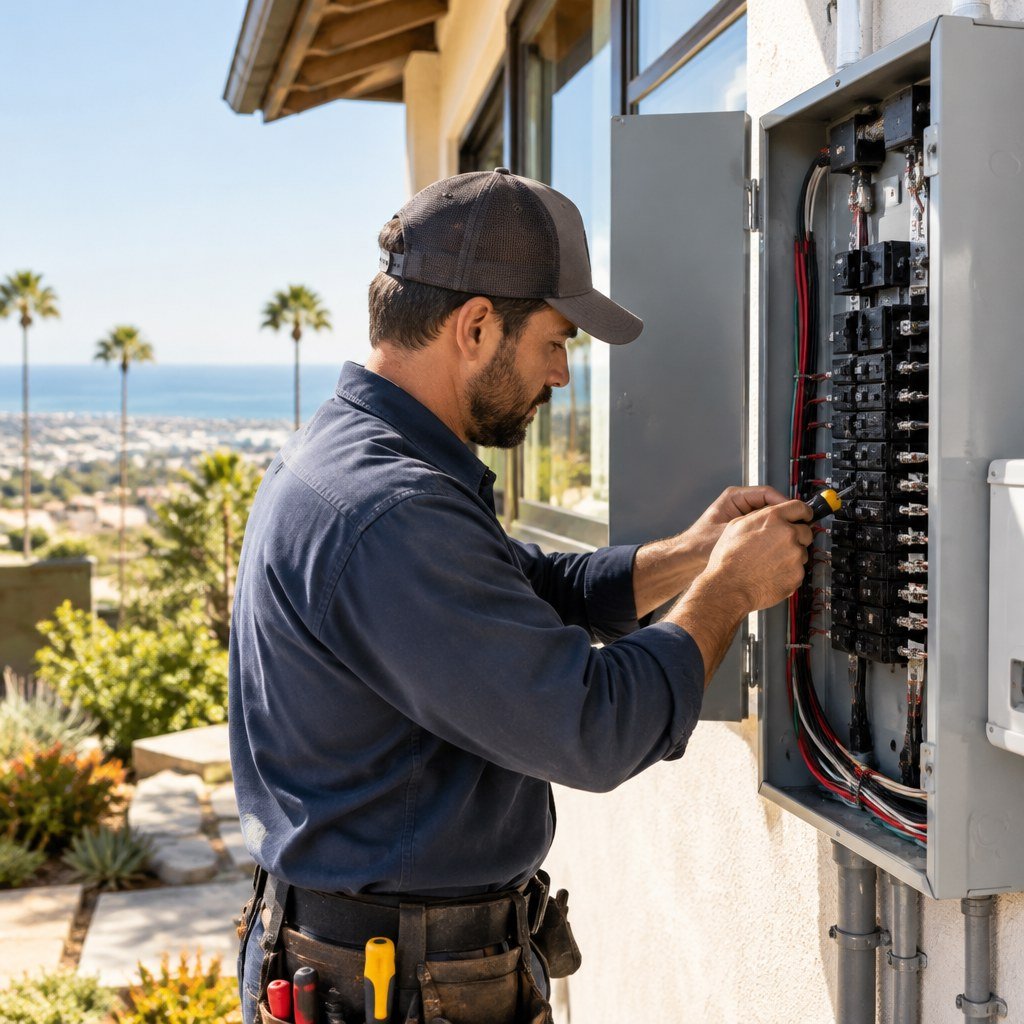
Upgrading early can prevent expensive redesigns later. A remodeled kitchen, added air conditioning, EV charger, heat-pump water heater, accessory dwelling unit, or larger addition can change the home’s electrical demand substantially. Planning the service first helps the remodel team coordinate circuits, framing, finishes, and inspection timing.
Panel replacement versus a service upgrade
“Panel upgrade” can describe several different projects. Understanding the distinction makes estimates easier to compare, because pricing references often include different work, materials, permits, and utility coordination.
A panel-only project may provide more breaker space, replace aging equipment, and support a remodel without increasing the home’s total service capacity. A service upgrade changes the capacity supplied to the home. That difference matters when comparing proposals that may use the same phrase but include very different labor.
Why 100A-to-200A work costs more
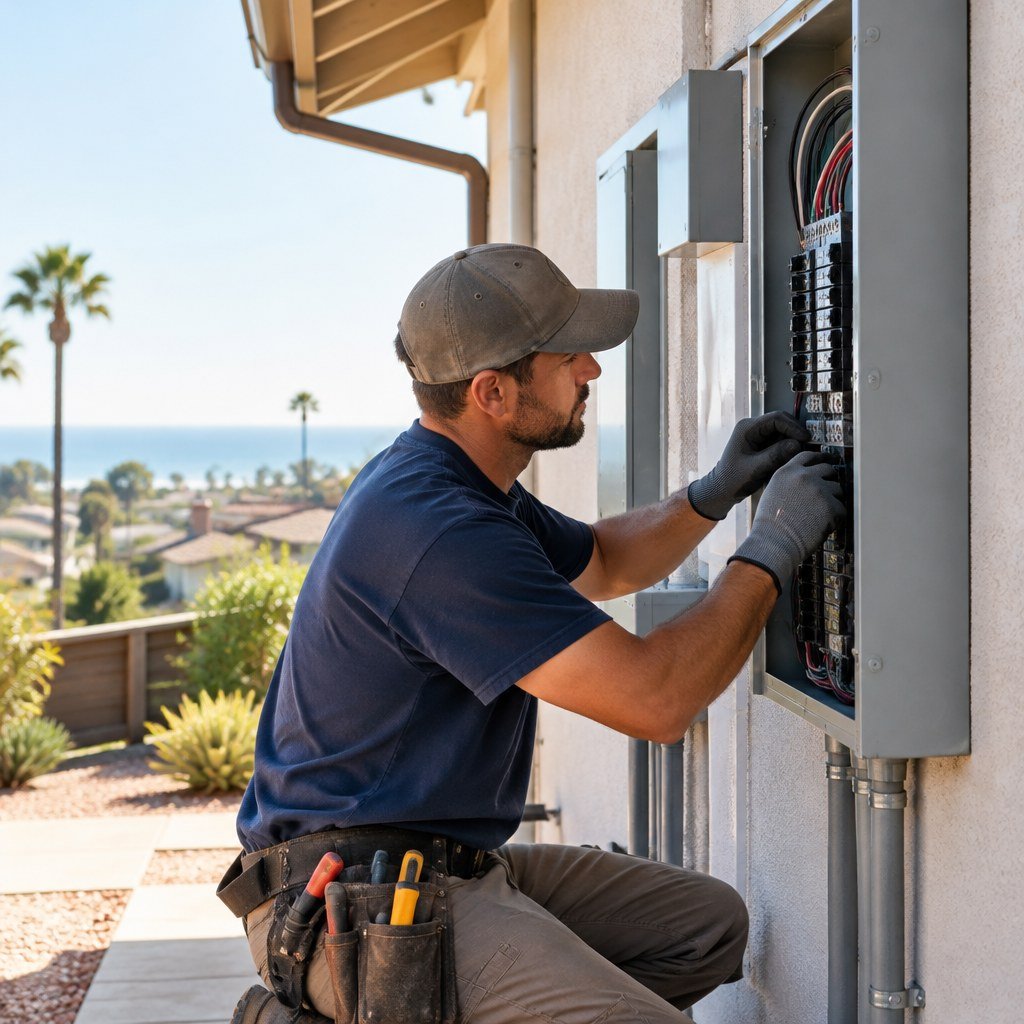
A 200-amp upgrade can involve more than swapping a metal box. The electrician may need to evaluate the service conductors, meter position, grounding and bonding, disconnect requirements, clearances, and the connection between utility equipment and the residence. Existing conditions determine what must be brought into the permitted scope.
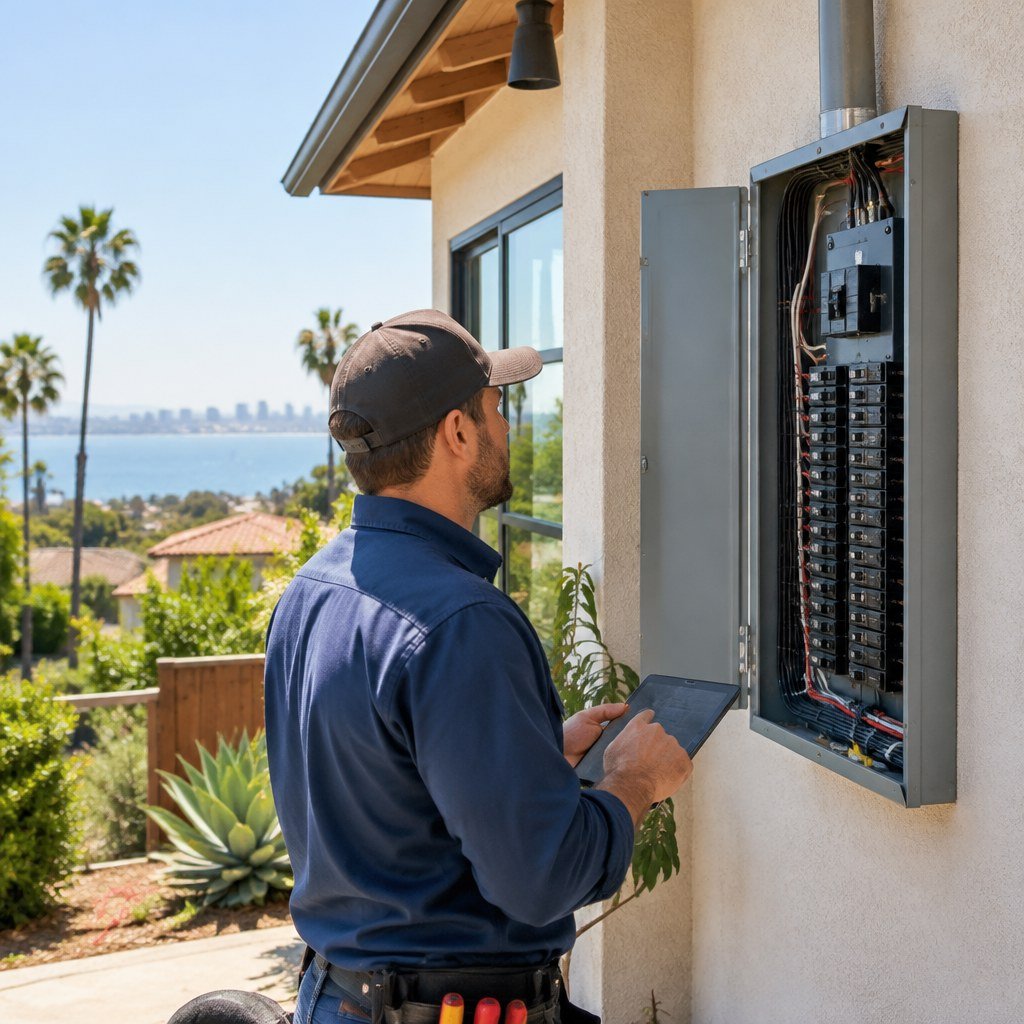
What drives electrical panel upgrade cost in San Diego?
San Diego homes vary widely, from compact postwar houses to hillside properties and newer planned communities. The panel’s age and location are only part of the picture. A detailed site review identifies the items that actually drive the budget.
Load calculation
The electrician calculates expected demand from existing and planned loads, rather than simply counting appliances or breaker spaces.
Access and location
Tight side yards, finished landscaping, masonry, elevated lots, and inaccessible equipment can add labor and restoration work.
Remodel additions
New kitchen circuits, HVAC equipment, solar plans, batteries, and EV charging should be considered together, not as afterthoughts.
For example, a kitchen remodel may add dedicated circuits for countertop appliances, refrigeration, lighting, ventilation, and an electric range. If the home also plans a heat pump and future EV charging, a 100-amp service may not be the right long-term fit. The load calculation establishes whether a larger service is justified.
Permits, inspection, and utility coordination
Electrical work associated with a service or panel upgrade commonly requires permits and inspection. Within the City of San Diego, homeowners can review the City’s Development Services Department permit information before starting. Requirements, processes, fees, and inspection procedures differ outside City jurisdiction, including in other San Diego County cities and unincorporated areas.
Permit costs are only one part of the total. A contractor or electrician should confirm the appropriate permit path, current fee schedule, and inspection requirements for the actual address and project scope. Utility coordination can also affect the sequence when meter or service equipment changes are needed. Scheduling should account for any planned shutoff and restoration of electrical service.
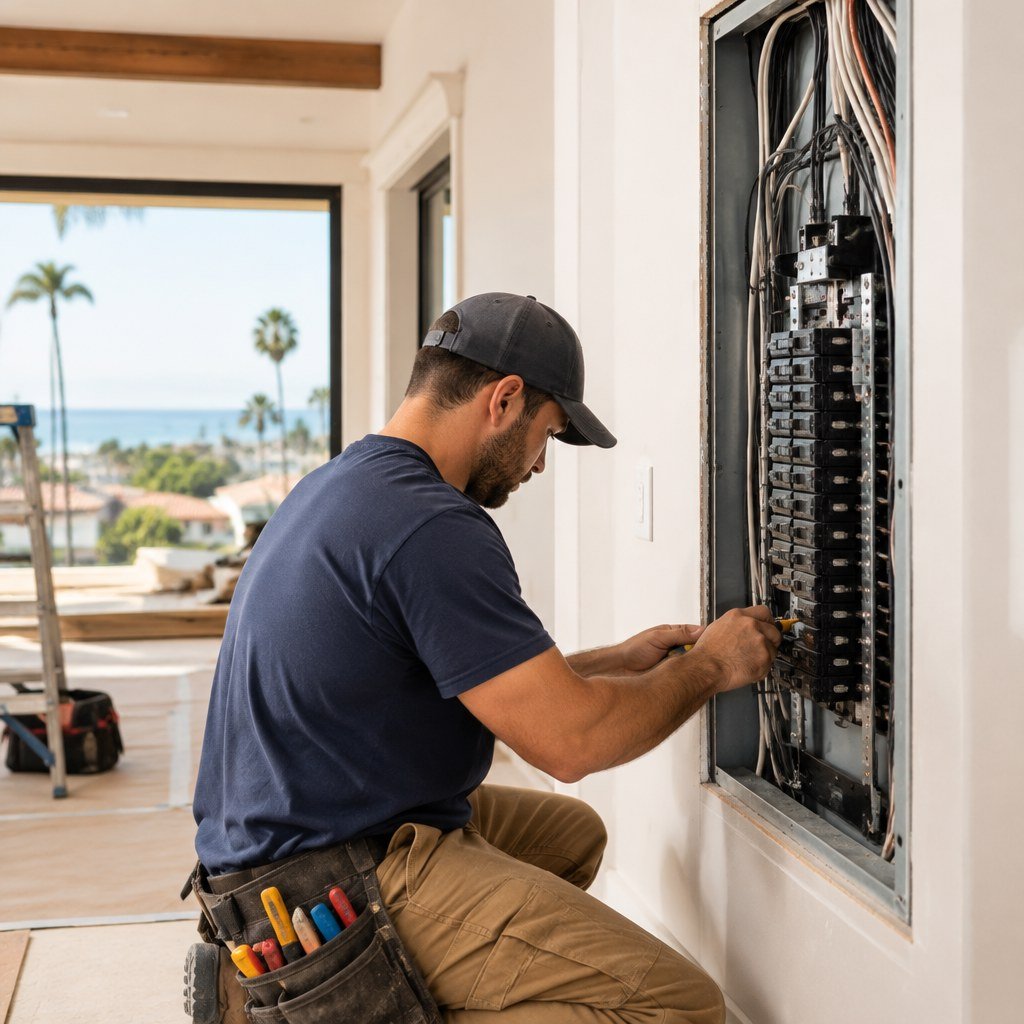
Do not assume a permit is unnecessary because the visible panel appears similar after replacement. Permitted work creates a documented review path and gives the remodel team a clearer basis for coordinating later electrical rough-in and final inspection.
When to upgrade during a remodel
Ideally, evaluate the panel during early feasibility and budgeting, before finalizing appliance selections or submitting plans. This timing allows the electrician to review the entire intended electrical load and helps prevent changes after cabinetry, drywall, landscaping, or exterior finishes are complete.
- List all planned appliances, HVAC equipment, EV charging, solar, batteries, and ADU loads.
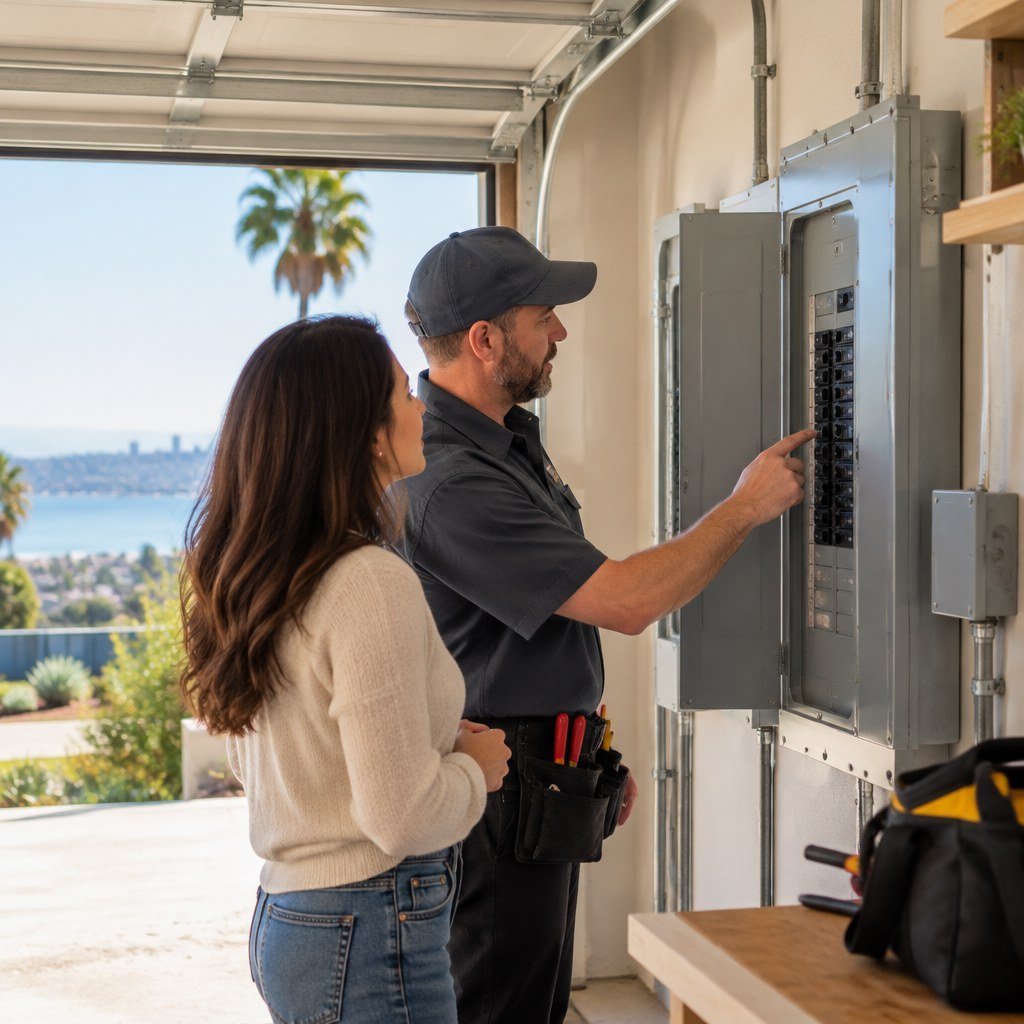
- Photograph the existing panel, meter, labels, and surrounding access area.
- Request a load calculation and clear written scope from a qualified electrician.
- Coordinate panel work with demolition, trenching, framing, utility timing, and inspections.
- Keep a contingency for concealed damage, obsolete equipment, or required repairs discovered after opening finishes.
Common surprises to budget for
Older homes may reveal undersized conductors, deteriorated equipment, missing grounding components, limited working clearance, damaged exterior finishes, or an awkwardly located panel. A service relocation can trigger patching, stucco repair, landscaping restoration, or longer conductor runs. These are not automatic costs, but they are valid reasons a field-verified estimate can differ from an initial online range.
Also consider temporary power needs. Some projects can be sequenced to limit disruption, while others require a planned outage. Your project team should explain the expected interruption, protection of sensitive electronics, and any steps residents should take before work begins.
A practical example of remodel budgeting
Imagine a homeowner renovating a kitchen and adding central heating and cooling. The existing 100-amp panel has limited spaces, and the remodel introduces an electric range, dedicated kitchen circuits, new lighting, and a future EV charger. A panel-only replacement may not address the calculated demand. If the electrical review supports a 200-amp service, the budget should include service equipment, panel installation, permit and inspection coordination, utility-related steps, and allowance for surface repairs.
That is why a $4,000 planning number for a simple replacement and a $9,000 planning number for a fuller service upgrade are not competing answers. They reflect different scopes. Comparing line items, exclusions, and assumptions is more valuable than comparing one headline number.
Questions to ask before approving the work
Ask whether the proposal is for a panel replacement or a complete service upgrade. Confirm the planned amperage, equipment location, included breakers, permit responsibility, inspection coordination, utility steps, outage expectations, patching responsibility, and allowance for concealed conditions. Request that the electrician explain how the load calculation accounts for planned equipment rather than only today’s household use.
A strong proposal should be readable and specific. It should state what the contractor has observed, what assumptions are being made, and what could change the price. This creates a much better foundation for remodel decisions than selecting an estimate based only on the lowest total.
Plan your electrical scope before construction begins
Schedule a free project-estimate appointment to discuss your remodel goals. This books a meeting; a written estimate follows review of the project and is not an instant online quote.
Frequently asked questions
Is upgrading to 200 amps always necessary for a remodel?
No. The right answer comes from a load calculation and evaluation of the existing service. Some remodels need additional circuits but not a larger service; others add enough electrical demand to justify an upgrade.
Can I upgrade the panel after the remodel is finished?
It is possible, but often less efficient. Completing service work before exterior and interior finishes are finalized can reduce the need for later patching, demolition, and disruption.
How long does a panel upgrade take?
Installation time varies by scope, existing conditions, permits, inspections, and utility coordination. Ask the electrician for a project-specific schedule, including expected outage windows and inspection timing.
Does a new panel include rewiring the entire house?
Usually not. A panel or service upgrade and whole-house rewiring are separate scopes. Existing branch circuits should be evaluated individually when remodel plans, age, condition, or safety concerns warrant it.
The bottom line
The electrical panel upgrade cost San Diego homeowners should plan for depends on whether the project is a straightforward panel replacement or a broader service upgrade. Start with the remodel’s future loads, obtain an electrician’s load calculation, confirm permit and utility needs, and compare written scopes carefully. That early planning can protect the remodel budget, reduce surprises, and give your finished home the electrical capacity it actually needs.


Discussion