What Artificial Turf Installation Costs in San Diego
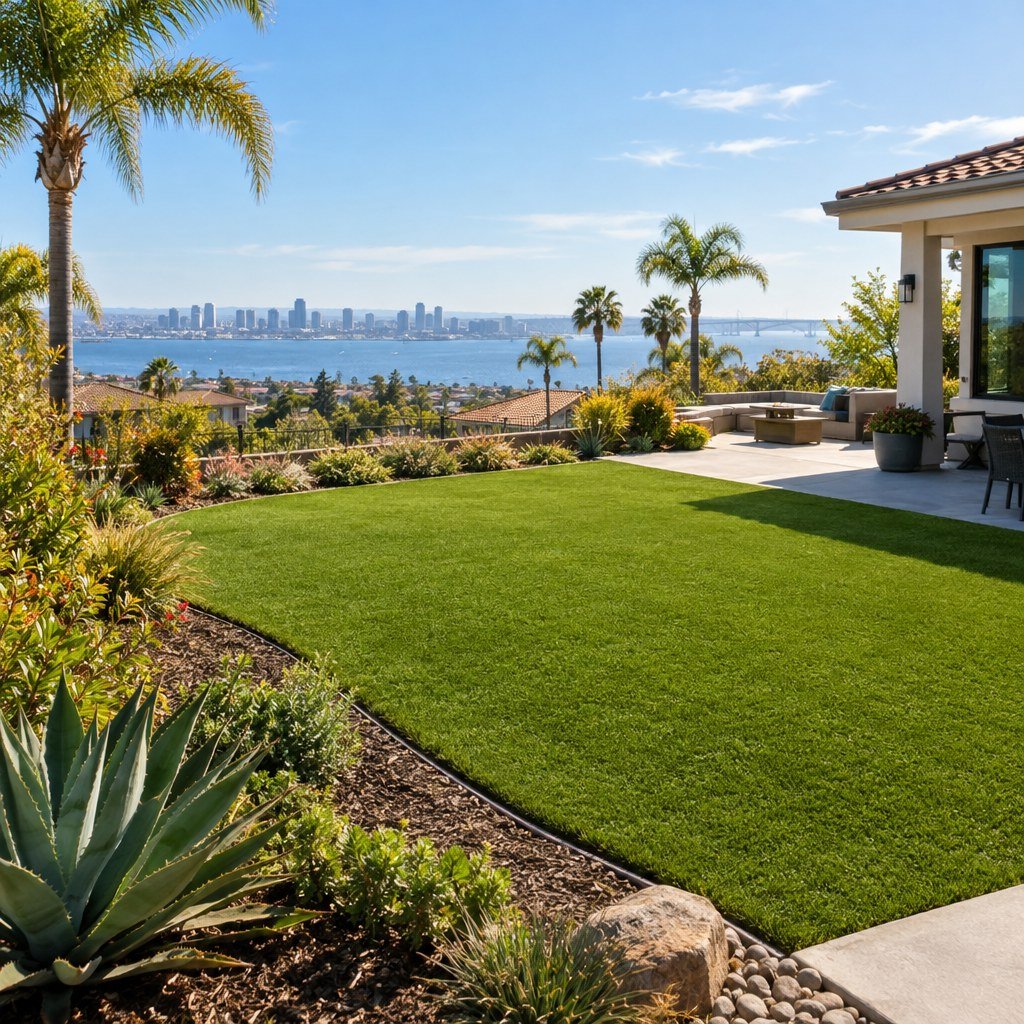
For most residential projects, the artificial turf installation cost in San Diego is commonly planned at roughly $9 to $18 per square foot installed for a professionally completed yard. That planning range includes typical turf, labor, base preparation, and basic finishing, but it is not a quote. Removal, grading, base depth, drainage, turf product, seams, edging, access, and specialty pet features can move the final price substantially. For context, Angi’s national artificial-turf cost guide reports a broad $3–$11 per-square-foot range; the San Diego planning band here assumes a professionally installed yard with ordinary base preparation and finishing, and site work can raise it.
For a quick budget example, a 500-square-foot area may land around $4,500 to $9,000, a 1,000-square-foot yard around $9,000 to $18,000, and a 1,500-square-foot project around $13,500 to $27,000. These figures use the $9 to $18 per-square-foot planning range and should be treated as an early budgeting tool, not a guaranteed project price.
San Diego Turf Cost by Yard Size
Square footage is the clearest starting point, yet larger yards do not always cost exactly the same per square foot as compact spaces. Mobilization, layout complexity, cuts around hardscape, and material waste can make a small irregular area comparatively expensive. Conversely, a large open rectangle may be more efficient to install.
The range assumes a standard residential installation. A yard with demolition, tree roots, restricted side access, steep slopes, extensive drainage work, decorative borders, or premium turf should be evaluated individually.
Why Site Preparation Drives the Final Price
Turf is the visible finish, but the base is the working structure. A crew cannot simply roll synthetic grass over compacted soil or an uneven existing lawn and expect a long-lasting result. Proper preparation creates a stable, drainable surface that supports the turf, reduces ripples, and helps the yard retain a consistent appearance.
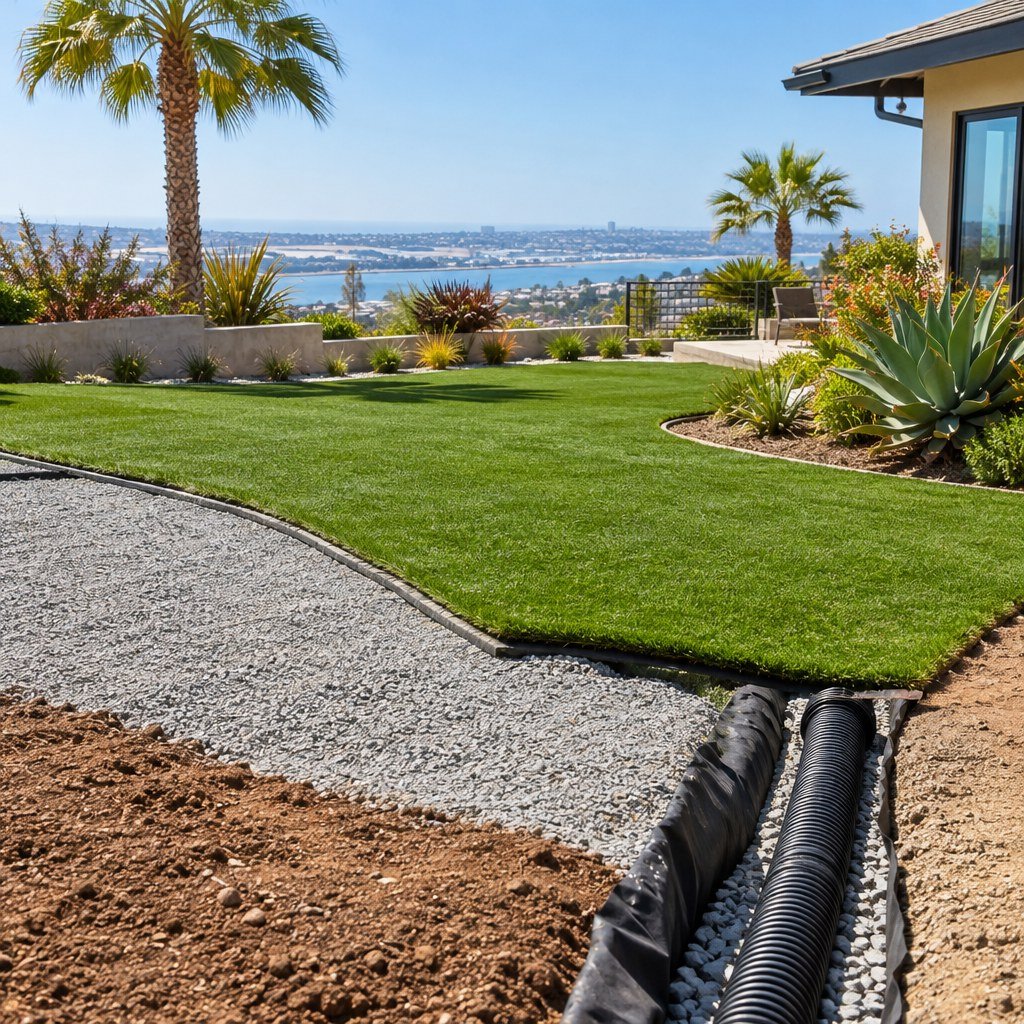
A typical installation sequence includes removing existing grass or surface material, excavating to the needed depth, correcting grades, installing and compacting an aggregate base, adding edging, fitting the turf, making seams, securing the perimeter, and applying infill when the selected product requires it. Each step can change the scope.
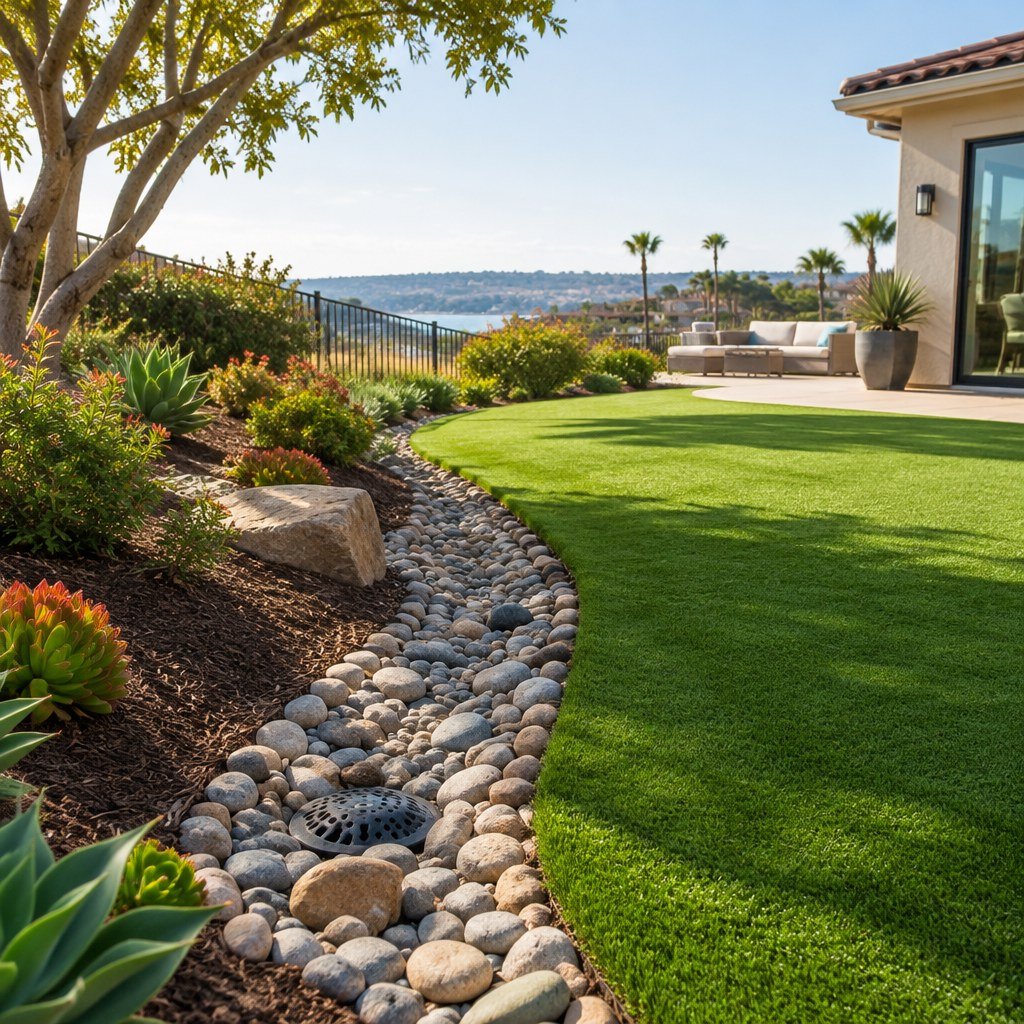
Existing surface removal
Natural lawn, decomposed granite, gravel, pavers, old turf, mulch, and concrete each require different labor and disposal planning. Removing a thin lawn in an accessible backyard is very different from breaking out hardscape or carrying debris through a narrow side gate. Ask whether haul-away and disposal are included in the written scope.
Grading and base depth
San Diego properties often have slopes, retaining walls, patios, pool decks, and transitions between outdoor rooms. The installer may need to shape the subgrade so water moves away from structures while still creating a comfortable, natural-looking finished elevation. More grading, imported base material, and compaction time generally mean a higher cost.
Drainage Is Not an Optional Detail
Even though San Diego has a dry climate, concentrated rain can expose weaknesses in a poorly prepared yard. Water that collects along a foundation, fence line, patio, or low corner can create odor, staining, settlement, and uncomfortable wet areas. Turf itself may allow water through, but the entire system must have a place for that water to go.
Drainage planning begins before excavation. An installer should identify existing downspouts, low points, hardscape elevations, soil conditions, and the direction water currently travels. The right solution may be a carefully sloped base, a drain channel, a catch basin, a connection to an approved drainage route, or a combination of measures.
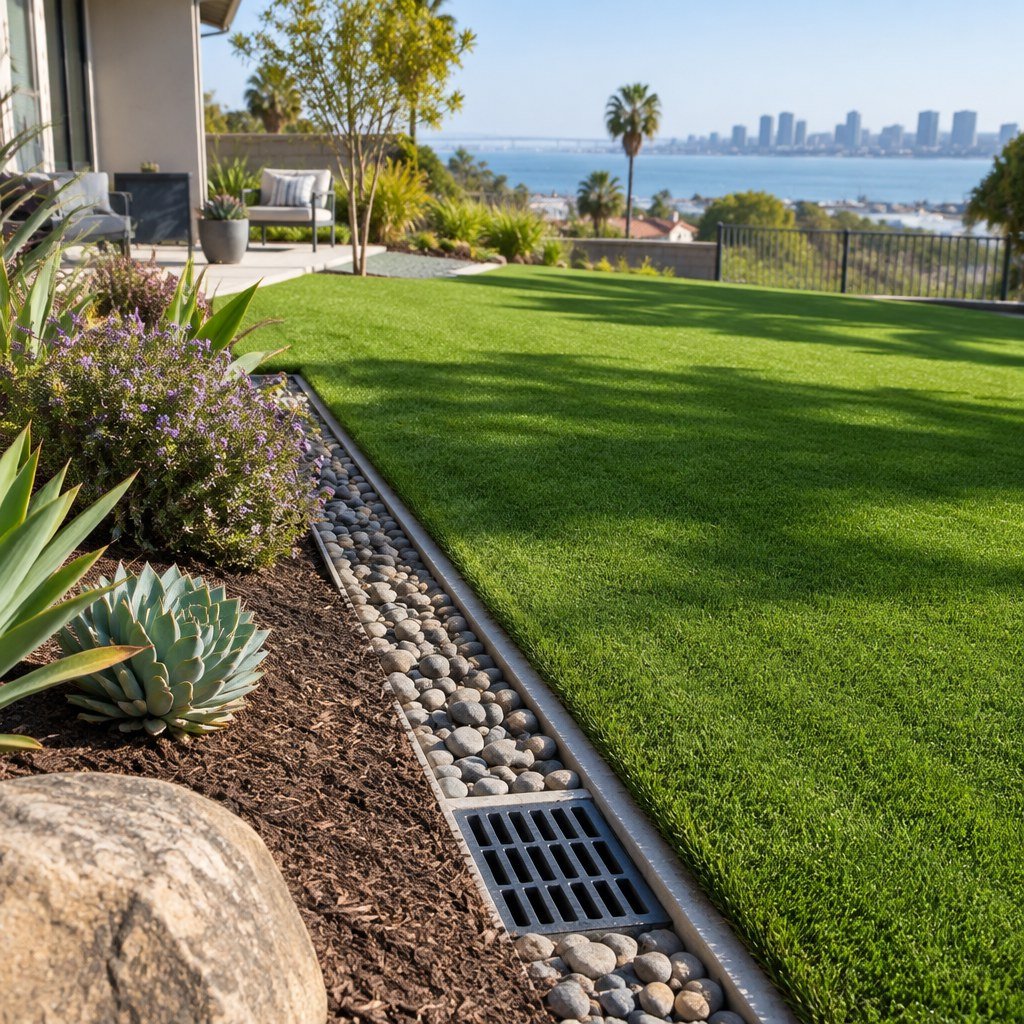
When drainage adds meaningful cost
- The property has visible ponding after storms or irrigation.
- The yard slopes toward the house, garage, or neighboring property.
- Downspouts discharge directly onto the future turf area.
- A low section sits between retaining walls, fences, or hardscape.
- Clay-heavy soil or compacted ground slows infiltration.
- The project includes a pet run where repeated rinsing will occur.
Drainage work should never be assumed from a photograph alone. If a project affects grading, drainage discharge, structures, or public connections, verify requirements with the applicable jurisdiction. For properties within the City of San Diego, review the city’s permit information at City of San Diego Development Services permits; requirements depend on the project and jurisdiction.
Turf Choices, Edges, Seams, and Access
Not every synthetic turf product is priced alike. Fiber shape, density, pile height, backing, drainage design, color variation, and warranty terms influence material cost. A low-traffic decorative lawn may not need the same construction as a play area, putting surface, or active dog run. Choosing by appearance alone can lead to paying for features that do not match how the yard will be used.
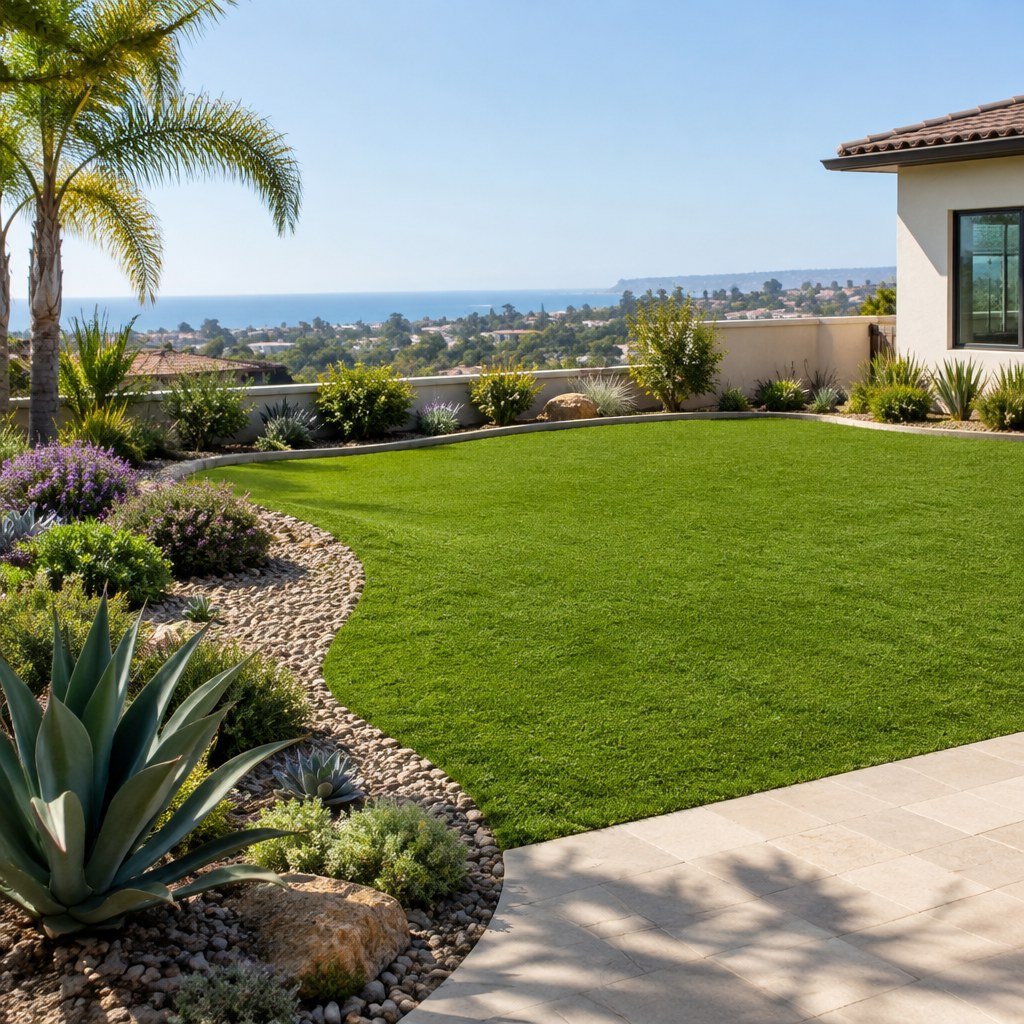
Complex layouts
Curves, islands, stepping stones, trees, and multiple turf zones create more cuts and waste than a simple rectangle.
Seams and grain direction
Large or irregular yards may need seams. Their placement and the turf’s pile direction affect both material use and visual consistency.
Limited access
Stairs, long carry distances, narrow gates, and hillside lots can require more manual labor and affect scheduling.
Plan for Pets, Kids, Heat, and Upkeep
For pet areas, prioritize drainage, odor-management options, a rinse plan, and easy access for cleanup. Ask whether the proposed base and infill suit animal use, how urine is expected to move through the system, and what cleaning products are compatible with the turf warranty. Do not assume every turf product performs identically in a dog run.
For children, discuss cushioning needs, playground equipment clearances, and transitions at patios or walkways. If the area will receive intense sun, talk openly about surface heat. Synthetic turf can become hot in direct sunlight, especially during warm conditions. Shade, landscaping, lighter materials nearby, and realistic use expectations may matter more than selecting turf by color alone.
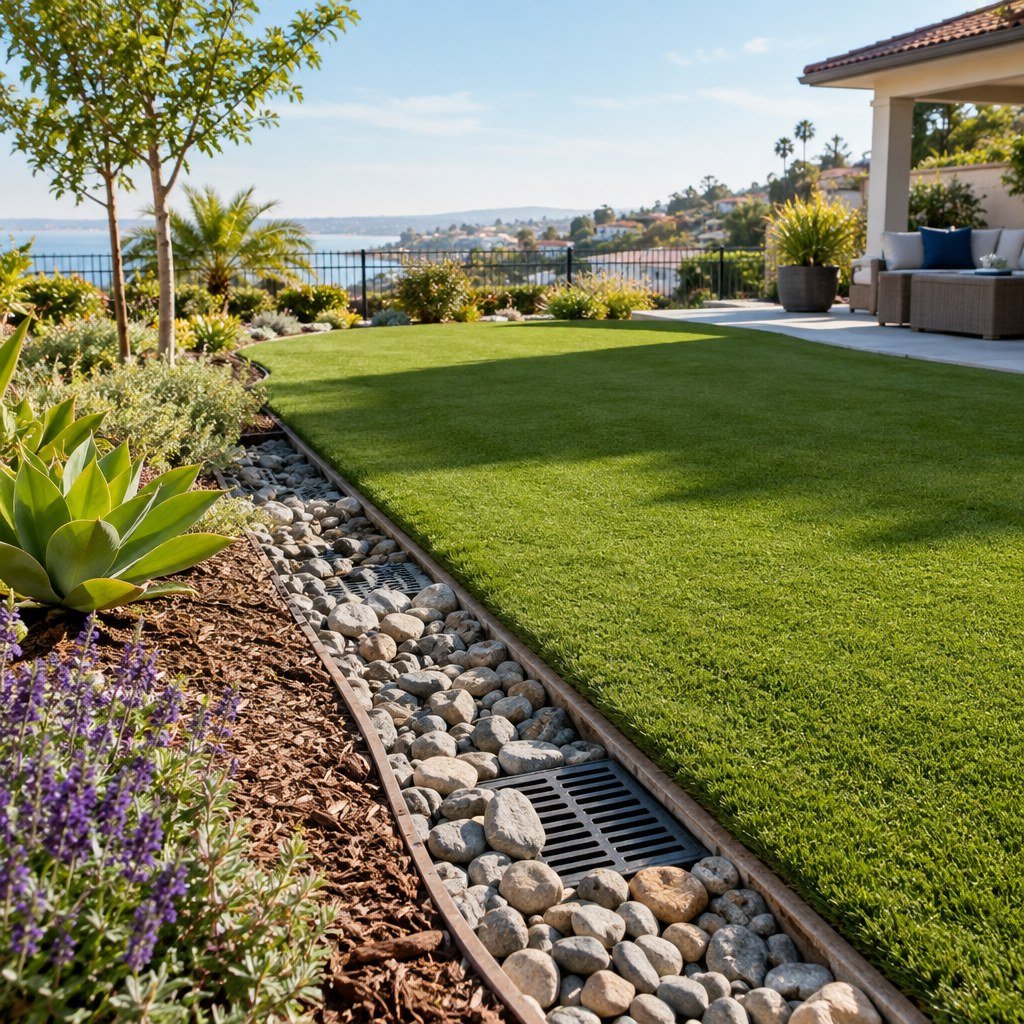
Maintenance is lighter than natural grass care, but it is not zero. Remove leaves and debris, rinse as needed, address pet waste promptly, brush high-traffic areas, and inspect seams, edges, and drainage points. Keeping outdoor furniture pads and grills in suitable locations can also help prevent damage or impressions.
Questions to Ask Before Approving an Estimate
- What existing materials will be removed, hauled away, and included in the price?
- How much excavation and compacted base does this site require?
- Where will water flow during a heavy rain or after rinsing a pet area?
- Which turf product, infill, edge restraint, and seam method are specified?
- How are uneven grades, hidden roots, buried utilities, or access issues handled?
- What labor and product warranties apply, and what maintenance is required to keep them valid?
A useful estimate explains assumptions, exclusions, and allowances. It should also identify whether landscape repairs, irrigation modifications, electrical work, drainage connections, or permit-related work are outside the core turf scope. Clarity early helps prevent a low initial number from becoming an expensive surprise later.
Get a Site-Specific Turf Estimate
Schedule a free project-estimate appointment to discuss your yard, drainage concerns, access, and preferred turf use. The process starts with a meeting; a written estimate follows afterward, not an instant online quote.
Frequently Asked Questions
Is artificial turf cheaper than natural grass in San Diego?
Installation is a significant upfront investment, while ongoing care needs differ from a natural lawn. The better comparison depends on your existing landscape, watering habits, mowing, repairs, desired appearance, and how long you expect to own the property. Compare total ownership needs rather than relying only on installation price.
Does artificial turf need drainage if the backing is permeable?
Yes. Permeable backing helps water pass through the turf, but the sub-base, underlying grade, and discharge path still determine whether the yard drains appropriately. A permeable product does not correct a low spot or solve water moving toward a structure.
Can artificial turf be installed over concrete?
It can be possible in some situations, but the approach depends on the concrete’s slope, condition, drainage path, and desired finished height. A contractor should inspect cracks, ponding, transitions, and whether a different surface preparation method is needed.
How long does installation take?
Timing depends on size, access, demolition, weather, materials, drainage scope, and scheduling. A straightforward small yard may move faster than a complex project involving grading, hardscape removal, or custom drainage. Ask for a project-specific schedule with the written estimate.
Bottom line: the smartest way to budget artificial turf installation in San Diego is to start with the $9 to $18 per-square-foot planning range, then evaluate site prep and drainage before choosing a product. A well-prepared base and deliberate water-management plan are usually more valuable than cutting corners beneath the turf.