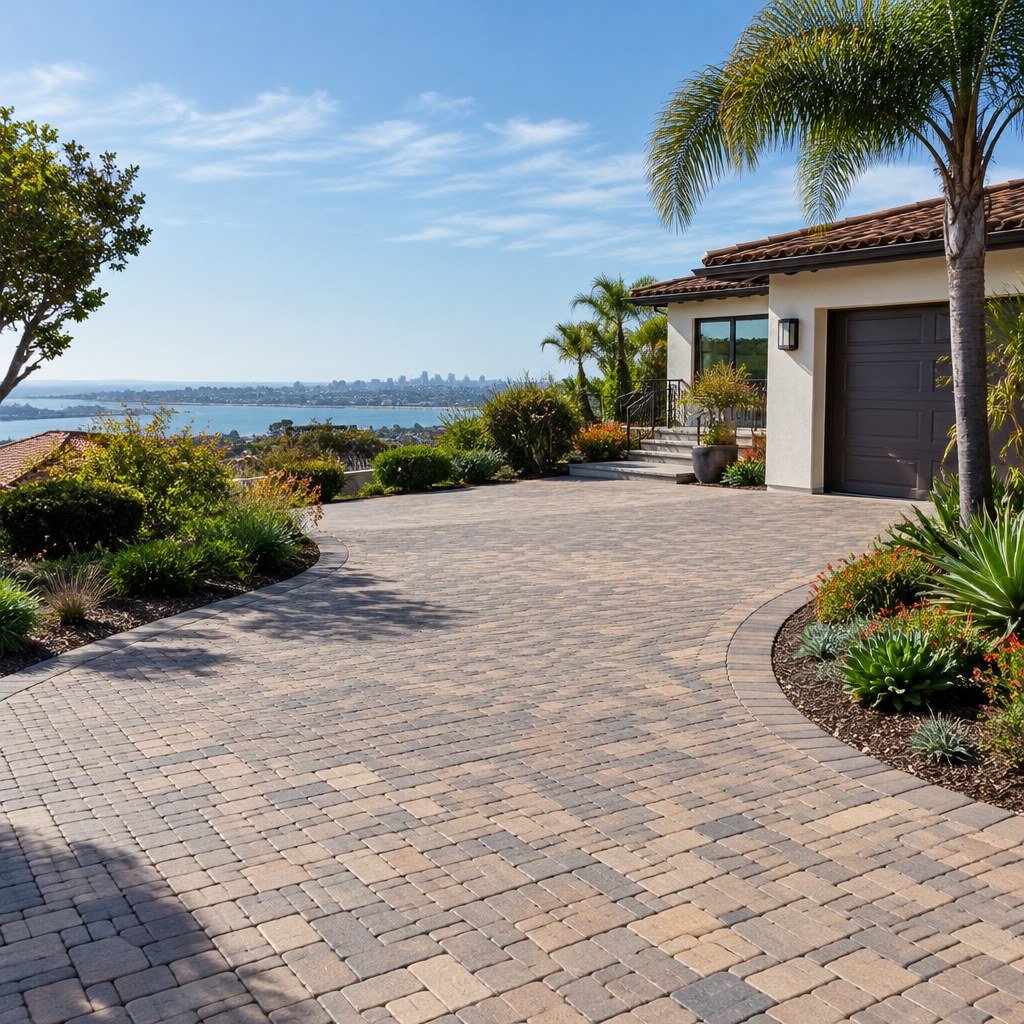
What a San Diego Paver Driveway Typically Costs
The paver driveway installation cost San Diego homeowners should plan for is commonly about $20 to $40 per square foot installed for a standard residential driveway with proper excavation, aggregate base, bedding sand, concrete pavers, edge restraint, joint sand, and labor. A straightforward project may land near the lower end, while demolition, drainage corrections, difficult access, premium pavers, borders, or detailed patterns can push pricing higher. This is a planning range, not a quote; property conditions and selected materials matter. (Source: Homewyse Concrete Paver Installation Cost Calculator, accessed October 2026.) As a national comparison, HomeGuide reports installed driveway paver ranges around $10–$30 per square foot. This article’s higher San Diego planning range includes a more complete scope allowance for excavation, base, edge restraint, drainage, and finish details; compare inclusions before relying on a headline rate.

Using that range, a 400 square foot driveway may budget roughly $8,000 to $16,000; a 600 square foot driveway, $12,000 to $24,000; and an 800 square foot driveway, $16,000 to $32,000. Those totals are simple square foot math based on the same $20 to $40 planning range. (Source: Homewyse Concrete Paver Installation Cost Calculator, accessed October 2026.) The important comparison is not just the final number. It is whether the proposal includes a vehicle capable base, drainage planning, and a finish appropriate for the property.
💡 Planning note: Two driveways with the same visible pavers can have very different installed costs when one needs concrete removal, deeper excavation, drainage channels, or hand carried materials because of limited access.
Price Math for Common Driveway Sizes
Square footage is the starting point, not the complete scope. Measure length by width, then separately note parking pads, widened turn areas, walk connections, curbs, and borders. Small driveways can cost more per square foot because mobilization, equipment, layout, and cutting take a meaningful amount of time regardless of area.
All cost figures in this table are estimates derived from the stated planning range, not an offer or a substitute for an on site inspection. (Source: Homewyse Concrete Paver Installation Cost Calculator, accessed October 2026.) Ask for quantities and scope descriptions so you can see what changes the total.
What a Complete Paver Driveway Scope Should Include
A reliable proposal should explain the work below rather than presenting only a material name and total price. Pavers depend on the layers beneath them. The finish is visible, but preparation determines how the driveway responds to vehicle loads, irrigation, rain, and time.
Removal and excavation
Confirm whether existing concrete, asphalt, soil, roots, and debris removal are included, along with haul away and disposal.
Base and compaction
The proposal should state aggregate base depth, compaction steps, bedding sand, and the intended finished elevation.
Drainage and restraint
Edge restraints hold the field in place, while swales, drains, or grading direct water away from structures.

Potential extras deserve separate attention. These may include extensive demolition, export of unsuitable soil, root management, retaining edges, steps, utility adjustments, permit fees, drainage connections, permit drawings, gate removal, or labor for narrow side access. Premium clay or natural stone pavers, custom inlays, contrasting borders, and intricate herringbone layouts may also increase cost because they require more cutting and layout time.
Base Depth, Drainage, and Vehicle Load Suitability
Passenger vehicles place repeated loads on a driveway, especially where wheels turn, brake, or enter from the street. That is why driveway pavers should not be installed like a lightly used garden path. The excavation depth, compacted aggregate base, stable bedding layer, jointing material, and perimeter restraint should work together as a system.
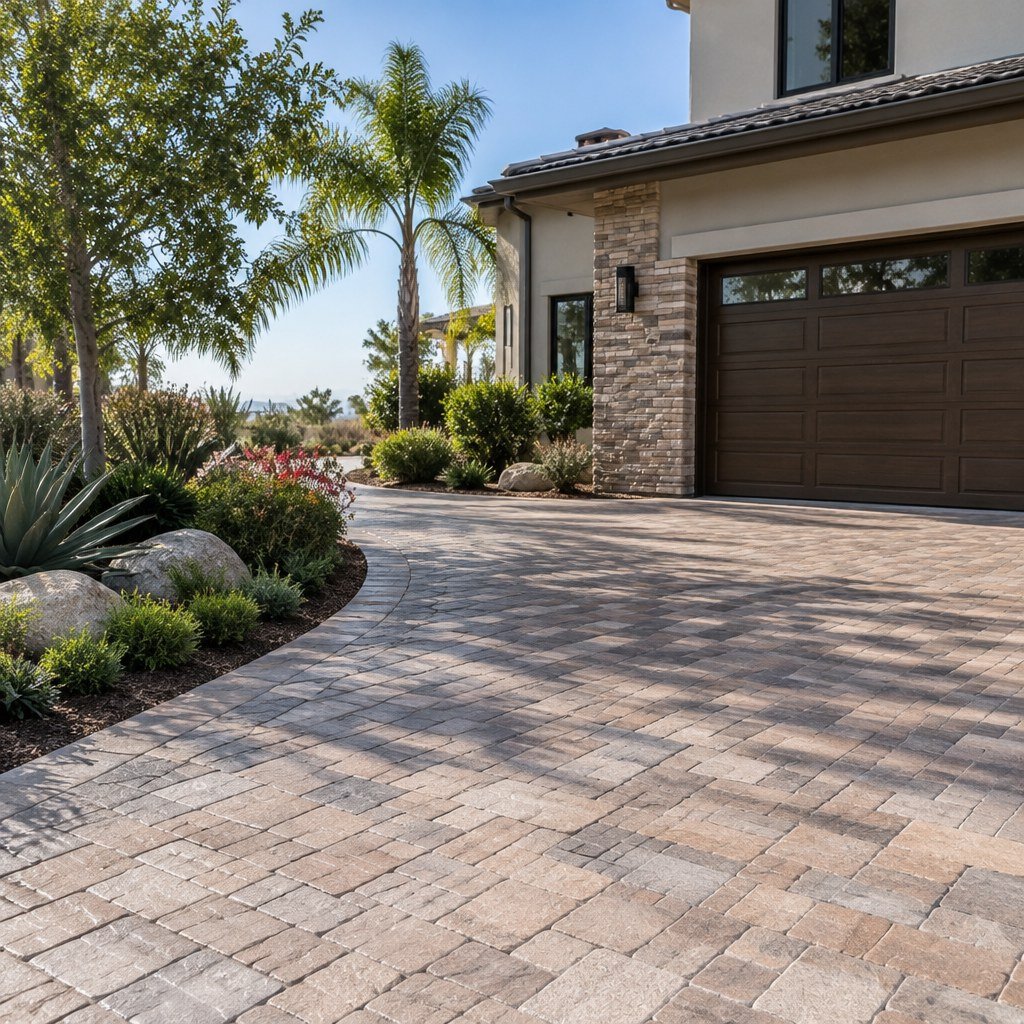
Base depth is not a universal number. Soil conditions, slope, existing subgrade, expected vehicles, and local drainage needs influence the design. A driveway used only by passenger cars has different demands than one regularly used by heavy trucks, trailers, delivery vehicles, or recreational vehicles. Tell the estimator about every expected vehicle before design decisions are made.
San Diego’s dry periods do not eliminate drainage concerns. Sudden rain can expose low spots, poor slopes, clogged drains, or runoff directed toward a garage. Good planning considers where water enters, crosses, and exits the driveway. It may require a channel drain at a garage threshold, a swale, permeable paving strategy, or drainage improvements beyond the paved area.
Permit requirements vary by project scope and jurisdiction. Work within the City of San Diego may require review when it affects the public right of way, drainage, structures, or other regulated site conditions. Check current information through the City of San Diego Development Services permit page; properties outside city limits are governed by their own city or county authority.
Paver Selection, Pattern, and Finish Decisions
Concrete pavers are a common driveway choice because individual units can be removed and reset if access to utilities or localized repair becomes necessary. Choose products rated for vehicular pavement use, then consider color, texture, size, and slip resistance. Lighter shades may feel cooler in sunny areas, while blended tones can make dust and everyday marks less noticeable.
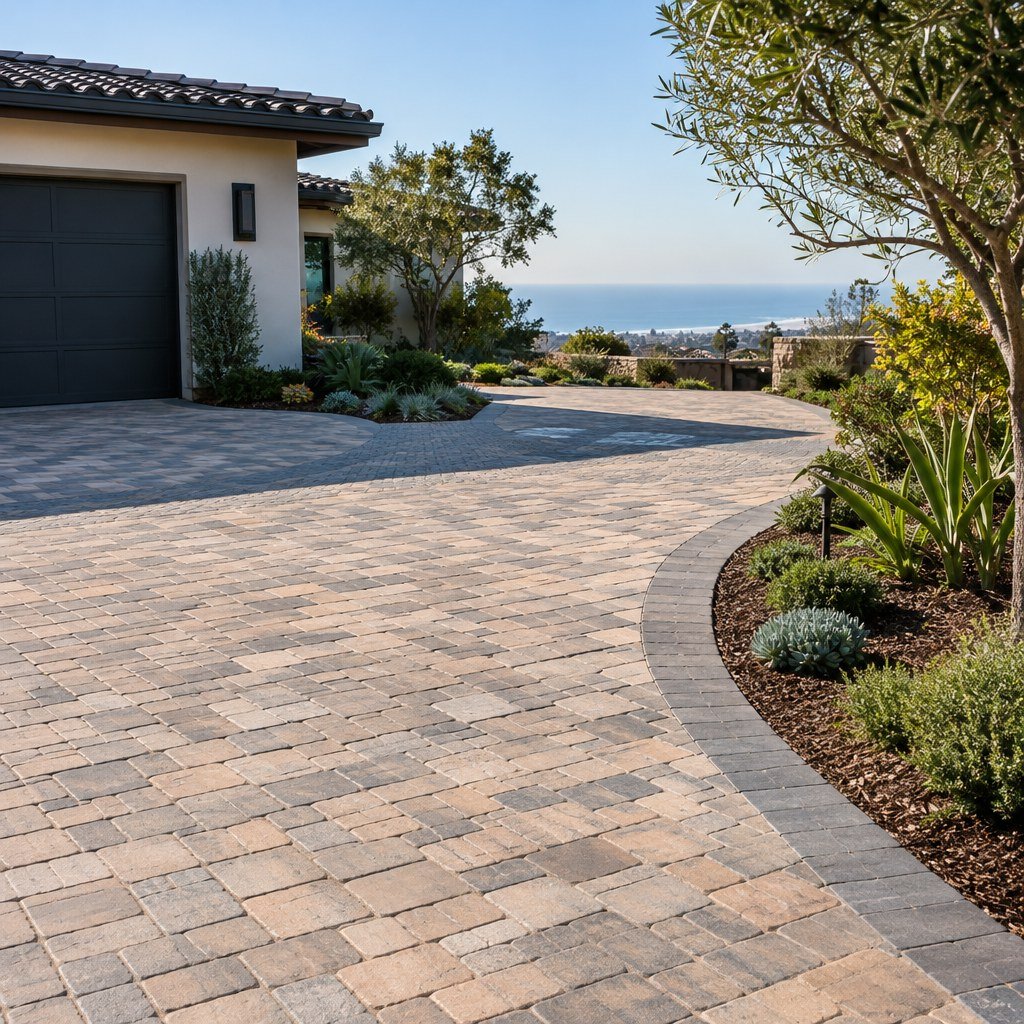
Pattern affects both appearance and performance. A herringbone layout is often selected for driveways because interlocking units help resist movement under vehicle traffic. Running bond, basketweave, and larger modular patterns can also work when the paver product, base, cutting, and restraints are designed for the application. A contrasting soldier course or border can add visual definition but should be installed with the same attention to restraint and elevation.
Sealer is optional, not automatically required. A suitable paver sealer may enrich color, reduce staining, or make routine cleaning easier, but it requires proper surface preparation and future maintenance. Discuss whether the proposal includes sealing, the type of product, curing time, and whether any sheen is desired. Avoid treating sealer as a cure for a weak base or drainage issue.
Installation Sequence and Long Term Care
Most paver driveway projects follow a predictable sequence: site review and layout, demolition if needed, excavation, subgrade correction, aggregate base placement and compaction, grading, bedding sand, paver installation, cuts, edge restraint, joint sand, final compaction, cleanup, and any sealing after appropriate curing. Weather, material lead times, access, hidden conditions, and inspection requirements can change the schedule.
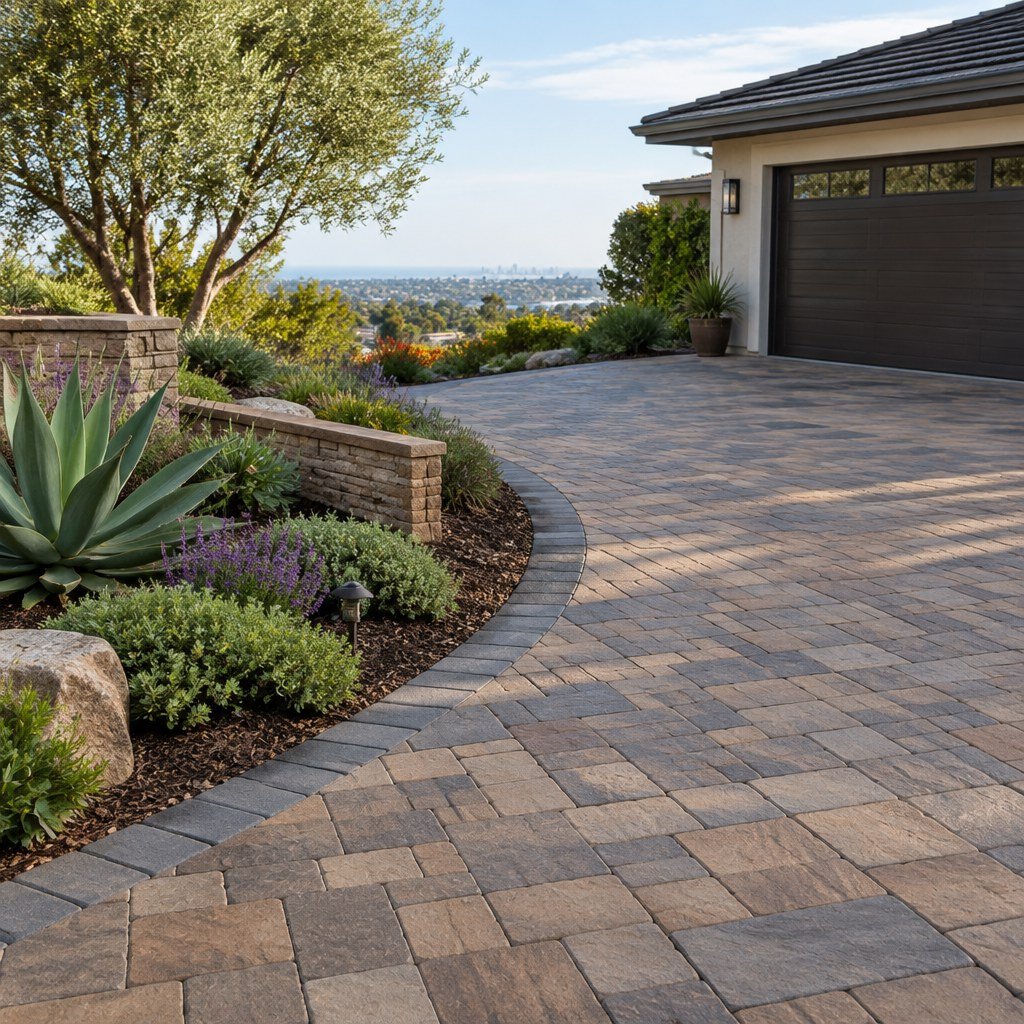
Maintenance is generally straightforward. Sweep debris, rinse periodically, address oil spills promptly, and keep drainage inlets clear. Inspect joints and edges after heavy weather or construction activity. If joint sand diminishes, replenishment may be appropriate. One advantage of interlocking pavers is targeted repair: localized settlement or damage can often be addressed by lifting, correcting the base issue, and reinstalling units rather than replacing an entire slab.
Questions to Ask Before Approving a Proposal
- What demolition, disposal, excavation, and base preparation are included?
- How will the finished driveway slope, and where will runoff go?
- What paver product, pattern, border, joint material, and edge restraint are specified?
- Is the design intended for passenger vehicles, heavier vehicles, or both?
- Which site conditions could change the written estimate after work begins?
- Does the price include sealing, access protection, final cleanup, and restoration?
Frequently Asked Questions
Are pavers more expensive than poured concrete?
They can be, especially when a detailed pattern, premium units, drainage, or extensive base work is included. However, comparing only initial surface cost misses repair flexibility, appearance, drainage needs, and the preparation required for either material.
Can a paver driveway handle daily cars?
Yes, when designed and installed as a driveway system with suitable pavers, a properly compacted base, sound restraints, and appropriate drainage. Share expected vehicle weights and use patterns during planning.
Does every driveway need a drain?
No. Some sites can shed water safely through grading. Others need a channel drain, swale, or additional drainage work because water approaches the garage, pools near the home, or crosses a problematic slope.
When should I request a written estimate?
Request one after an on site review, measurements, and discussion of access, materials, drainage, and intended vehicle use. A written scope makes meaningful comparison possible.
Plan Your Driveway With the Full Scope in View
Schedule a free project estimate appointment to discuss base preparation, drainage, paver options, and access. This is a meeting followed by a written estimate, not an instant online quote.