
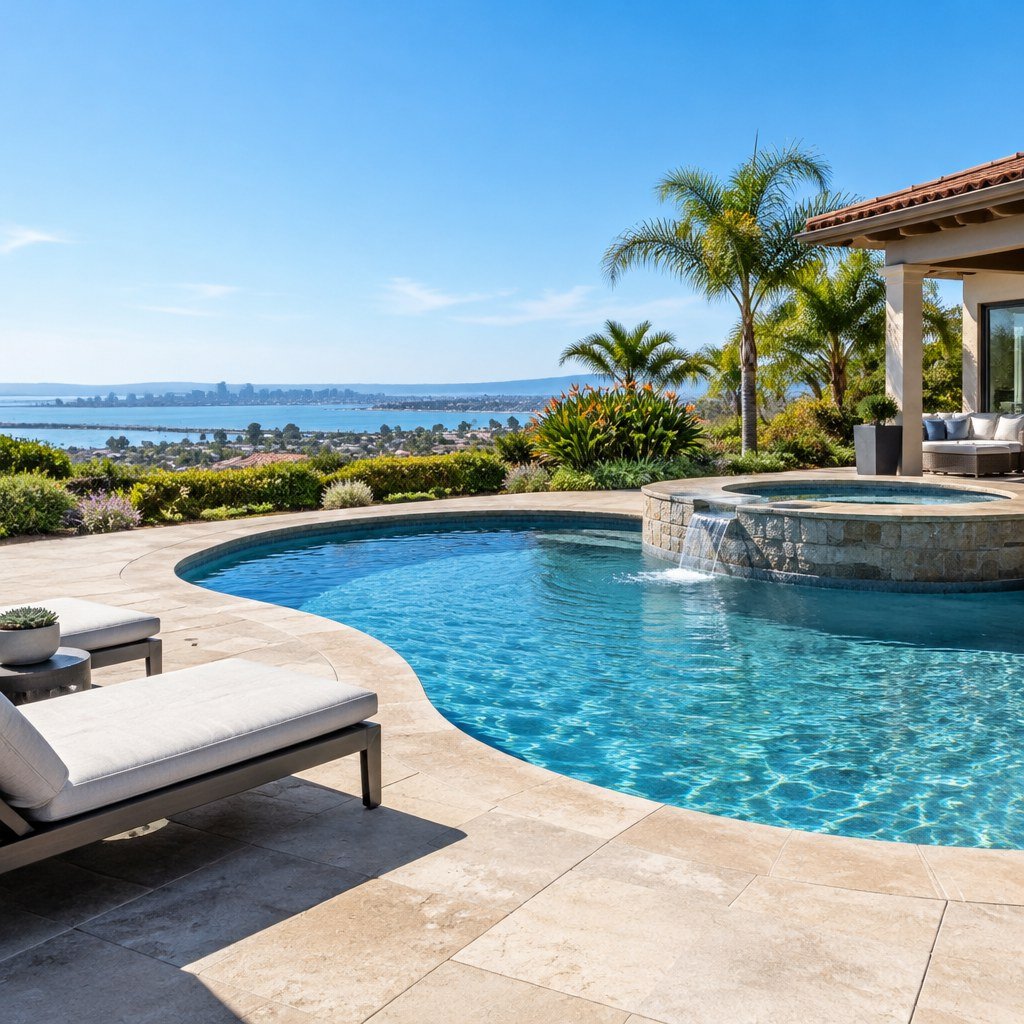
The short answer for San Diego homeowners
Pool deck resurfacing is usually the lower-cost choice when the existing concrete is structurally sound, reasonably level, and draining correctly. Replacement becomes the better value when settlement, widespread cracking, poor slope, failing edges, or a planned layout change affects the slab itself. For San Diego projects, planning ranges commonly overlap because access, demolition, coping work, drainage corrections, and finish selection can outweigh simple square footage. Treat any price-per-square-foot figure as a starting point, not a quote. For a published cost comparison, HomeGuide places concrete pool-deck resurfacing at about $3–$12 per square foot, while new pool-deck construction is listed around $25–$50 per square foot. Those national figures describe different scopes and are useful benchmarks, not San Diego bids.

What resurfacing and replacement actually include
Resurfacing keeps the existing slab and changes its usable surface. A contractor typically cleans and prepares the concrete, addresses suitable cracks or isolated defects, applies a compatible overlay or coating system, then completes the selected texture, color, and sealing steps. Some projects also include joint treatment, minor edge repairs, and local slope corrections where the substrate allows them.
Replacement means removing all or part of the existing deck, preparing the base, installing reinforcement and new concrete, forming transitions around the pool, and finishing the new surface. It may also involve new drainage, equipment-pad transitions, steps, planter edges, or a revised deck footprint. Pavers are a separate option: they can be installed over a properly prepared base, but their cost depends heavily on excavation, base construction, edge restraint, and cutting around curved pool lines.
Pool deck resurfacing vs replacement cost in San Diego
Published national consumer-cost guides can help establish broad planning ranges, but a pool deck is not a simple patio. As a reference point, consumer sources such as Angi and HomeAdvisor commonly describe concrete resurfacing and concrete replacement in broad per-square-foot ranges that vary by preparation, materials, labor, and local conditions. San Diego estimates should be adjusted after an on-site review because pool access and site constraints are often substantial.
These are planning ranges only, not a contractor quote. They are intended to compare possible scopes, not to promise a finished price. Material availability, finish selection, existing conditions, and the relationship between the deck and pool shell all affect the final written estimate.
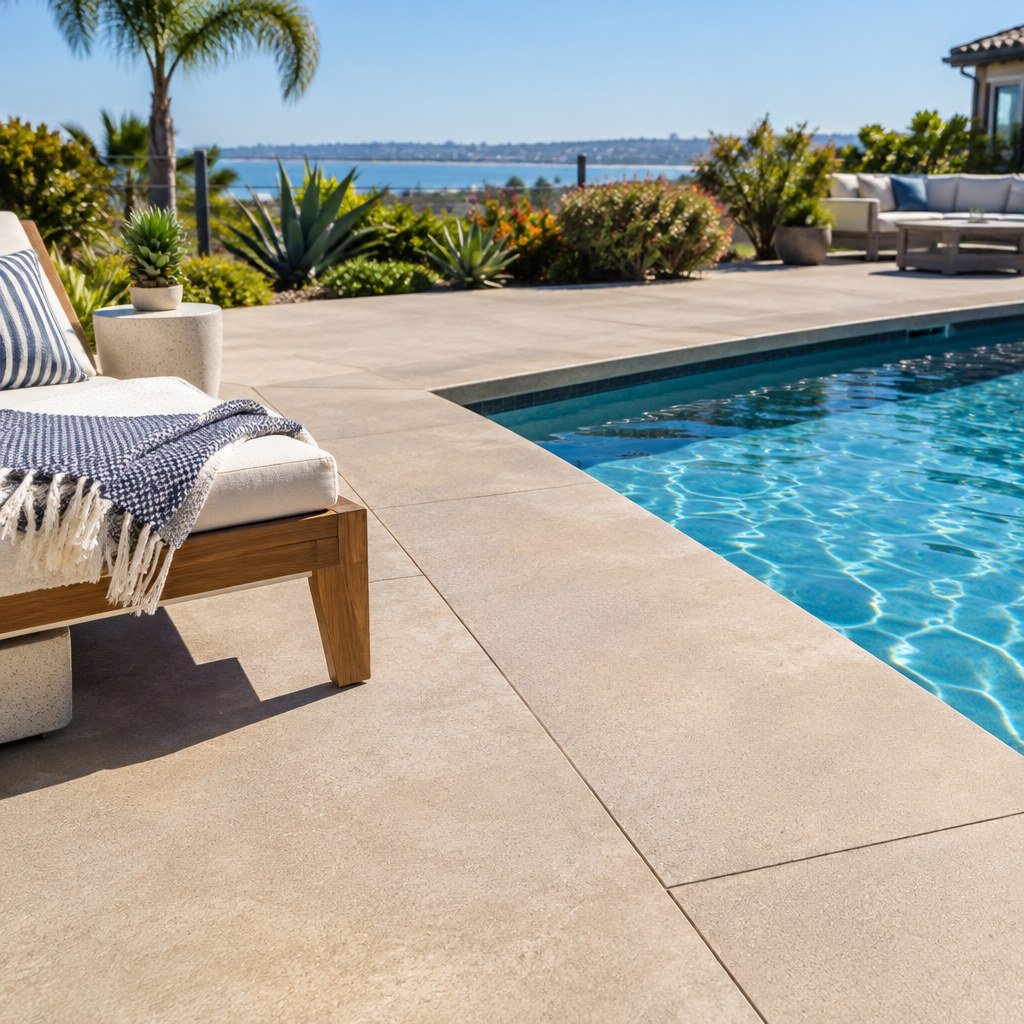
A 600-square-foot comparison example
Consider a 600-square-foot pool deck with a sound slab, ordinary backyard access, no major drainage correction, and an existing coping line that remains in serviceable condition. Using the planning ranges above, a basic resurfacing scope might begin around $1,800 to $6,000 before significant repairs or design upgrades. A more decorative overlay could plan around $4,200 to $9,000 or more.
If that same deck needs complete demolition and a new concrete slab, a preliminary range of $7,200 to $15,000 or more is reasonable for discussion. Pavers at the same size could preliminarily range from $9,000 to $21,000 or more. Those calculations simply multiply 600 square feet by the stated range; they do not include every possible pool-specific cost.
For example, the numbers can rise if workers must move material through a narrow side yard, protect landscaping, remove thick concrete, rebuild a compromised base, modify drains, or replace coping. They can also change when a homeowner chooses a custom color pattern, multiple textures, curved cuts, new lighting, or a larger deck layout.
When resurfacing is the sensible investment
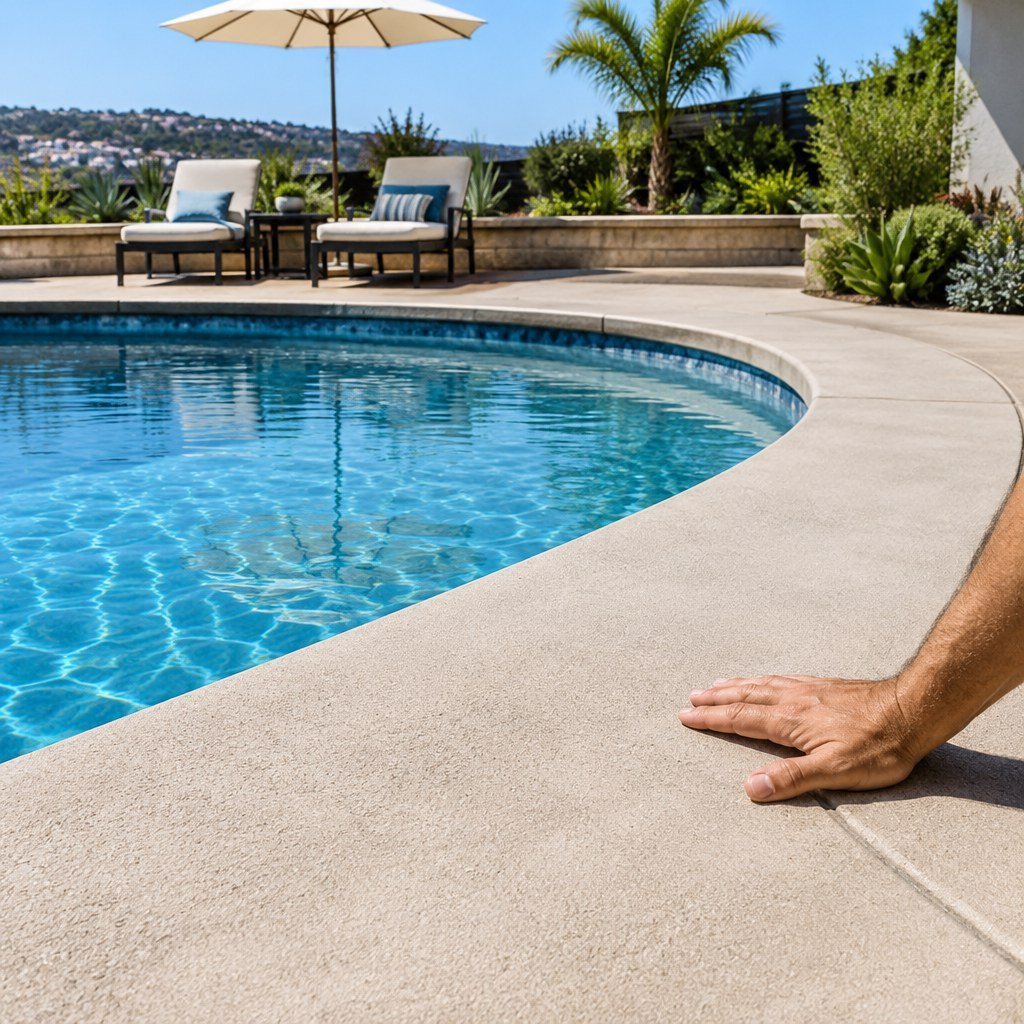
Resurfacing is often worth considering when discoloration, worn texture, shallow surface scaling, old coatings, isolated cosmetic cracking, or an outdated finish are the main concerns. The existing deck should be stable enough to support the new system, and water should drain away from the pool and home rather than ponding on the surface.
A good candidate does not have to look perfect. Small repairs may be part of a responsible resurfacing scope. The important distinction is whether defects are superficial or signs of continuing movement. A qualified contractor should explain which cracks can be treated cosmetically, which joints must remain functional, and which conditions warrant further evaluation.
Usually favorable
The slab is level, cracks are limited, edges remain intact, and drainage is working. A new finish can refresh the appearance without unnecessary demolition.
Needs closer review
Recurring cracks, hollow areas, standing water, or separation near coping may indicate that surface work alone will not solve the underlying problem.
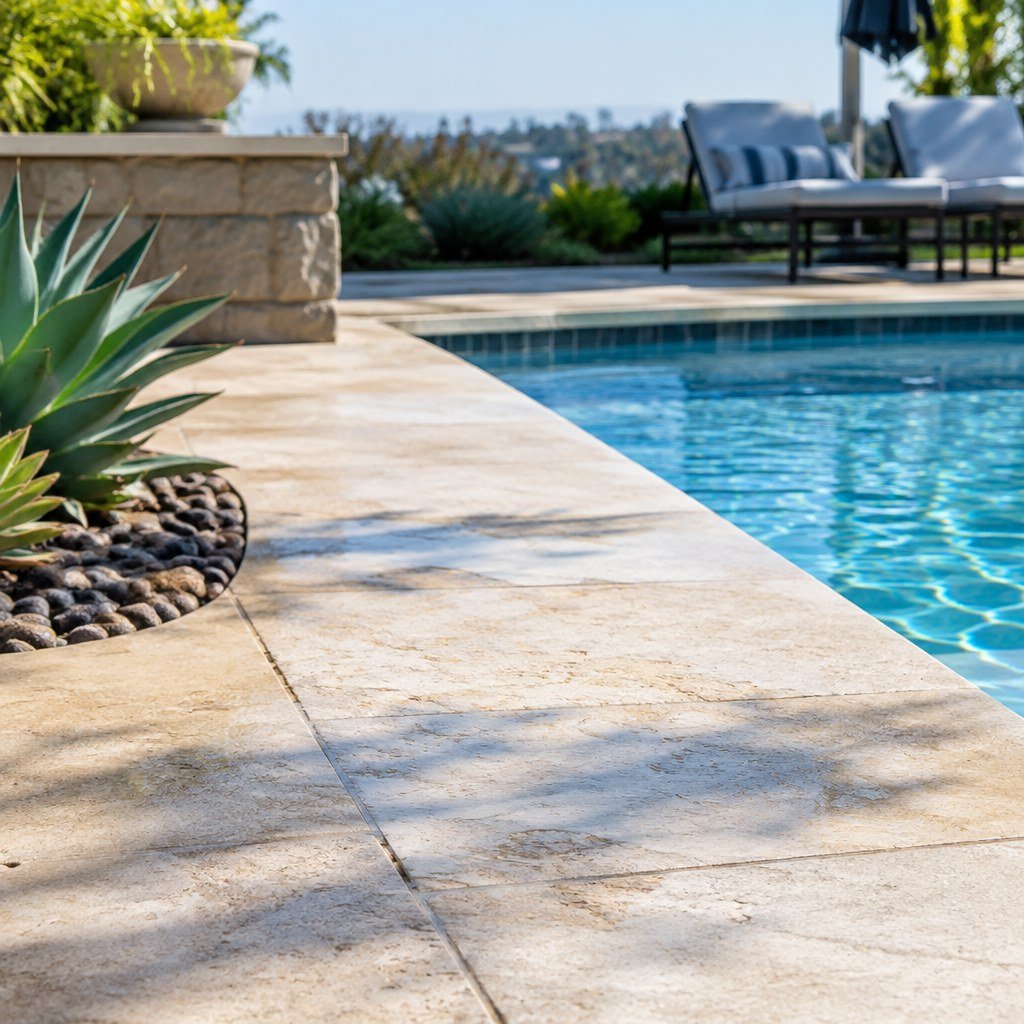
Signs replacement may protect the budget better
Replacement can be the more economical long-term choice when the deck has significant settlement, broad cracking patterns, unstable sections, repeated patch failures, or drainage that cannot be corrected with practical surface adjustments. It is also appropriate when the homeowner wants to widen the deck, change walkways, alter elevation, add outdoor living features, or replace incompatible materials around the pool.
Pay particular attention to the pool edge. Coping, expansion joints, tile, skimmer areas, and the deck-to-pool transition require coordinated work. A deck can look like an isolated slab, but it is close to a water-containing structure. Careless demolition or poorly detailed replacement can create avoidable complications, which is why the scope should identify protection measures and who handles each transition.
Inspection checklist before requesting estimates
Walk the deck after irrigation or rain if possible, and take notes before meeting contractors. Clear observations help distinguish a cosmetic upgrade from a larger site-correction project.
- Photograph cracks, chips, uneven areas, stains, and locations where repairs have already failed.
- Note whether water ponds, flows toward the house, or reaches the pool edge unexpectedly.
- Check for separations at coping, steps, drains, planter walls, gates, and equipment pads.
- Measure the approximate deck area and identify narrow gates, stairs, slopes, or limited side-yard access.
- Decide whether the goal is appearance only, improved layout, drainage correction, or a complete backyard update.
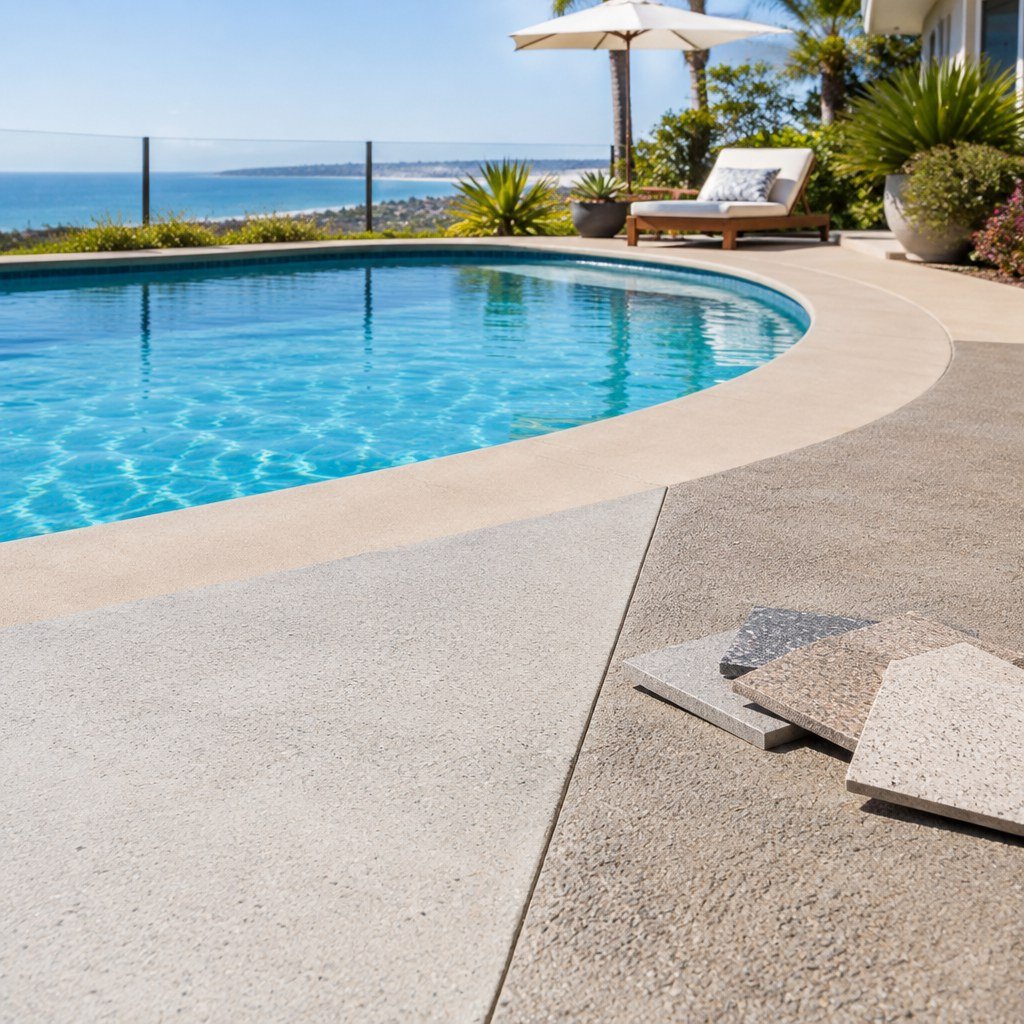
Do not assume every textured finish offers the same wet-use performance. Review the product manufacturer’s technical data, maintenance requirements, and intended application with the contractor. Discuss texture, cleaning practices, coatings, drainage, and expected use rather than relying on general claims about “slip resistance.”
Permits, process, and scope details
Some resurfacing projects are primarily finish work, while replacement or layout changes may trigger permit, drainage, barrier, electrical, or structural questions. Requirements differ by jurisdiction, property conditions, and project scope. Verify current requirements with the applicable local building department before work begins, especially if the project changes deck elevation, drainage routes, gates, fencing, electrical features, or the pool perimeter.
A careful process begins with an on-site inspection, measurements, and a discussion of priorities. The contractor should then identify visible conditions, recommended preparation, inclusions, exclusions, finish choices, access assumptions, and likely schedule steps. For replacement, ask how demolition debris, base preparation, reinforcement, joints, curing, coping protection, and drainage will be addressed.
Frequently asked questions
Can a cracked pool deck be resurfaced?
Sometimes. Hairline or isolated cosmetic cracks may be addressed within a suitable system, but active movement, settlement, wide separations, or repeated cracking require a more careful assessment. Resurfacing should not be presented as a structural repair.
Is resurfacing faster than replacement?
It often involves less demolition and may have a shorter construction sequence, but preparation, repair curing, weather, material specifications, and design complexity still affect timing. Ask for a project-specific schedule rather than assuming a standard duration.
Can new coping be installed with either option?
Yes, but coping work must be coordinated with the deck scope and pool edge details. Replacing coping can expand the budget, yet it may be sensible when the existing coping is loose, damaged, incompatible with the new finish, or part of a broader remodel.
Should I choose pavers instead of concrete?
Pavers can offer a distinct appearance and allow targeted access for future repairs, but they need a properly designed base and edge restraint. Compare the complete installation scope, not merely the visible paver price.
Get a written pool deck estimate
The best choice depends on the slab, pool edge, drainage, access, and finish you want. Schedule a free project-estimate appointment to discuss the site in person, then receive a written estimate—not an instant online quote.


Discussion