
Stucco Repair and Resurfacing Cost in San Diego
Most San Diego homeowners can plan roughly $300 to $1,000 for a small isolated stucco patch or crack repair. A localized water-damaged opening and reconstruction commonly needs $1,500 to $5,000. Re-stuccoing one elevation often falls near $6 to $12 per square foot, while whole-home work can reach $10,000 to $25,000 or more. These are planning bands, not fixed market averages or a quote. The true stucco repair cost San Diego depends on what sits behind the finish, how much preparation is needed, and whether moisture has damaged the wall system.
Cost methodology: These are broad planning estimates reviewed in October 2026 using publicly available cost references and regional scope considerations. They are not contractor-specific pricing or a quote; actual costs depend on site conditions, selections, and the written scope confirmed during a project meeting.
Key Takeaways
- Small cosmetic repairs cost far less than repairs involving hidden moisture or failed lath.
- Matching an existing texture and color can require more labor than the patch itself.
- Resurfacing works when the substrate is sound; it cannot solve active water intrusion.
- A written scope should separate demolition, repairs, finish work, painting, permits, and cleanup.
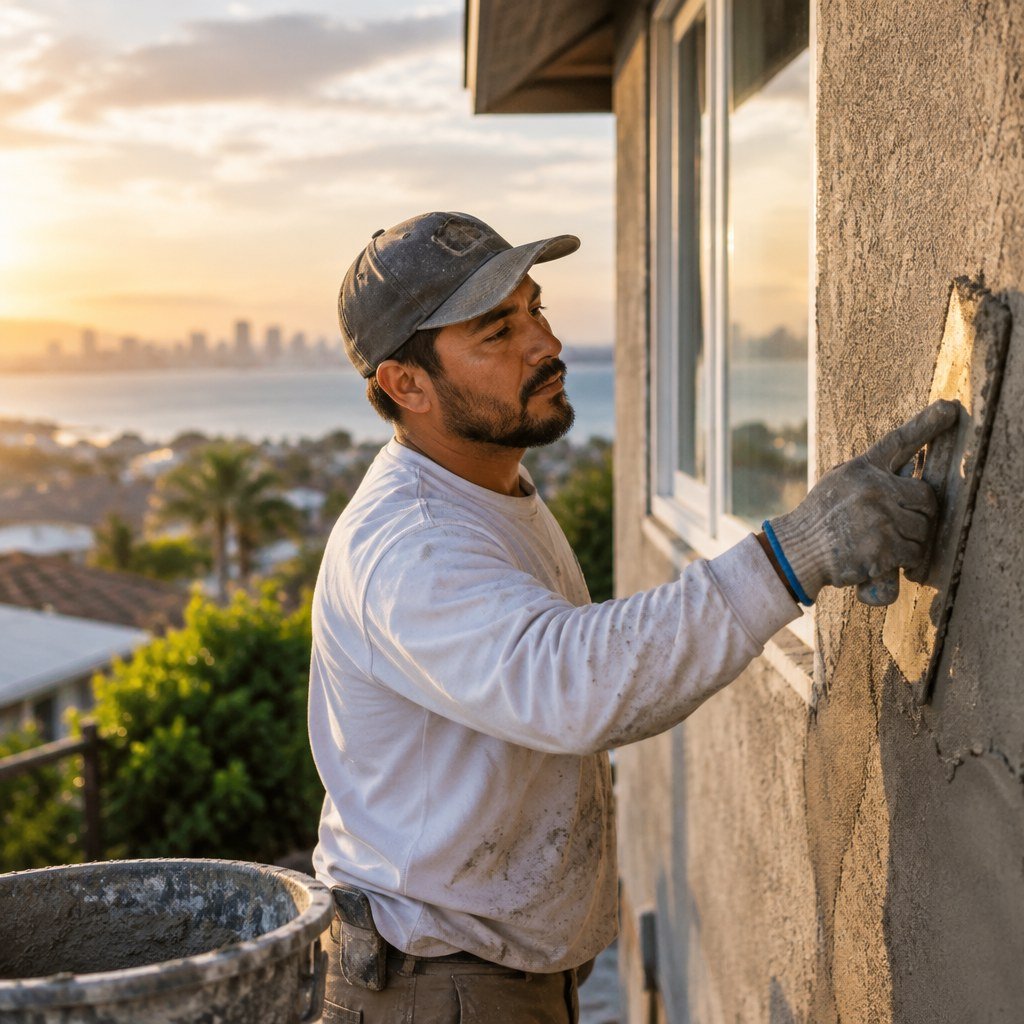
What Is Included in a Stucco Repair Estimate?
A dependable estimate starts with diagnosis, not just a price per patch. A contractor may inspect cracks, tap suspicious areas for hollowness, check transitions around windows and doors, and look for staining or soft sheathing. The visible finish is only one layer. Depending on the damage, the scope may include surface protection, removal of loose stucco, disposal, lath or paper replacement, substrate repair, base coats, finish texture, curing time, primer, paint, and final cleanup.
Ask whether the price includes painting. Fresh cementitious stucco rarely matches an aged exterior exactly without paint, especially where sunlight and weather have changed the original color. If the repair is limited to one area, the estimate should also explain whether the painter will blend the surrounding wall or paint only the repaired section.
San Diego Stucco Cost Ranges by Project Type
Use these figures for early budgeting only. A two-story home with tight side yards, landscaping to protect, complex rooflines, or extensive scaffolding needs can cost more than a straightforward single-story wall. Likewise, a small area can become expensive when opening the wall reveals deteriorated sheathing, rusted lath, missing flashing, or a failed weather-resistant barrier.

Patch, Resurface, or Remove and Re-Stucco?
The best option is not always the least expensive one today. The right choice depends on whether the problem is confined to the finish coat or reaches the structure behind it.
Patch repair
Best for isolated chips, impact damage, and stable hairline cracks. It is economical, but a close texture match may still be difficult.
Resurfacing
Best when the wall is generally sound but worn, uneven, or visually dated. It refreshes appearance without automatically fixing hidden defects.
Removal and re-stucco
Best for widespread failure, repeated moisture problems, or damaged backing layers. It costs more, but provides access to rebuild the wall assembly.
Cosmetic hairline cracks are often monitored or repaired locally if they are stable and dry. Recurring, widening, stair-step, or diagonal cracks deserve closer evaluation. The same is true for bubbling paint, rust marks, soft areas, loose stucco, staining below windows, or damage near roof and wall intersections. Those clues can point to movement or water intrusion rather than a simple finish problem.
Need a Scope Built Around Your Wall?
Book a meeting to discuss your project and receive a project-specific written estimate. This is not an instant online quote.
The Main Factors That Change Stucco Pricing
Labor often drives more of the final total than bags of stucco. Crews need time to mask windows, protect hardscape and plants, set up ladders or scaffolding, remove unsound material, and allow coats to cure properly. A smooth finish may be easier to blend than a heavy dash or lace texture, but every texture requires careful handwork.
- Damage depth: Finish-only repairs cost less than repairs involving paper, lath, framing, or sheathing.
- Wall access: Second-story work, slopes, narrow side yards, and obstructed areas increase labor.
- Moisture source: Repairing a leak, flashing issue, or failed seal is separate from restoring stucco.
- Finish matching: Matching texture, color, and sheen may require larger blend areas or repainting.
- Demolition and disposal: Removal of old stucco and debris handling should be listed clearly.
- Permits: Requirements depend on project scope and jurisdiction, especially when structural work is involved.

How to Compare Stucco Repair Quotes Safely
Compare scope lines before comparing totals. One proposal may include only patching and texture; another may include demolition, moisture repairs, flashing work, paint, and protection for landscaping. Neither is automatically wrong, but they are not equivalent jobs. Request an itemized description of the repair area, the layers being replaced, the finish specified, and exclusions that could change the price.
Questions Worth Asking Before You Sign
- What caused the visible crack, stain, or loose stucco?
- Will you inspect and repair damaged paper, lath, sheathing, or framing if found?
- How will you protect windows, planting beds, walkways, and adjacent finishes?
- Is paint included, and how will color and texture blending be handled?
- What workmanship warranty is offered, and what conditions are excluded?
- Which items are allowances, and which are fixed within the written scope?
A practical warranty discussion matters. Ask whether the warranty covers workmanship, patch adhesion, cracking, paint, water intrusion, or only particular parts of the repair. It should also explain what happens when an existing drainage, roof, window, or flashing problem causes new damage outside the repaired scope.

Timeline, Preparation, and Common Surprises
A small dry patch can sometimes be completed quickly, but exterior stucco is not always a one-day process. Preparation, base coats, finish coats, drying, curing, and painting may require multiple visits or weather-aware scheduling. Larger resurfacing projects can take longer because crews work systematically around windows, doors, rooflines, and access equipment.
The most common surprise is hidden damage after loose stucco comes off. A good contractor should pause, document what was found, describe the repair options, and obtain approval before moving beyond the agreed scope. Homeowners can help by moving furniture away from exterior walls, clearing access paths, trimming plants when appropriate, and identifying irrigation or drainage concerns before work begins.
Frequently Asked Questions
Can cracked stucco simply be painted?
Paint can improve appearance, but it does not fix loose material, active moisture, or movement. Stable hairline cracks may be prepared and coated as part of maintenance. Wider or recurring cracks should be evaluated before painting.
Is resurfacing cheaper than complete re-stucco?
Usually, yes, because resurfacing may avoid full removal. However, it is only appropriate when the existing wall system is sound. Covering widespread delamination or moisture damage can create a larger future repair.
Why does a small stucco repair sometimes cost so much?
Small jobs still require mobilization, masking, setup, surface preparation, multiple material stages, texture matching, and cleanup. If the wall must be opened to repair backing layers, the cost rises quickly.
Will a repaired patch match perfectly?
Texture can often be blended well, but age, sun exposure, prior paint, and dirt accumulation affect the final look. Painting the full elevation is often the best way to create a more consistent appearance.
Do stucco repairs need a permit in San Diego?
Requirements vary by the extent of work and the responsible jurisdiction. Cosmetic repair may be treated differently than structural reconstruction or changes involving exterior wall assemblies. Confirm requirements for your specific address and scope before work begins.
Bottom Line
The best way to budget for stucco repair in San Diego is to separate a simple cosmetic patch from a wall-system repair. Start with the visible symptoms, confirm whether moisture or substrate damage is present, and insist on a clear scope before choosing the lowest number. A careful inspection can prevent paying twice for a repair that only addresses the surface.
Plan Your Stucco Project With Clarity
Schedule a meeting to discuss your home, review likely scope options, and receive a project-specific written estimate.