

Replacing old windows can make a home quieter, more comfortable, and easier to maintain. It can also become an expensive project quickly, especially when the quote includes custom sizes, new frames, exterior repairs, or upgraded glass. If you are researching window replacement cost in San Diego, the most useful first step is to compare the work behind each price—not just the final number.
This guide explains realistic planning ranges, the choices that affect your price, what a written estimate should include, and how to check permits and contractor credentials before you sign. Prices below are budgeting examples, not a quote for a specific home. The installer must measure each opening and inspect its condition before giving you a reliable price. If you are comparing windows with other remodeling work, use the San Diego Remodeling Costs guide as the main cost hub.
Methodology: We do not use competing window companies, remodeling companies, builders, or lead-generation marketplaces as editorial pricing sources. Energy-performance, permit, and licensing guidance is tied to official or regulatory resources where available. General window cost ranges should be treated as provisional budgeting guidance unless a stronger non-competitor source is identified, and they should be replaced with a property-specific written estimate before work is approved.
How much does window replacement cost in San Diego?
For a straightforward project using standard vinyl windows installed as retrofit replacements in sound existing frames, a useful preliminary budget is about $600 to $1,200 per window installed. That range can be lower or higher depending on the product, opening, installation method, and repair work. Custom shapes, large windows, premium frame materials, full-frame replacement, or hidden damage can raise the price substantially.
| Project example | Rough planning range for standard vinyl retrofit windows |
|---|---|
| 1 window | 600–1,200 |
| 5 windows | 3, 000–6,000 |
| 10 windows | 6, 000–12,000 |
| 15 windows | 9, 000–18,000 |
These examples multiply the per-window range to help you start a budget. They are not guaranteed package prices. Contractors may price a whole-home project differently, and the table does not include major framing repairs, premium products, unusual access, or extensive finish work. A local published estimate can vary widely because one source may assume basic vinyl inserts while another includes full-frame work, upgraded products, or additional labor. Use the numbers to decide what questions to ask, then compare written, itemized bids for the same scope.
Replace every window at once or work in phases?
Replacing several windows in one project can make scheduling and cleanup simpler. It also gives you a chance to choose one consistent product and finish throughout the home. But a large project is a major expense, and replacing sound windows solely to get a matching set may not be the best use of your budget.
Ask the contractor to price the full project and a practical first phase separately. If you phase the work, start with the openings that leak, do not lock, have failed glass seals, or make a frequently used room uncomfortable. Then confirm that the selected product line, colors, grids, and hardware will still be available for later phases. Ask whether separate visits change the per-window labor, delivery, or setup costs. Do not assume a staged project will cost exactly the same as one larger installation; ask for both totals in writing and decide whether the flexibility is worth any added cost.
What does “installed” include?
The word “installed” is not enough to tell you what a price covers. One quote might include removal, disposal, sealing, exterior trim, and interior finish work. Another may include only the window unit and basic labor. Ask each contractor to list what is included and excluded, especially:
- Removal and disposal of existing windows
- Installation method and any flashing or water-management work
- Interior and exterior trim, caulking, and paint or stucco touch-up
- Repairs to damaged framing discovered after removal
- Permits, inspections, and who will obtain them
- Product and labor warranties
An itemized quote makes it easier to spot missing work before the project begins.
What changes the price of replacement windows?
1. Frame material and product line
Vinyl is often the most budget-friendly choice and needs little routine maintenance. Fiberglass, wood, composite, and clad products can cost more. Compare the specific product line, not just a label such as “premium vinyl.” Two windows made from the same broad material can differ in construction, glass package, hardware, finish, warranty, and performance ratings.
Ask for the manufacturer and exact series or model in writing. If the proposal says only “white vinyl, dual pane,” you do not yet have enough detail to compare it fairly with another bid.
2. Window style, size, and shape
Standard-size single-hung or sliding windows are usually simpler to price than oversized, bay, bow, arched, or custom-shaped units. Casement and awning windows use operating hardware that differs from a basic fixed or sliding unit. A large picture window may need more than one installer or additional support. A patio door is a separate product and should not be priced as though it were an ordinary window.
The quote should identify each opening by room or location, size, style, operation, frame color, and any grids or other options. This prevents a bid from quietly substituting a different product or leaving an opening out.
3. Retrofit versus full-frame installation
With a retrofit (insert) replacement, the installer fits a new unit into the existing frame. This can be faster and less disruptive when the old frame is sound, square, and free of moisture damage. Because part of the old frame remains, the visible glass area may become slightly smaller.
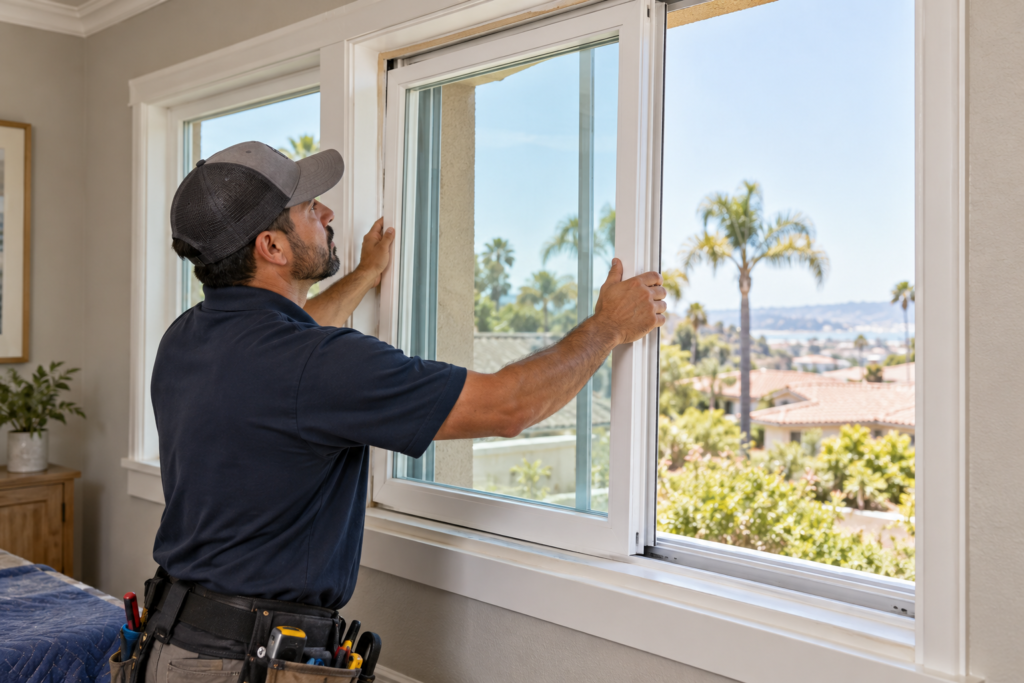
With a full-frame replacement, the crew removes more of the existing assembly, often down to the rough opening. This gives the installer a chance to inspect the framing and address rot, water intrusion, or an opening that needs to change. It also involves more labor and may require additional exterior and interior finish work.
Neither method is automatically right for every house. Ask the contractor to explain why the proposed method fits each opening. If one bidder recommends full-frame work and another recommends inserts, ask both to document the frame condition and exactly what each scope includes.
4. Condition of the opening and hidden repairs
After an old window is removed, the crew may find deteriorated wood, water damage, failed flashing, or framing that needs correction. A quote should say how concealed damage will be handled. Ask what evidence the contractor will provide, how you will approve added work, and how the extra cost will be calculated. Avoid vague language that lets a substantial change become an unpriced surprise.
5. Glass and performance options
Glass choices affect both price and comfort. Double-pane glass, low-emissivity (low-E) coatings, gas fills, laminated glass, tempered safety glass, and sound-control packages may change the cost. The right specifications depend on the opening, sun exposure, noise, safety needs, and the applicable code—not on a generic claim that one package is always best.

Ask for the product’s NFRC label and ratings. The U-factor describes how readily heat transfers through the window; a lower number generally means better insulation. The solar heat gain coefficient (SHGC) indicates how much solar heat passes through; lower values reduce solar heat gain. Have the contractor explain how the selected ratings fit your home and any applicable California energy requirements. The California Energy Commission explains these ratings and the NFRC label in its home window efficiency guide.
Do not rely on a promise that new windows will pay for themselves through energy savings. Savings vary with the old windows, installation quality, heating and cooling use, orientation, shading, and local weather. A comfort improvement may matter to you even if utility savings alone do not justify the project.
6. Access, height, and exterior finishes
Second-story openings, difficult-to-reach windows, tight work areas, landscaping, security grilles, stucco, and fragile finishes can add labor. A home with older plaster or custom trim may need careful removal and repair to preserve its appearance. Ask the estimator to inspect the actual site conditions rather than assuming every opening is equally easy to reach.
In coastal areas, consider how salt air and sun exposure affect frame finish and hardware selection. In older neighborhoods, matching the original sightlines, divided-light pattern, or exterior trim may matter as much as the glass package. If you live in a homeowners association, check its rules for colors, grids, and visible exterior changes before approving a product. These are not reasons to buy the most expensive window by default; they are details to settle before the order is placed, since custom colors and profiles can affect both cost and lead time.
How to compare window replacement quotes
Get at least three written estimates when the project is large enough to justify it. Make sure every contractor prices the same list of windows and the same product specifications. Otherwise, the lowest total may simply represent less work or a different window.

Copy-and-use window quote checklist
Before you approve an estimate, confirm that it answers these questions:
- Which openings are included? Each window should be identified by room or location, size, style, and quantity.
- What exact product is proposed? Record the manufacturer, product line, frame material, color, hardware, grids, and glass package.
- What are the performance ratings? Ask for the NFRC label or the U-factor and SHGC for the quoted configuration.
- Is the work retrofit or full-frame? The quote should state the method for each opening and explain any differences.
- What installation work is included? Look for removal, fastening, insulation, air sealing, flashing or water management, and finish work as applicable.
- What happens to the old windows? Confirm removal, hauling, and disposal.
- Are trim, paint, stucco, or siding repairs included? If not, ask who will complete them and whether they are priced separately.
- How will hidden damage be approved and priced? Get the change-order process in writing before work starts.
- Who checks permit requirements and obtains any permit? The proposal should name the responsible party and disclose fees.
- What warranties apply? Separate the manufacturer’s product warranty from the installer’s labor or workmanship warranty. Ask how to make a claim and who handles it.
- What is the project schedule? Confirm ordering lead time, expected installation days, and what could delay the work.
- What are the payment terms? The contract should explain deposits, progress payments, final payment, and what triggers each payment.
- What is excluded? Look for exclusions involving drywall, interior casing, exterior finishes, alarms, blinds, and repairs.
- Who will perform the installation? Ask whether the named company’s employees or subcontractors will do the work, and who supervises the crew.
Keep the estimates side by side and compare each line. If one bid is much lower, ask the contractor to explain the difference in product, installation method, warranty, and finish work. A low total is not a bargain if it leaves you paying for necessary repairs later.
Do replacement windows need a permit in San Diego?
Permit rules depend on the exact location and scope. “San Diego” can mean the City of San Diego, another incorporated city, or an unincorporated area of San Diego County. The authority that serves the property address sets the applicable process, so do not assume one city’s rule applies throughout the county.
Within the City of San Diego, some replacement windows in existing openings may be exempt from a building permit if specific conditions are met. The City’s current guidance says the exemption applies to qualifying detached single-dwelling units, duplexes, or townhouses when the exterior weather-resistant flashing is not modified, the rough opening is not altered, and the existing windows are not required to be fire-resistive or meet Very High Fire Hazard Severity Zone requirements. Historic resources and designated historic districts can trigger additional review. If the work does not qualify for the exemption, a same-size, same-type replacement may be eligible for a No-Plan Building Permit. Read the City’s Information Bulletin 203 and confirm the answer for your address and project before ordering.
Changing the size or location of an opening, replacing a window in a fire-hazard area, working on a historic property, or repairing structural damage can change the requirements. Ask the contractor to identify the permitting authority, the rule they are relying on, and whether the estimate includes permit fees. If a permit is required, make the contract clear about who applies and schedules inspections. Keep copies of permits and final inspection records with your home documents.
How to check a window contractor
Ask each company for its California contractor license number, then verify the status and business information through the Contractors State License Board (CSLB). Confirm that the license classification and scope fit the work being proposed. Ask for proof of insurance and, if workers will be on site, clarify workers’ compensation coverage. A referral, online review, or polished presentation does not replace a license check.
Get the complete contract before paying a deposit. Read the scope, product specifications, payment schedule, cancellation terms, warranty, start and completion expectations, and change-order procedure. Do not sign a blank or incomplete form. If the salesperson says an important promise is part of the deal, ask for it in writing.

Warning signs to slow down for
- A quote that does not identify the product or number of windows
- A contractor who will not explain the installation method
- A large price reduction that appears only after a long in-home sales visit
- Requests to pay the full amount before the work is completed
- Pressure to skip a permit check or to list the homeowner as responsible for work the contractor agreed to handle
- Unclear answers about licensing, insurance, warranties, or who will do the installation
One warning sign does not prove a contractor is dishonest, but it is a reason to pause, get answers in writing, and compare another bid.
When should you repair a window instead of replacing it?
Replacement is not the only option. A failed latch, worn weatherstripping, damaged screen, or isolated hardware issue may be repairable. Fogging between panes can indicate a failed insulated glass seal; in some window systems, replacing the glass unit may cost less than replacing the entire frame. On the other hand, widespread rot, repeated leaks, frames that no longer operate safely, or a renovation that changes the opening may call for broader work.

Ask a qualified window professional to identify the actual failure and provide both repair and replacement options when practical. Compare the expected service life, appearance, performance, and cost of each option. If water is entering the wall, find and correct the source; installing a new window without addressing the underlying leak can repeat the problem.
A practical next step
Make a simple window schedule before requesting estimates. List each room, approximate width and height, window style, operating problem, and any visible damage. Take photos from inside and outside where safe. Note which windows face strong afternoon sun, street noise, or coastal exposure, and whether your home is in an HOA or historic area. The contractor still needs to measure every opening, but this information helps you explain the project and compare proposals.
When you are ready, request written estimates from qualified local contractors and ask each one to use the same window schedule. Compare the specifications, installation plan, finish work, permit responsibility, warranty, and total—not just the headline price. Use our remodeling quote comparison checklist, San Diego planning and permits guide, and San Diego remodeling budgets guide as you review proposals. That is the clearest way to understand window replacement costs in San Diego and choose a scope that fits your home and budget.
Planning estimates and permit guidance can change. Prices vary by product, opening, project conditions, and contractor. Verify current permit requirements with the agency serving your address and request a written, project-specific estimate before approving work.


Discussion