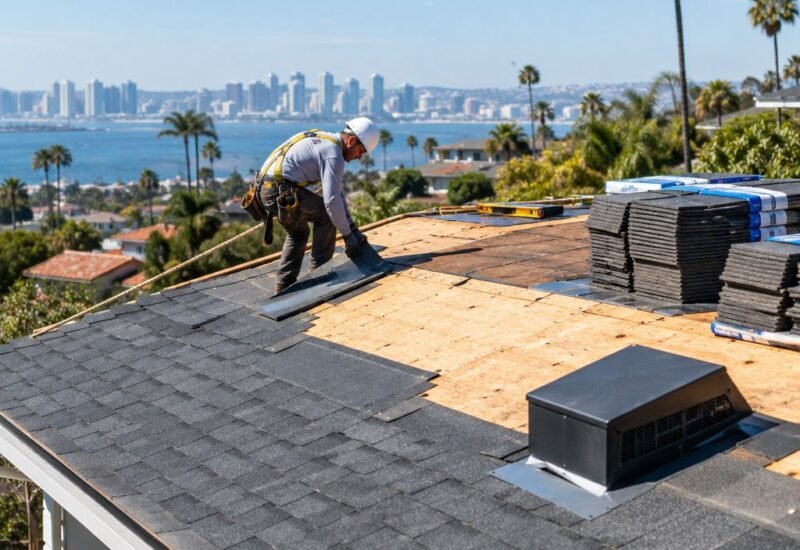

What Pool Coping Replacement Costs in San Diego
For a straightforward project, pool coping replacement cost in San Diego commonly starts around $40 to $80 per linear foot installed. A typical pool with 60 to 80 linear feet of coping may therefore begin near $2,400 to $6,400. That planning range can rise when the crew finds bond-beam damage, difficult access, curved geometry, premium stone, failing waterline tile, or deck work that must be rebuilt around the pool edge.
Cost methodology: These are broad planning estimates reviewed in October 2026 using publicly available cost references and regional scope considerations. They are not contractor-specific pricing or a quote; actual costs depend on site conditions, selections, and the written scope confirmed during a project meeting.
Pool coping is the finished cap at the top edge of a pool shell. It creates a comfortable transition between water and deck, directs splash water away from the pool, protects the beam beneath it, and helps define the pool’s appearance. Because coping ties into the pool structure and adjacent deck, replacement is more involved than simply swapping a few loose pieces.
What a Coping Replacement Scope Usually Includes
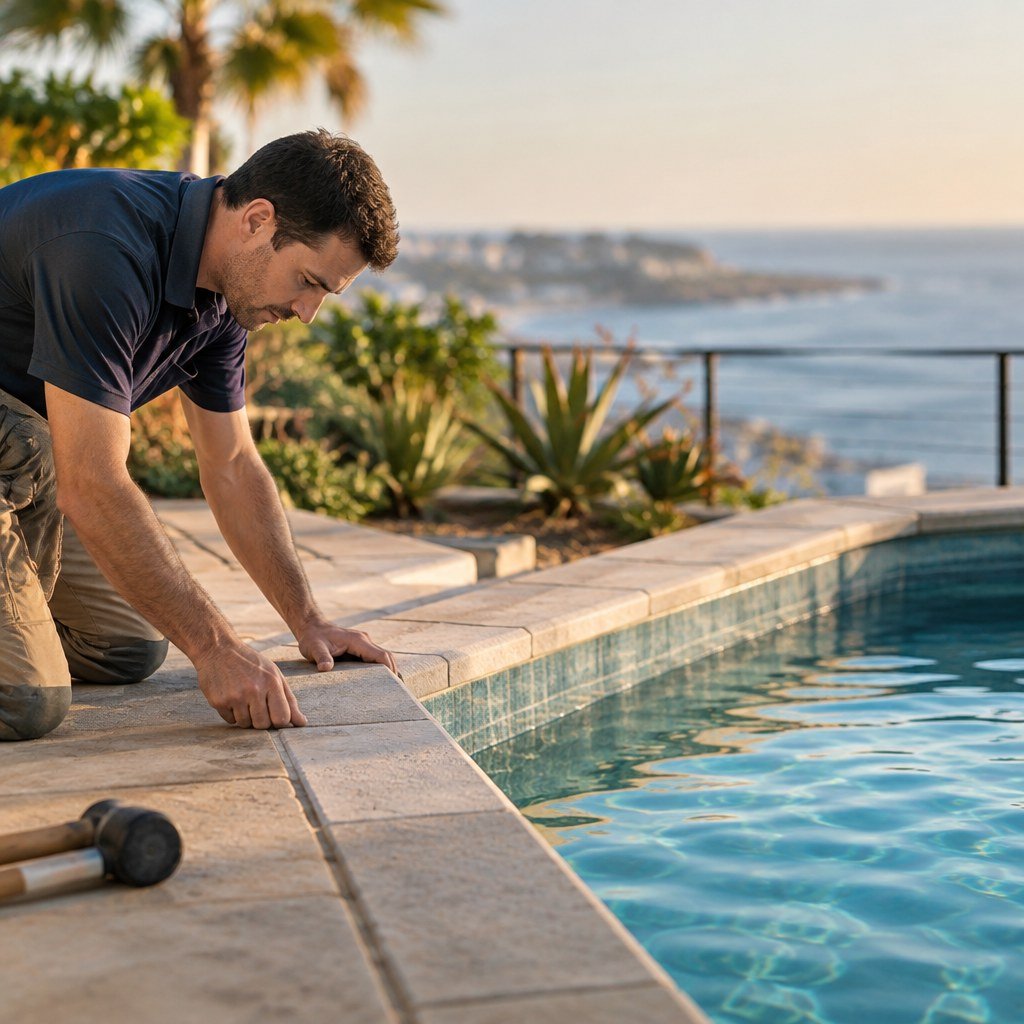
A clear proposal should describe the work from demolition through cleanup. Basic coping replacement generally includes carefully removing old coping, disposing of debris, preparing the exposed edge, setting the new material, grouting or mortaring joints where appropriate, and cleaning the work area.
However, “replacement” can mean very different scopes. One homeowner may only need a few cracked precast pieces reset. Another may need the entire perimeter removed, the bond beam repaired, waterline tile replaced, and the first section of deck resurfaced to make the transition look intentional.
- Removal and disposal of existing coping materials
- Inspection and preparation of the pool edge or bond beam
- New coping material, setting bed, cuts, and joint treatment
- Expansion-joint work between the coping and deck when included
- Limited cleanup and protection of nearby finishes
Items often excluded from a base number include draining and refilling, waterline tile, deck demolition, structural concrete repairs, plumbing corrections, pool plaster, landscaping restoration, and extensive access accommodations. Ask for exclusions in writing so a lower initial price does not obscure necessary follow-on work.
Materials: Price, Feel, and Upkeep
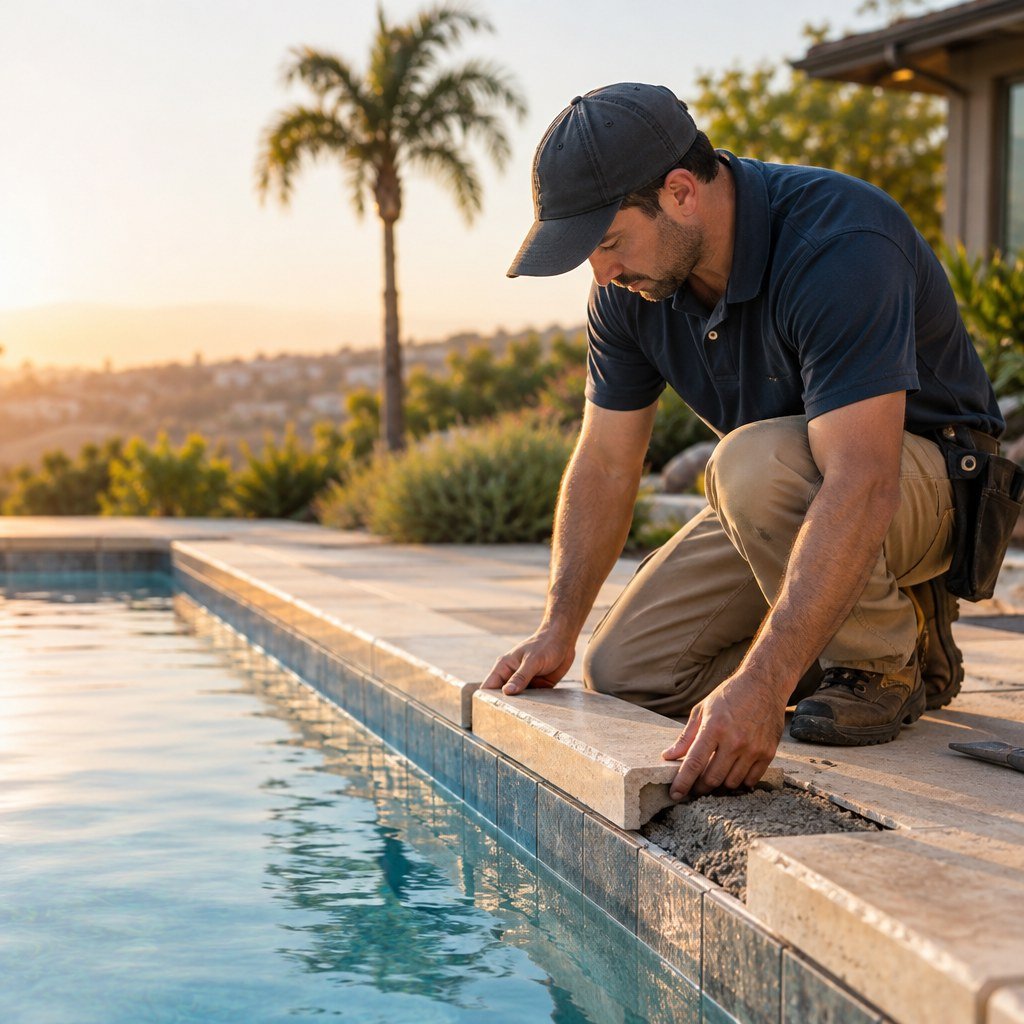
Material choice affects both the installed price and how the pool feels on a hot San Diego afternoon. The right answer is usually the one that works with the deck, the home’s style, bare-foot comfort, maintenance expectations, and the repair condition of the pool perimeter.
Light-colored, textured finishes can be more comfortable underfoot and offer better traction, but no surface is automatically slip-proof. Wet feet, sunscreen residue, algae, shade, drainage, and finish texture all matter. Stone may need sealing, while concrete and brick benefit from routine cleaning and joint checks.

The Biggest Cost Drivers
Linear footage is the starting point, not the whole budget. Rectangular pools with open access typically allow more efficient cutting, staging, and installation. Freeform pools, tight side yards, elevated properties, and landscape obstacles can increase labor time and handling.
Structural condition
Cracked or deteriorated bond beam concrete can turn a finish project into a repair project. That work should be evaluated before new coping is installed.
Shape and cuts
Curves, radii, raised spas, steps, and unusual corners require more measuring, fitting, and material cutting than straight runs.
Connected finishes
Waterline tile, deck edges, plaster, and expansion joints may need coordinated work to avoid a mismatched finished appearance.
Repair or Full Replacement?
Repair can make sense when damage is isolated, matching material is available, and the surrounding beam remains sound. A few loose pieces, minor joint failure, or a single chipped unit may not justify rebuilding the full perimeter. The key is identifying why the damage occurred before resetting material.
Full replacement is often the better long-term choice when cracking repeats around the pool, coping has widespread movement, the style is outdated, multiple repairs are visible, or the deck and waterline tile are already scheduled for renovation. It also gives the installer a complete view of the pool edge rather than hiding issues beneath scattered patches.
The expansion joint deserves special attention. It is the flexible separation between coping and deck that helps accommodate movement. Hard mortar where a proper flexible joint belongs can crack, allow water intrusion, or transfer stress between surfaces. A site evaluation should also examine the bond beam, which supports the coping and can reveal structural or moisture-related concerns.

Coordinate Coping With Deck Resurfacing
Coping replacement is not the same as whole-deck resurfacing. Coping addresses the narrow cap around the waterline; deck resurfacing renews the larger walking surface around the pool. They can be separate projects, but the sequence matters when both are planned.
In many renovations, coping is addressed before a new deck coating or overlay so the final deck finish can meet the coping cleanly. If the deck is already cracked, settled, or being redesigned, ask whether removing and replacing a perimeter strip is more sensible than trying to preserve every existing edge. The answer depends on the deck system, drainage, elevation, and desired finished height.
Do not assume a new coping profile will fit the old deck elevation. A thicker stone, a bullnose edge, or cantilevered concrete can affect drainage and the visual line at door thresholds, patio areas, and raised features.

Get a Scope Built Around Your Pool
Schedule a meeting to discuss the job and receive a project-specific written estimate, not an instant online quote.
Timeline, Permits, and Smart Buying Questions
Once materials are available, a basic replacement may take several working days. Larger scopes take longer because demolition, concrete repair, tile coordination, curing, weather, and deck work create dependencies. Your contractor should explain when the pool can remain filled, when it may need to be drained, and when normal use can resume.
Permit requirements depend on the project scope and local jurisdiction. Structural changes, electrical work, plumbing changes, safety-barrier alterations, and major renovations may trigger requirements that a simple finish replacement does not. Verify the current rules with the relevant City of San Diego, County, or local permitting authority before work begins.
Buyer checklist
- Measure the pool perimeter and note spas, curves, steps, and raised walls.
- Ask whether the bond beam and expansion joint are included in the inspection.
- Compare material thickness, finish texture, heat behavior, and maintenance needs.
- Confirm how waterline tile and deck edges will look after completion.
- Request written inclusions, exclusions, allowances, schedule, and warranty terms.
Frequently Asked Questions
Can coping be replaced without resurfacing the pool?
Often, yes. Coping can be replaced while keeping existing plaster, provided the scope does not require plaster removal or waterline tile replacement. The installer should explain how the pool interior and tile line will be protected.
Does a pool need to be drained for coping replacement?
Not always. The answer depends on the construction method, condition of the pool edge, waterline tile work, and safety of the planned repairs. Confirm this before scheduling.
Why is natural stone coping usually more expensive?
Stone pricing can reflect material grade, thickness, finishing, sealing, freight, handling, cutting, and installation complexity. Its variation is part of the appeal, but it requires thoughtful selection.
Can new coping match an old deck?
It can complement an old deck, but an exact match may not be realistic when original materials are discontinued or weathered. Samples viewed outdoors are the best way to judge color and texture.
What is the most important inspection item?
The condition of the bond beam and expansion joint is especially important. New coping should not be used to conceal movement, cracking, or moisture problems that need correction first.
Bottom line: Plan for roughly $40 to $80 per linear foot for straightforward pool coping replacement in San Diego, then refine the budget based on material, pool shape, beam condition, access, and connected tile or deck work. The best next step is an on-site review that turns those variables into a written scope.
Schedule a project meeting to discuss your pool edge, material options, and a project-specific written estimate.