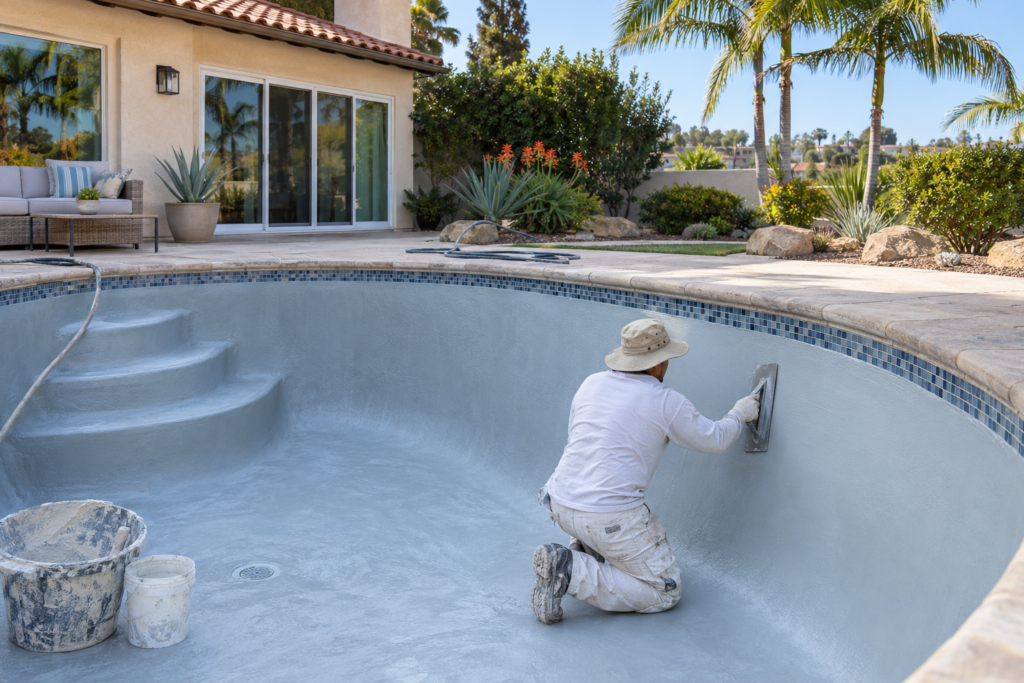
A worn pool finish can feel rough underfoot, stain easily or expose the concrete shell. Resurfacing renews the pool’s interior finish, but the cost depends on finish choice, surface area, shell condition and what needs attention while the pool is drained.
Quick answer: For a typical San Diego concrete pool, plan roughly $7,000–$12,000 for standard plaster, $9,000–$16,000 for a quartz finish, and $12,000–$20,000+ for a pebble finish. Repairs, waterline tile, access limitations, startup service and a larger or unusually shaped pool can raise the total. These are broad 2026 planning ranges, not a property-specific quote.
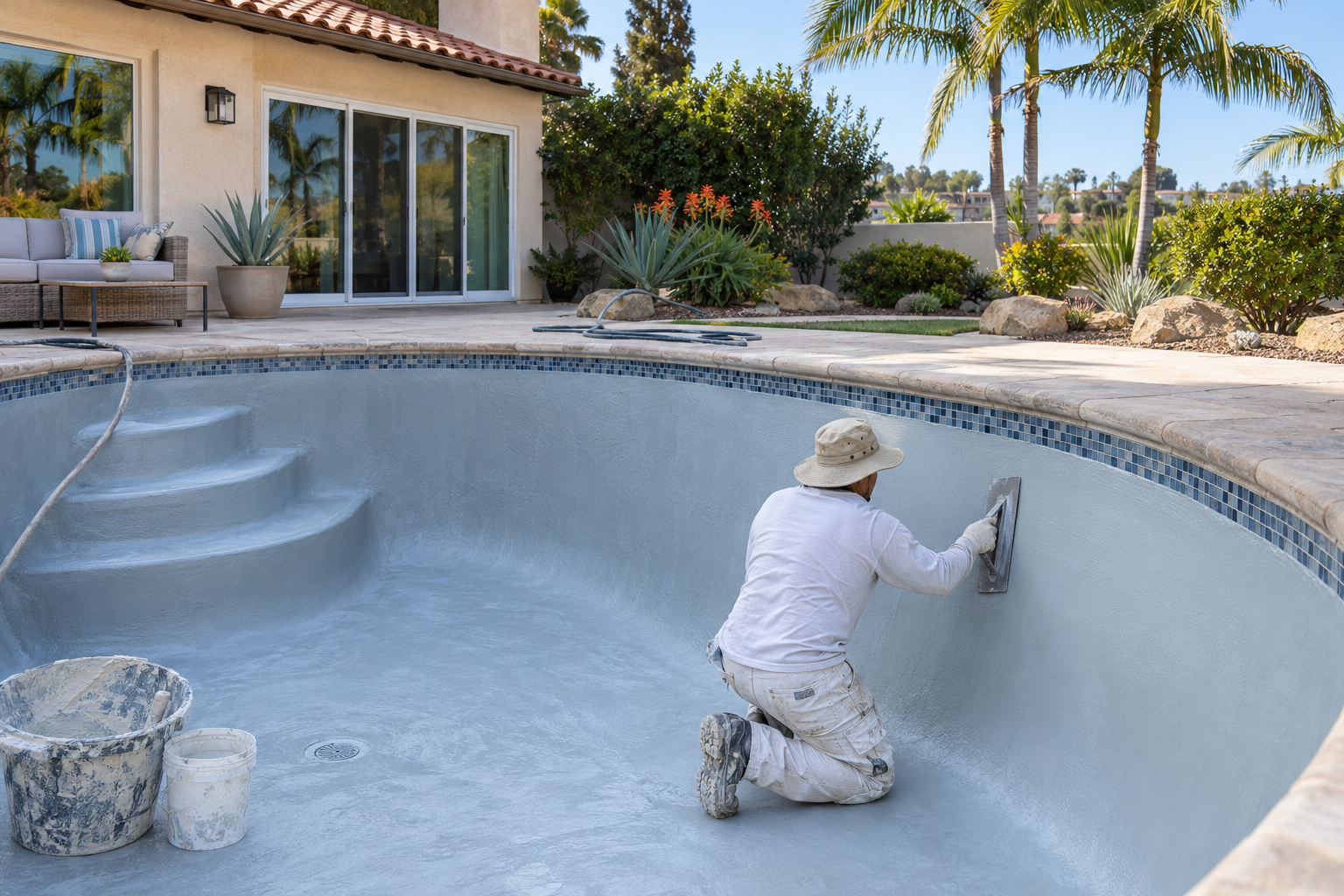
Pool resurfacing costs by finish
Finish prices are hard to compare without the pool’s interior area and the work included in the bid. The ranges below are for early budgeting for a common residential concrete pool in the San Diego area.
- Standard white plaster: $7,000–$12,000. Usually the lowest-cost conventional finish. Color and texture options are limited compared with aggregate finishes, and water chemistry needs careful management.
- Quartz aggregate: $9,000–$16,000. Quartz crystals add color and a more varied appearance. Final cost varies with product selection, surface area and prep.
- Pebble or premium aggregate: $12,000–$20,000+. Exposed aggregate creates a textured look and often carries a higher installed price. Premium blends, complex shapes and repairs can exceed this range.
- Tile: Waterline tile replacement on a typical pool can add roughly $2,400–$6,000, depending on perimeter, tile and prep. A full tile interior is a specialty upgrade and can run about $20–$50 per square foot of interior surface—often tens of thousands of dollars. Keep tile as its own line item so it is not confused with plaster or aggregate resurfacing.
Some estimates include drain-down, surface removal or preparation, application, cleanup and startup; others list some work separately. Compare the complete installed scope, not just the finish material name.
What is included in resurfacing?
A typical project may include safely draining the pool, preparing the existing shell, addressing minor defects, applying the selected finish, refilling the pool and starting the water-care process. The exact method depends on the existing surface and the contractor’s system.
Ask whether the estimate includes:
- Drain, disposal and any required water management.
- Removal or treatment of the old finish and preparation of the shell.
- Crack repair, hollow or delaminated areas, and other discovered damage.
- New interior finish, steps, benches and tanning ledges.
- Waterline tile, coping and deck work, if desired.
- Refill coordination, startup chemicals, brushing instructions and follow-up visits.
Pool interior finish, coping and deck are distinct scopes. If your deck is cracked or the coping is loose, ask for those items to be listed separately so you can decide what to do now and what can wait. See our guides to pool deck resurfacing versus replacement and pool coping replacement for those adjacent scopes.
Why pool resurfacing estimates differ
Pool size and shape
Contractors price the surface that receives the finish, not only the pool’s length and width. Deep ends, curves, steps, benches and raised features increase the area and labor. Bring approximate dimensions if you have them, but expect the contractor to confirm them during the site visit.
Condition of the shell
Small surface preparation needs are different from structural cracks, water intrusion or widespread delamination. Some hidden conditions become visible only after draining and removing loose material. Ask how unforeseen repairs will be documented and approved before extra work begins.
Finish selection and color
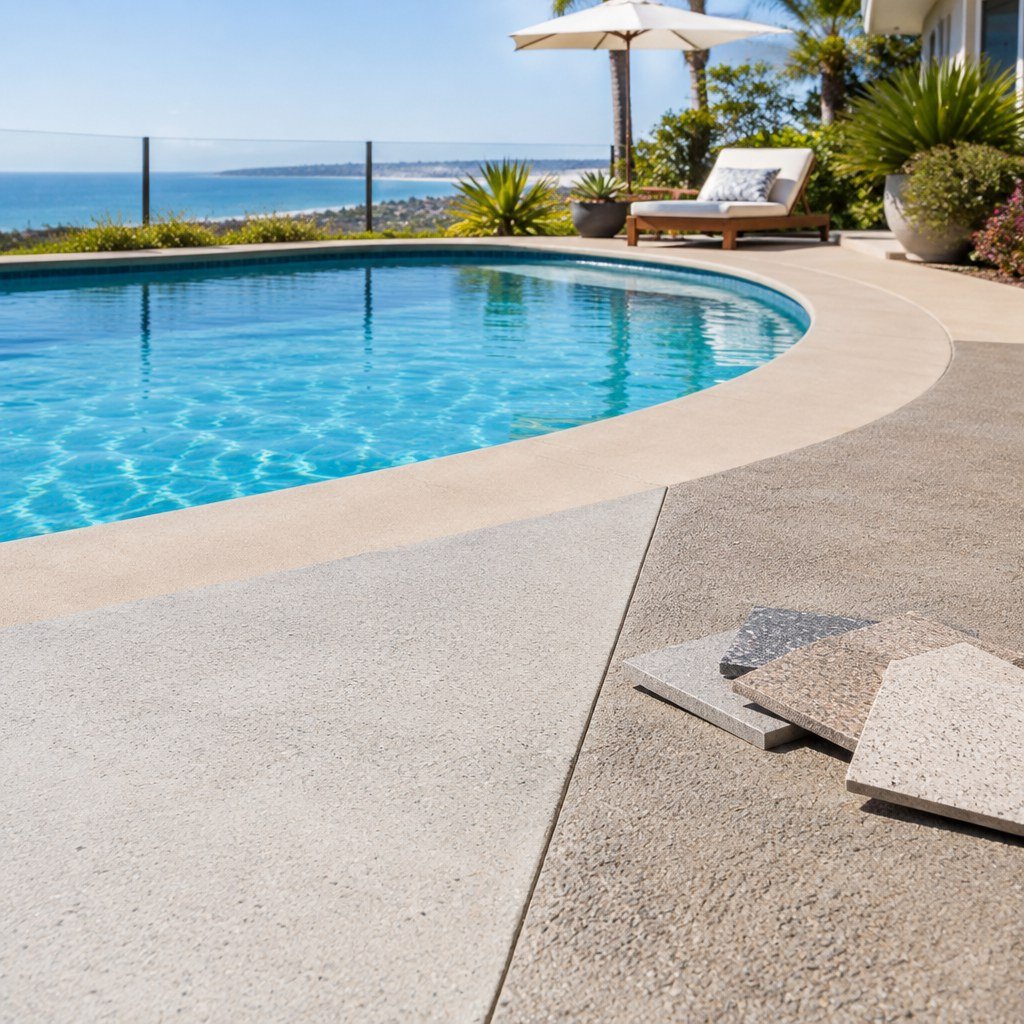
Standard plaster, quartz and pebble finishes have different materials, installation steps, textures and maintenance expectations. Look at physical samples in sunlight and ask how the finish may vary in color when submerged. A darker or patterned finish can look different depending on depth and light.
Tile, coping and equipment work
Replacing waterline tile, repairing coping, moving fittings or addressing light niches can expand the project. Equipment replacement and deck resurfacing are normally separate from the pool’s interior finish. Get a clear line-item price for every added scope.
How to choose a pool finish
Think about comfort, appearance, maintenance and long-term ownership—not just the initial price. Ask the installer to explain expected service life for the specific product under proper water balance, the care routine during startup and what conditions affect the warranty. Lifespan figures vary by product, installation quality and water chemistry, so get the product documentation and maintenance instructions in writing.
California requires appropriate contractor licensing for many pool construction and remodeling projects. Verify the company and license classification with the California Contractors State License Board. Ask who handles required permits and safe drain-water disposal. Requirements can vary with the work and jurisdiction; check with the City of San Diego Development Services or your local agency when applicable.
Questions to ask before signing
- What finish product and color blend are specified?
- Which preparation and shell repairs are included, and how are hidden conditions priced?
- Are tile, coping, fittings and deck excluded or separately itemized?
- Who manages draining, refill and startup water care?
- How many days will the pool be out of service, and what weather or curing conditions affect timing?
- What warranty applies to workmanship and materials, and what maintenance is required?

Frequently asked questions
How do I know when my pool needs resurfacing?
Rough patches, persistent stains, flaking, exposed aggregate or a finish that is difficult to keep clean can signal wear. These symptoms can have other causes too, so have a pool professional inspect the finish and shell before deciding on a replacement.
How long does resurfacing take?
The work itself may take several days, but draining, repairs, curing, refill and startup can extend the time before normal swimming resumes. Ask for the expected sequence and the conditions that can shift it.
Does resurfacing include the pool deck?
No. The interior finish, coping and surrounding deck are different surfaces and are commonly estimated separately. Make sure the written scope names each one.
Get a pool resurfacing estimate
The best way to compare options is to review the pool in person, confirm its measurements and existing condition, and decide which items belong in the project. Schedule an on-site appointment for a free project estimate. We’ll meet with you and prepare a written scope after reviewing the pool; this is an appointment, not an instant online quote.