Outdoor Lighting Installation Cost in San Diego: The Quick Answer
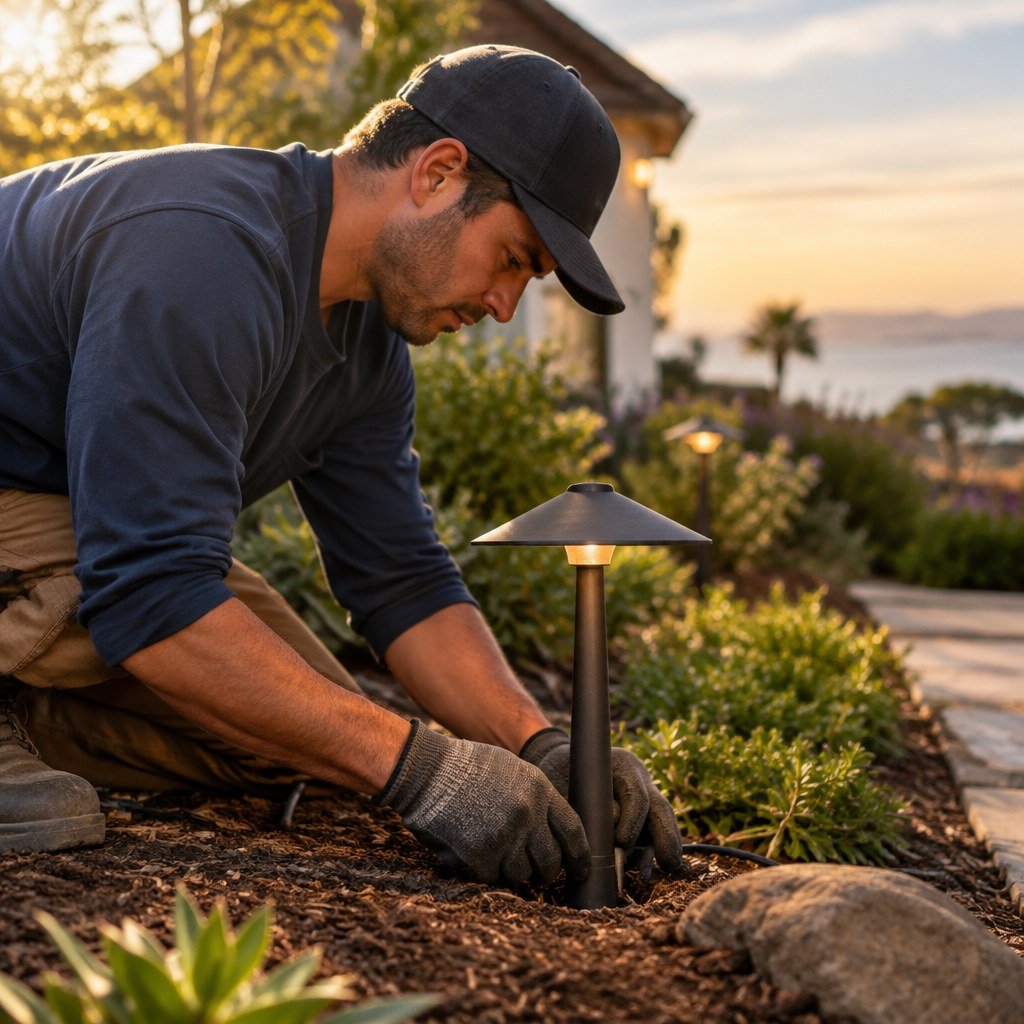
For most homeowners, the outdoor lighting installation cost in San Diego is about $1,500 to $6,000 for a professionally installed low-voltage landscape lighting system with roughly 10 to 20 fixtures. Many typical fixture-and-system scopes also land in a broader planning range of $1,700 to $5,700. Your final price depends on fixture quality, wire runs, transformer capacity, site access, controls, and whether new line-voltage electrical work is needed.
A simple project might light a front path, a few planting areas, and a patio edge. A larger design may include uplights for mature palms, wall washing, step lights, multiple zones, and smart controls. The best approach is to plan the whole system before pricing individual fixtures, so the transformer, wire, and layout can support the finished design.
Key Takeaways
- Low-voltage landscape lighting is not the same as adding a new household electrical circuit.
- Fixture count matters, but wire routing, trenching, access, and controls can change the installed price substantially.
- Path lights, uplights, and wall washes serve different jobs and should be chosen as a coordinated layout.
- Solar lights and permanent holiday or event lighting are separate products with different performance and installation needs.
- Careful aiming helps reduce glare, light trespass, wasted energy, and unnecessary nighttime brightness.
What an Outdoor Lighting Estimate Usually Includes
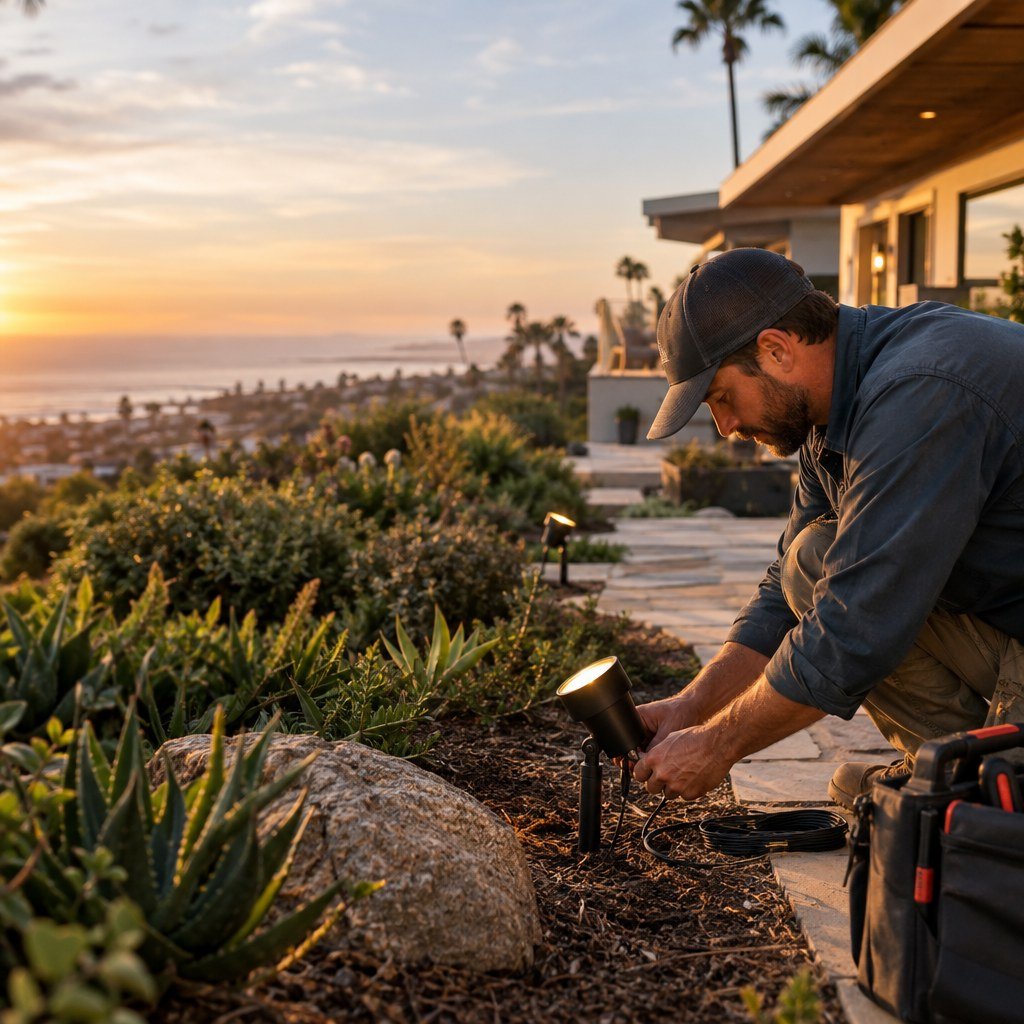
A complete low-voltage estimate generally includes fixtures, a transformer, low-voltage cable, connectors, mounting hardware, layout work, installation labor, aiming, and basic programming. It may also include a timer, photocell, or app-based smart control. Some proposals include minor trenching or concealment of cable, while others price difficult digging separately.
Ask whether fixture lamps or integrated LED components are included, how the system will be zoned, and whether the transformer has room for future additions. A less expensive quote can look attractive until it leaves out a larger transformer, wire protection, repair of disturbed landscape areas, or final nighttime adjustments.
Fixture Choices and Typical Budget Priorities
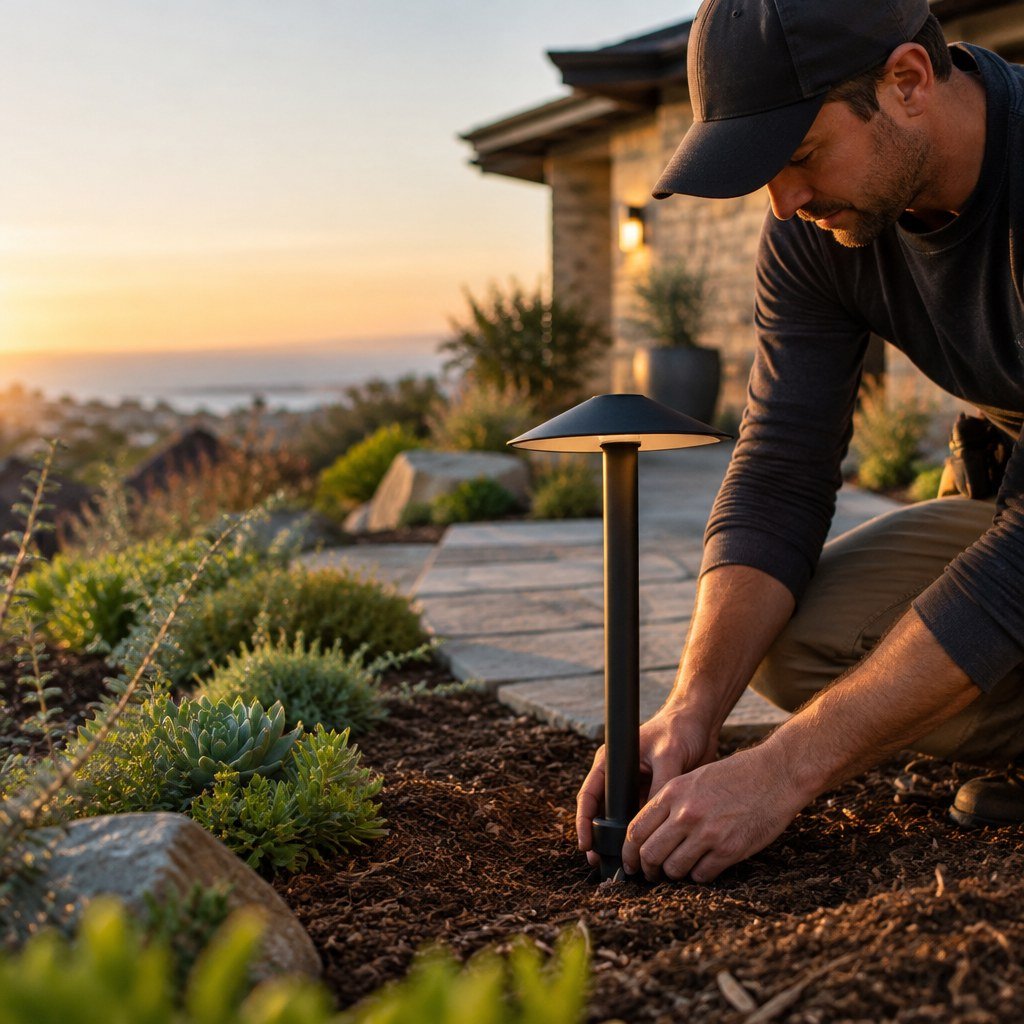
Fixtures influence the appearance, longevity, and maintenance needs of the system. Rather than treating every light as interchangeable, match the fixture to the job. Path lights mark circulation routes, uplights bring dimension to trees and architecture, and wall washes provide a soft, broad layer of illumination.
Path lights
Best for walkways, entries, and garden transitions. Spacing matters more than simply adding the highest possible fixture count.
Uplights
Useful for palms, specimen trees, columns, and textured walls. Adjustable aiming is important as plants mature.
Wall washes
A good option for soft architectural emphasis without the sharp hotspots often caused by poorly aimed spotlights.
Metal fixtures generally cost more upfront than lightweight alternatives, but material quality matters in coastal neighborhoods where salt air can be especially hard on finishes and connections. The lowest fixture price is not always the lowest long-term ownership cost.
Wiring, Transformers, and Electrical Work
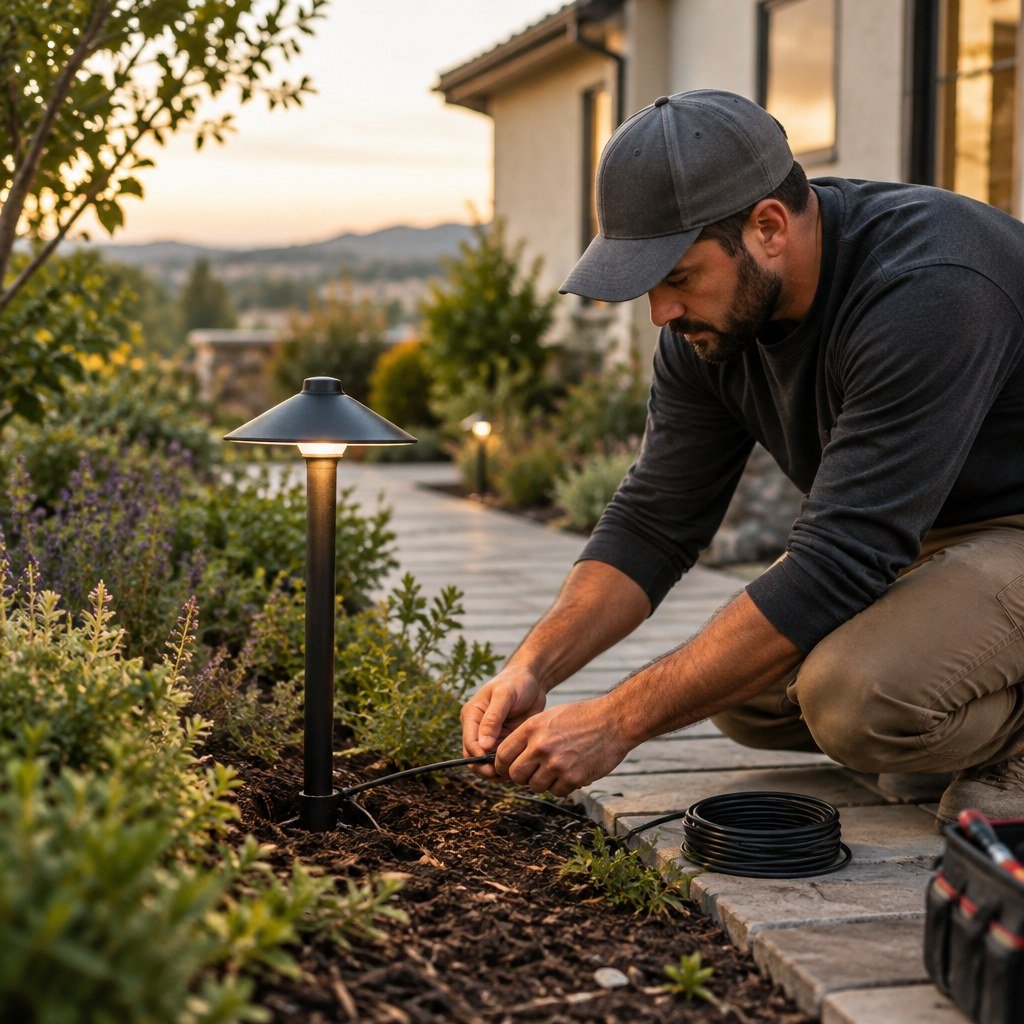
Most landscape systems use low-voltage wiring connected to a transformer. The transformer converts household power to a lower voltage for the outdoor fixtures. Its size must account for the fixture load, cable distance, voltage drop, and reasonable room for future expansion.
Long cable runs, several branches, crossing hardscape, and protected routing can increase labor. Existing landscaping also matters. Mature roots, dense planting, decorative rock, retaining walls, irrigation lines, and narrow side yards can all make access slower and more delicate.
Adding a dedicated line-voltage circuit, installing new exterior receptacles, or changing electrical equipment is different from installing the low-voltage system itself. That work should be clearly identified in the scope. Requirements can depend on the property, jurisdiction, and project details, so an installer should confirm what applies before work begins.
Plan the System Before Buying Fixtures
Use this request to schedule a meeting to discuss your project and receive a written estimate, not an instant online quote.
Layout Decisions That Protect Your Budget
A strong layout begins with priorities: safe arrival, clear walking routes, usable entertaining space, and a few focal points. Start with the front entry and primary path, then add patio, pool, side-yard, or backyard zones as the budget allows. This approach prevents a scattered collection of lights that does not feel intentional.
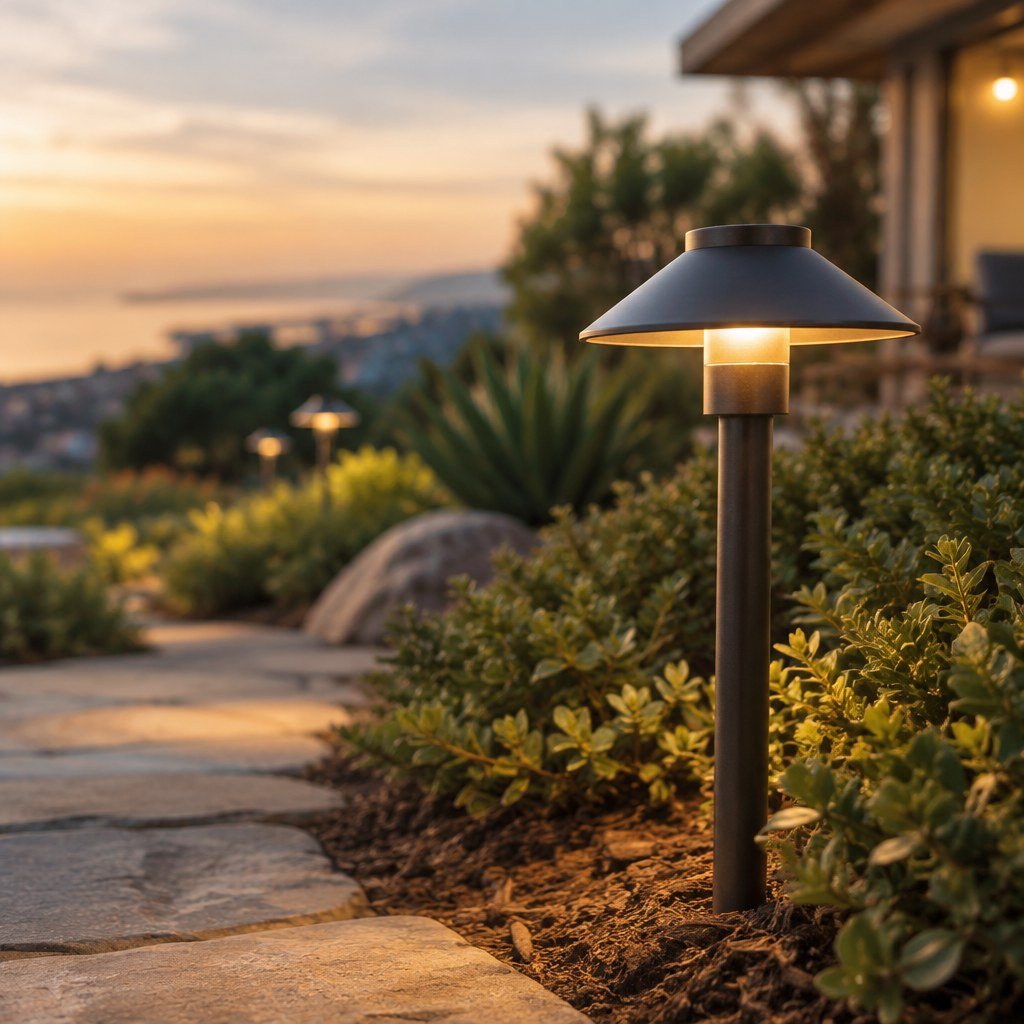
Think about sightlines from indoors, neighboring homes, and the street. Shielded fixtures and deliberate aiming help keep light on the path, tree, or wall instead of shining into bedroom windows. Warm, restrained illumination usually feels more comfortable than a property filled with bright points of light.
For example, a homeowner might budget about $3,800 for an assumed 14-fixture low-voltage project: eight path lights, four uplights, two wall-wash fixtures, a properly sized transformer, cable, basic timer control, and installation in accessible planted areas. That is a planning example, not a universal price. Extensive trenching, premium fixtures, hardscape drilling, or electrical upgrades could push the total higher.

Timeline, Maintenance, and Common Exclusions
After design decisions are made, a straightforward low-voltage installation can often be completed quickly, while larger properties or projects coordinated with landscape construction may take longer. Final nighttime aiming should not be skipped; daylight installation alone cannot show whether beams create glare or uneven coverage.
Plan for occasional maintenance. Fixtures may need cleaning, lenses may collect debris, plants can block light, and connections should be checked when a zone stops working. Keep mulch below fixture heads and adjust uplights as trees grow. Smart controls may also need seasonal schedule updates.
Common exclusions include landscape restoration beyond minor disturbance, masonry work, major trenching, irrigation repairs, electrical panel upgrades, permit-related services where required, and specialty lighting for holidays or events. Solar fixtures are also not equivalent to a professionally wired low-voltage system; their output, charging, placement flexibility, and reliability are different.
Buyer Checklist for a Clear Written Estimate
- Confirm the fixture count, fixture type, finish, and proposed locations.
- Ask whether the transformer has capacity for future fixtures.
- Clarify wire routing, trenching assumptions, and hardscape access.
- Review control options, including timers, photocells, zones, and smart scheduling.
- Request a nighttime aiming and final walkthrough process.
- Identify exclusions before comparing proposals side by side.
Frequently Asked Questions
How much does each outdoor light cost to install?
Per-fixture pricing can be useful for rough comparisons, but it does not capture the cost of the transformer, cable, controls, routing, and labor needed to make the system work as one whole design. Full-system planning is usually more accurate.
Is low-voltage lighting enough for a San Diego yard?
For many paths, planting beds, patios, and architectural accents, yes. A well-designed low-voltage system can provide effective guidance and atmosphere. Areas needing higher-output security lighting or new household circuits may require a separate electrical scope.
Do smart controls add much to the price?
They can add cost, but they may simplify scheduling and seasonal changes. The value depends on whether you want zones, app access, automation, or simple dusk-to-dawn operation. Basic timers remain practical for many smaller systems.
Can lighting be installed after landscaping is complete?
Yes, although finished hardscape, mature roots, delicate planting, and irrigation can make access more complex. Coordinating lighting during a landscape remodel may reduce disruption, but retrofit installation remains common.
How can I avoid light trespass?
Choose shielded fixtures, use lower output where possible, aim beams carefully, and inspect the property after dark from the street and neighboring viewpoints. Good outdoor lighting reveals useful surfaces without becoming a source of glare.
Methodology and Bottom Line
These broad planning ranges were reviewed in October 2026 and are not guaranteed prices. Every property has different access, electrical conditions, fixture preferences, and landscape constraints, so an on-site meeting is needed for a written estimate.
The practical bottom line: budget for a complete layout, not just a row of fixtures. A balanced low-voltage system can improve safety, highlight the parts of your property you enjoy most, and stay flexible for future additions when it is designed with wiring, transformer capacity, and nighttime comfort in mind.