QUICK ANSWER
For most San Diego homes, a practical low-maintenance backyard combines a usable patio, smaller planting beds with plants suited to the site, manageable irrigation, and shade where you actually sit. Keep lawn only where it serves a purpose. Prioritize drainage and access before decorative upgrades.
- Less mowing: reduce unused lawn instead of automatically removing all of it.
- Less pruning: choose plants for their mature size, not their nursery size.
- Easier cleaning: simplify borders and choose surfaces around how you use the yard.
- Fewer surprises: plan runoff, utilities, and permit responsibilities before installation.
These low-maintenance backyard ideas focus on reducing recurring chores without sacrificing outdoor meals, play space, or a comfortable place to relax. Use the comparisons below to decide which changes solve your biggest maintenance problem first.
What Makes a Backyard Easier to Maintain in San Diego?
A backyard should give you more time to relax, not create another demanding chore list. San Diego’s dry summers, bright sun, coastal conditions, and occasional heavy rain can be hard on lawns, wood, paint, and poorly planned drainage. A thoughtful design helps your yard stay attractive while reducing regular upkeep.
Lower maintenance does not mean a bare yard. You can still create a welcoming space for meals, children, pets, gardening, or entertaining. The goal is to choose materials and plants that suit your location instead of forcing the space to behave like a different climate.
Maintenance also affects long-term remodeling costs. Replacing thirsty turf, repairing rotting wood, or correcting water that drains toward your home can cost more than planning those details at the beginning. A simple design is often easier to inspect, clean, and repair.
Start With a Practical Backyard Plan
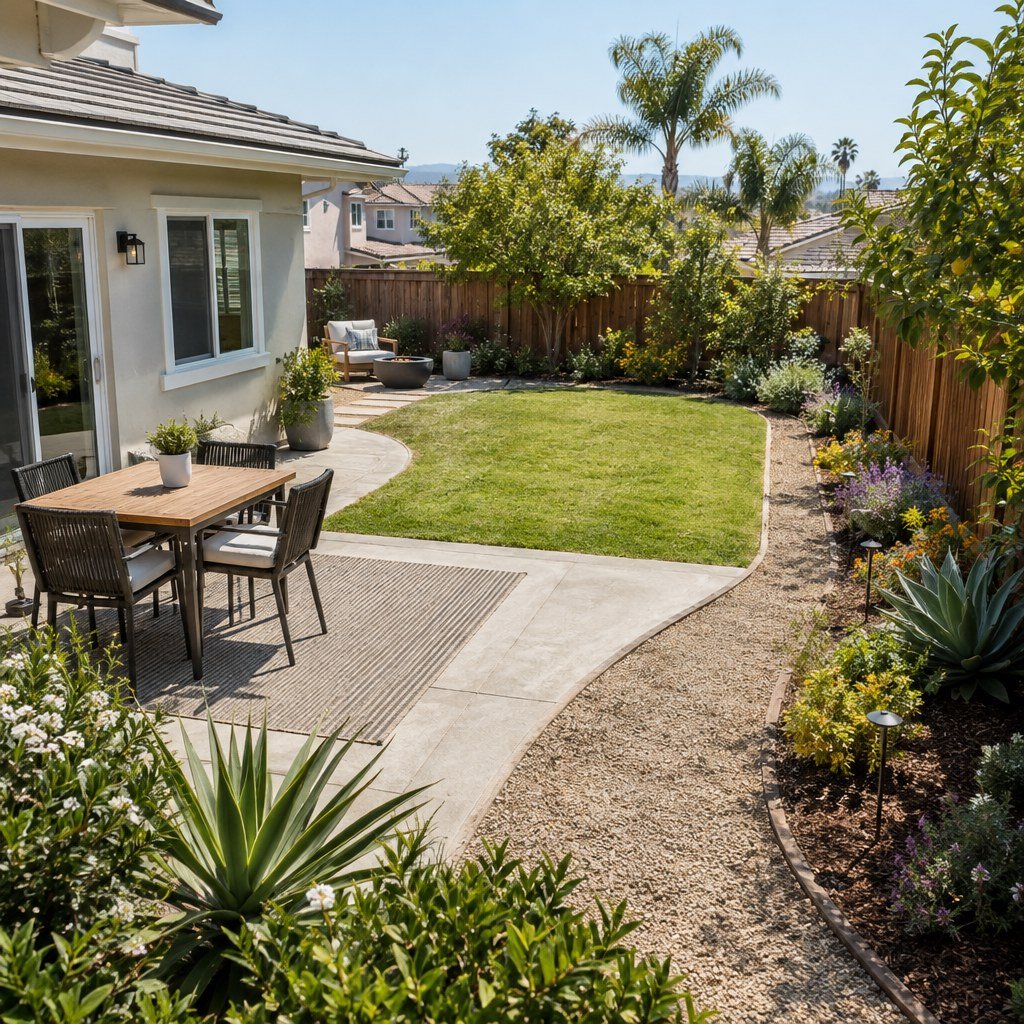
Before choosing pavers or plants, divide your yard into activity zones. You might need a dining area near the kitchen, a small play or pet area, a planting bed, and a quiet seating corner. Give each zone a clear purpose so you do not spend money covering the entire yard with materials you rarely use. For more layout inspiration, see our Backyard & Outdoor Living guide.
Study sun, wind, and drainage
Notice where your yard receives morning, midday, and afternoon sun. Also look for strong wind, standing water, and slopes. These observations help you place shade structures, seating, plants, and surfaces more effectively. Take a few photos at different times of day and after rain, then mark the observations on your sketch. That gives you a more reliable planning record than choosing locations from a single quick visit.
Check where roof runoff and irrigation water travel during rain. Hardscape is the term for nonplant surfaces such as concrete, pavers, and gravel. Hardscape should be planned with drainage in mind, because adding more impermeable surface can change where water flows.
Decide what you want to maintain
Make a short list of tasks you are willing to do each month. If mowing is the main problem, reduce or remove lawn. If pruning is frustrating, choose plants that stay appropriate for the available space. If weeds are the concern, use carefully installed mulch, ground cover, or a defined paved area.
Which Patio and Path Surfaces Are Easiest to Maintain?
Patios, walkways, and seating areas can reduce the amount of planting that needs regular care, but each material has trade-offs. Concrete offers a relatively continuous surface and can be easy to sweep. Pavers allow individual pieces to be replaced if damage occurs, though joints can collect weeds and may need occasional attention. Compare the trade-offs in our guide to concrete and hardscaping options.
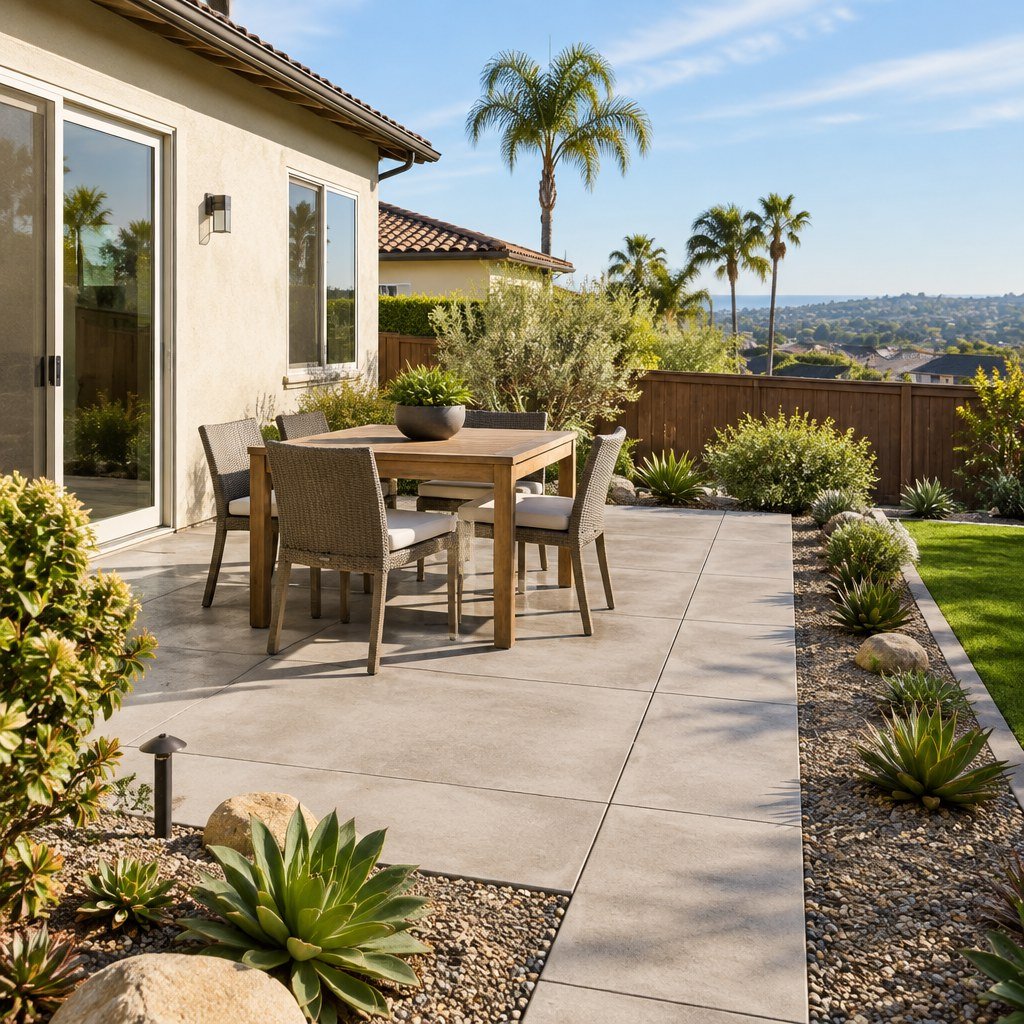
Decomposed granite, gravel, or similar loose materials can suit informal paths and seating areas. They may shift, spread, or collect leaves, so use stable edging and plan for periodic raking. Avoid choosing a surface based only on appearance. Consider heat, glare, drainage, accessibility, and how comfortable it will be under bare feet.
For a low-maintenance entertaining area, keep the shape simple and limit unnecessary borders, steps, and narrow planting strips. Fewer transitions mean fewer places for weeds, debris, and irrigation problems to develop.
Compare surfaces by the work they leave you with
No surface eliminates upkeep. Use this table to compare everyday care and suitability; installation price depends on preparation, access, drainage, and finish.
| Surface | Best fit | Routine care | Main trade-off |
|---|---|---|---|
| Concrete | Dining areas and straightforward paths | Sweep, clean spills, inspect cracks; follow finish-care instructions | Crack repairs can remain visible |
| Pavers | Patios where replacing individual pieces is useful | Clear joints, maintain joint material, address settling | More joints and edges to maintain |
| Gravel or decomposed granite | Informal seating corners and suitable low-traffic paths | Rake, remove leaves, replenish displaced material | Loose material can track indoors and be difficult for small wheels |
| Mulched planting beds | Garden borders outside primary walking routes | Weed, replenish mulch, prune plants as needed | Not a substitute for a firm walking or dining surface |
Choose for the task: a firm, even patio is usually more useful under dining chairs than loose gravel. A gravel corner may work well for occasional seating, but becomes a chore beneath a tree that drops lots of small leaves. For walkers, wheelchairs, or strollers, discuss a stable route and suitable transitions before selecting materials.
Drainage check: ordinary pavers are not automatically a permeable paving system. Ask how the complete surface, base, soil, and drainage design will handle water.
How Do You Create a Water-Wise Garden Without Constant Pruning?
Replacing traditional lawn with a water-wise landscape can reduce mowing and help you use water more intentionally. However, “low-water” does not mean “no-water.” New plants need appropriate establishment care, and every plant still needs the right location and irrigation.
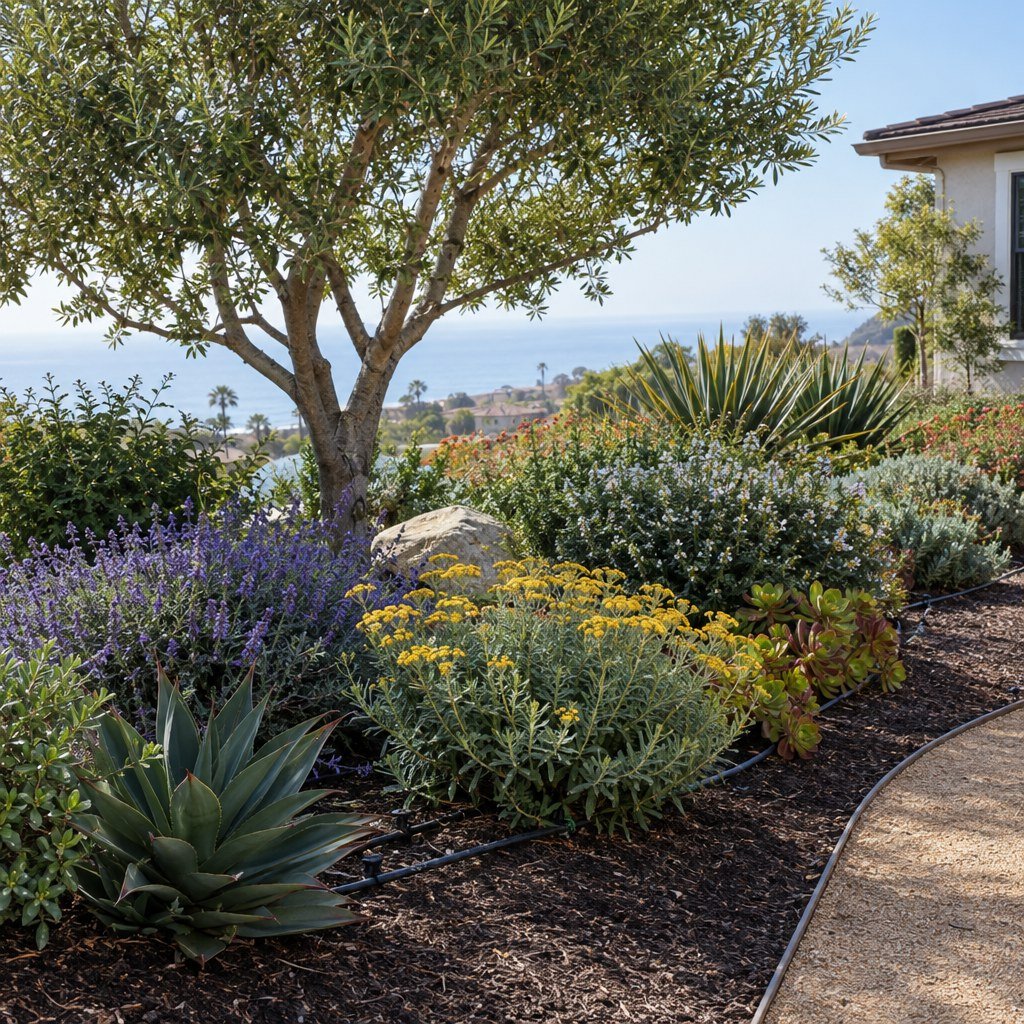
The City of San Diego’s water-saving guidance recommends drought-tolerant landscaping and identifies mulch as a useful way to retain moisture and suppress weeds. Plant selection and correct watering still determine how well a particular bed performs.
Group plants by similar needs
Place plants with similar sun and watering requirements together. This approach is sometimes called hydrozoning. For example, keep plants that need occasional supplemental water separate from plants that prefer more regular moisture. Grouping prevents you from overwatering an entire bed just to support one thirsty plant.
Choose mature size carefully. A plant that looks small at the nursery may eventually block paths, cover windows, interfere with fences, or require repeated pruning. Read the plant tag and confirm whether the selection suits your microclimate, such as inland heat, coastal exposure, or a shaded canyon area.
Make mulch part of the design
Mulch is a protective layer placed over soil. It can help reduce evaporation, moderate soil temperatures, and limit some weed growth. Keep mulch away from direct contact with building materials and plant trunks, and refresh it when it becomes thin or scattered.
Do not cover every inch of the yard with landscape fabric and gravel without considering soil health and drainage. Those materials can be useful in specific areas, but they are not a substitute for good grading, suitable plants, or correct irrigation.
San Diego planning tip: check your water provider’s current turf-replacement and irrigation programs before removing lawn or buying equipment. The City’s rebate page links to relevant programs. Confirm eligibility, required approvals, and qualifying materials before treating a rebate as part of your budget.
Install Irrigation You Can Actually Manage
A simple, well-labeled irrigation system is more valuable than a complicated system you do not understand. Drip irrigation can deliver water near plant roots, while spray systems may be more appropriate for some lawn or larger planting areas. The right choice depends on plant type, layout, pressure, and local conditions.
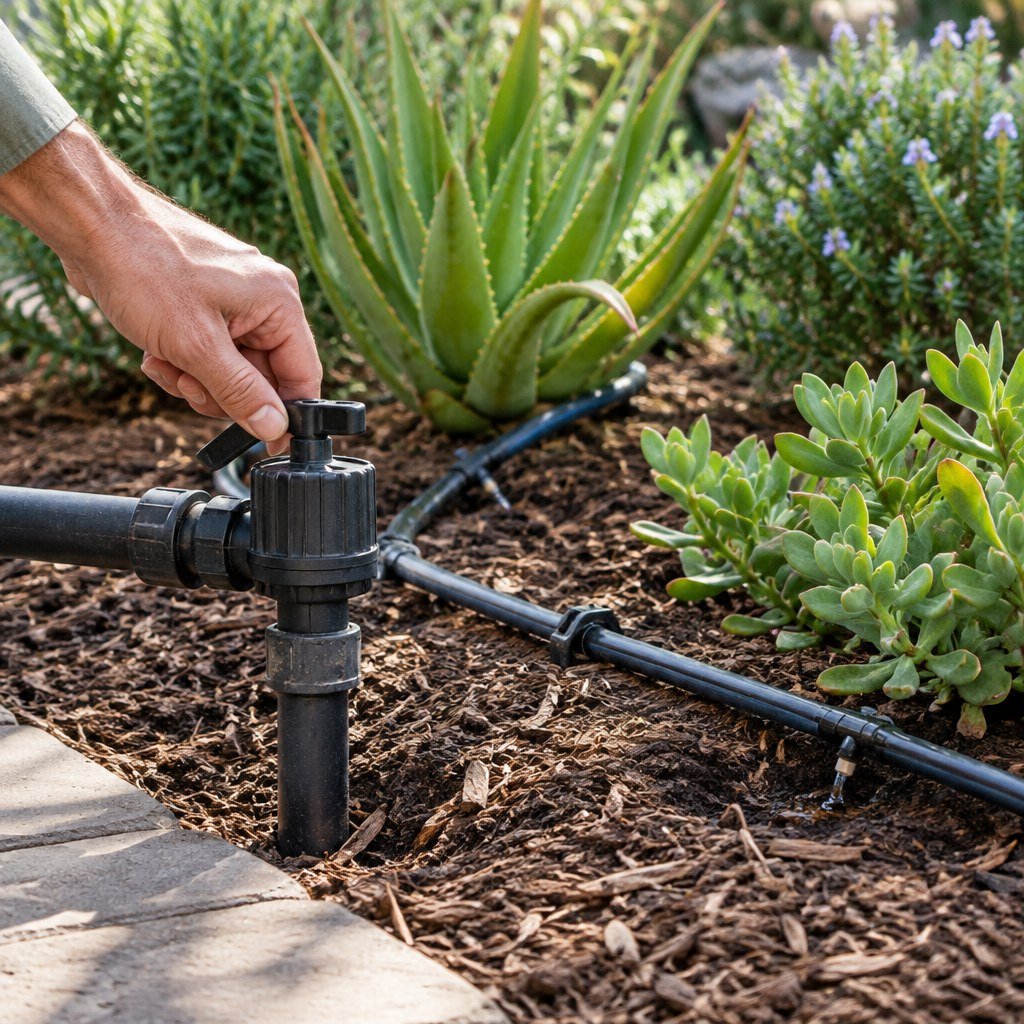
Use separate irrigation zones for areas with different water needs. Inspect emitters and lines periodically for leaks, clogged outlets, or overspray onto patios and walls. Adjust the schedule as seasons change instead of assuming one setting works all year.
If you remodel the yard, leave access to valves, cleanouts, and drainage components. Covering these elements with permanent construction may make future repairs difficult and expensive.
Add Shade and Durable Outdoor Comfort
Shade can make a backyard more usable during sunny parts of the day. Options include a shade sail, pergola, covered patio, retractable awning, or strategically placed tree. Compare each option for wind exposure, maintenance, drainage, and the amount of shade it provides at different times. Our patio cover guide can help you compare permanent shade options.
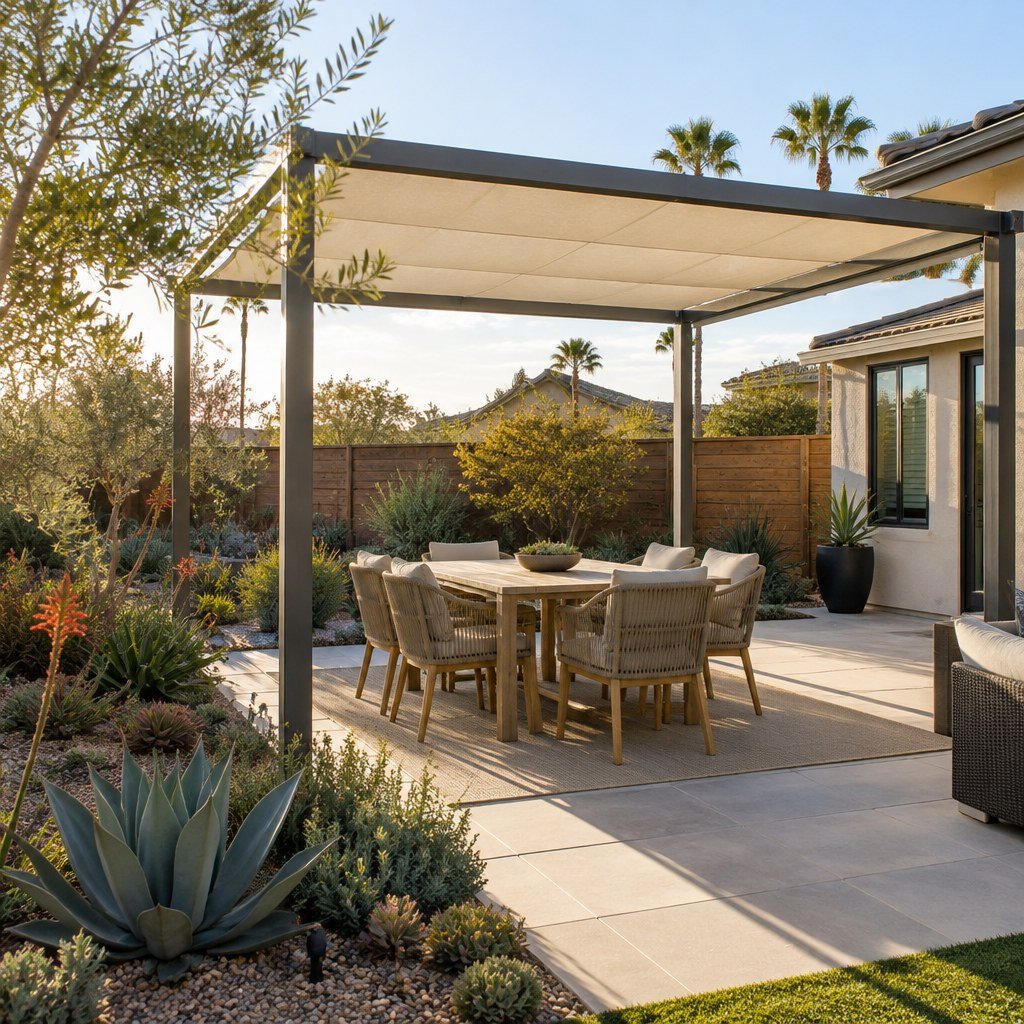
Wood structures may need staining or sealing, while metal and composite products have their own cleaning and heat considerations. Choose outdoor furniture with removable, washable covers and store cushions when weather or moisture could damage them.
For an outdoor kitchen or built-in fire feature, plan utilities, ventilation, clearances, and surfaces before construction begins. These features can add convenience, but they also add maintenance and may trigger review requirements.
What Should You Budget for, and When Should You Check Permits?
Your budget will depend on demolition, soil conditions, drainage corrections, access to the yard, utility work, plant size, surface materials, lighting, and labor. A simple refresh may involve replacing selected areas, while a full backyard remodel can include grading, retaining walls, electrical work, plumbing, and structural construction. See our remodeling budget guide for help organizing priorities before you request estimates.
Ask for an itemized scope that separates demolition, preparation, materials, installation, irrigation, planting, lighting, and cleanup. This makes it easier to compare proposals and identify what is optional. Keep a contingency for concealed conditions such as damaged irrigation, poor soil, or drainage problems.
Permit and inspection requirements vary by project and location. The City of San Diego has requirements that may differ from other cities in San Diego County, such as Chula Vista, Escondido, or Oceanside. Unincorporated county areas follow county processes. Before work begins, confirm current requirements with your city or the County of San Diego, especially for structures, electrical or gas work, plumbing, grading, retaining walls, pools, and changes near property lines. Start with our San Diego planning and permits guide, then confirm details with the agency that serves your property.
For patio covers within City of San Diego jurisdiction, Information Bulletin 206 explains building-permit exemptions and their exceptions. Size alone does not settle the question: site conditions and location matter, and separate trade permits may still be needed.
Need help with permits? Many remodeling contractors can help identify required permits and coordinate applications and inspections. Ask which services are included, who prepares any plans, and who pays the fees. The applicable building department makes the final determination.
Compare Lawn Alternatives Before Replacing Turf
Replacing a lawn can reduce mowing, but the best alternative depends on how your household uses the space. A dog run, play area, outdoor dining zone, and decorative garden each have different needs. Compare the ongoing care as well as the installation appearance:
| Option | What it can simplify | What still needs attention |
|---|---|---|
| Smaller lawn area | Less mowing and edging than a full lawn | Watering, seasonal care, and worn or shaded patches |
| Water-wise planting beds | Less routine mowing; plants can be grouped by needs | Establishment watering, occasional pruning, mulch, and weed control |
| Artificial turf | No mowing and a consistent green appearance | Debris removal, brushing, cleaning, infill care, and heat checks in direct sun |
| Patio, pavers, or gravel | Less planted area to trim and water | Joint weeds, shifting material, cleaning, and drainage planning |
Keep a lawn or turf area if it serves a real purpose, such as active play or a pet-friendly surface. You can also shrink it instead of removing it completely. Visit samples at different times of day and consider how hot the surface may feel, how water drains through or around it, and whether it is comfortable for the people and pets who will use it.
For a closer comparison of cleaning, heat, pet use, and installation considerations, read artificial turf versus natural grass in San Diego.
Set a Simple Maintenance Routine
A low-maintenance yard still needs periodic checks. Build a short routine around what you install and adjust it to the weather and plant establishment needs. The goal is to catch small issues before they become larger repairs:
- After windy or stormy weather: Clear leaves from drains, check for standing water, and secure or inspect shade structures.
- During regular yard use: Look for irrigation overspray, leaking connections, loose pavers, lifted edging, or new trip hazards.
- As plants grow: Remove dead growth and prune only as needed to keep paths, windows, and access points clear.
- When seasons change: Review irrigation schedules, check mulch depth, and look for areas that need more shade or better drainage.
- Before hosting or heavy use: Sweep hard surfaces, clean furniture, and check that gates and walkways are easy to use.
Make irrigation valves, drains, utility shutoffs, and cleanouts visible and reachable. Keep a note of the system zones and the plants or surfaces each one serves. That small record helps you adjust watering and makes troubleshooting easier if a line leaks or an area stops receiving water.
Consider a Phased Backyard Remodel
You do not have to rebuild every part of the yard at once. A practical first phase may address drainage, access, and any unsafe or failing surfaces. Later phases can add planting, shade, lighting, or an outdoor kitchen. Work from the permanent and technical items toward the decorative details so new finishes are not damaged by later construction.
Before starting, confirm the sequence with the people doing the work and ask which utilities, permits, inspections, and site access each phase requires. If you are comparing project scopes or deciding what to prioritize, see our remodeling budget guide and keep the initial plan flexible enough for site conditions.
Two practical ways to phase the work
Example: keep a usable patio and improve the edges. If the existing patio is sound and drains properly, start with irrigation repairs, selective lawn reduction, and appropriately spaced planting. Refresh furniture and add suitable shade after you understand the afternoon sun. Keeping serviceable hardscape can leave more budget for the problems that actually create chores.
Example: build one outdoor room first. If the yard has no useful seating area, plan one patio connected to the house, with a clear route to gates and utilities. Coordinate any future shade foundations or utility routes before paving. Add the remaining garden in a later phase instead of finishing surfaces that must be torn up again.
These are illustrative planning examples, not completed-project case studies or priced proposals. Site conditions determine whether either approach is suitable.
Common Mistakes and Quick Fixes
- Installing too much concrete: Break up large areas with planting beds, permeable sections, or gravel where appropriate, and confirm drainage before pouring.
- Choosing plants by appearance alone: Check mature size, sun exposure, watering needs, and potential root or litter issues before buying.
- Ignoring access: Keep gates, valves, drains, and utility areas reachable for maintenance and repairs.
- Using one irrigation schedule everywhere: Create separate zones and adjust them for plant needs and seasonal weather.
- Forgetting the heat of surfaces: Test samples in direct sun and consider how the material will feel around seating and play areas.
- Skipping drainage planning: Correct slopes and runoff paths before adding finished surfaces or planting soil.
- Making the design too detailed: Reduce unnecessary edges, tiny beds, and decorative elements that create extra trimming and cleaning.
Low-Maintenance Backyard Checklist
- List the outdoor activities you want to support.
- Map sun, wind, slopes, drainage, utilities, and access points.
- Reduce lawn only where replacement surfaces serve a clear purpose.
- Group plants by water and sunlight needs.
- Confirm mature plant sizes before installation.
- Choose surfaces for heat, drainage, cleaning, and repair needs.
- Plan irrigation zones, valve access, and future maintenance.
- Ask your local jurisdiction about permits before construction.
- Request an itemized remodeling scope and clarify exclusions.
Low-Maintenance Backyard FAQs
What is the most affordable place to start?
Start by identifying what you can keep. Repairing a leak, simplifying a planting bed, or reducing a small unused lawn area may require less work than replacing the whole yard. Get drainage or failing surfaces assessed first; cosmetic improvements will not solve an underlying site problem.
Can I make a small backyard easier to maintain without covering it in concrete?
Yes. Combine a modest seating area with planted borders and a clear walking route. Choose plants that fit the available space at maturity, reduce unnecessary edging, and avoid filling every gap with a pot that needs separate watering.
Will gravel stop weeds permanently?
No. Windblown seeds and organic debris can collect in gravel, so occasional weeding and cleanup remain part of the routine. Choose gravel because it suits the use of the space, not because it promises a permanently weed-free yard.
What should I bring to a backyard estimate appointment?
Bring photos, rough dimensions if you have them, your budget priorities, and a short list of maintenance tasks you want to reduce. Note pooling water, access restrictions, pets, and any planned shade or utility work. Finished plans are not necessary to start discussing the scope.
Make Your Next Step Simple
A successful low-maintenance backyard starts with a clear plan, not a long shopping list. Identify the tasks you want to reduce, correct drainage and access issues first, then select plants, surfaces, shade, and lighting that match how you use your San Diego home.
Ready to Discuss Your Backyard Remodel?
Schedule a free, no-obligation estimate appointment to review the yard, priorities, maintenance goals, drainage, access, and project scope. The form does not provide an instant online price. After the appointment, a written project-specific quote can be prepared based on the work discussed.
Sources and How to Use This Guide
Updated October 10, 2026. This guide combines practical planning comparisons with the City of San Diego resources linked below. The surface comparisons are qualitative guidance, not product testing or a survey of local contractor bids. Confirm product care with the manufacturer and permit requirements with the agency serving your property.
- City of San Diego: water-saving tips
- City of San Diego: water conservation rebates and program links
- City of San Diego: patio cover permit guidance, Information Bulletin 206
Images are provided for design inspiration, not as documentation of completed client projects or construction details.