

The short answer for San Diego homeowners
Artificial turf can reduce routine mowing and irrigation work, while natural grass offers a cooler, living surface that can suit families, trees, and certain landscapes. Neither choice is automatically cheaper or more sustainable over time. In San Diego, the right answer depends on sun exposure, drainage, pets, intended use, irrigation condition, and whether you want a planted yard or a low-maintenance ground cover.
Choose quality synthetic turf when you want a consistently green, usable surface and accept eventual replacement, periodic cleaning, and hotter summer surface temperatures. Choose natural grass when you value cooling, soil health, play comfort, and the option to adjust watering practices. If water efficiency is the main goal, a planted water-wise landscape may be the strongest third option.

Upfront cost: what actually changes the quote
Installed cost is shaped less by the visible grass than by site preparation. For current local price ranges for turf, sod, and broader yard work, see our San Diego landscaping cost guide. Use those ranges as planning context, then request a site-specific scope.
Artificial turf proposals commonly include demolition, hauling, grading, weed barrier, compacted aggregate base, drainage work, edging, turf material, infill, seams, and installation labor. Curves, access restrictions, slopes, mature roots, and drainage corrections can change the price substantially. Premium pet systems and cooling infills can also add cost.
Natural grass installation may include removal, soil preparation, compost or amendments, grading, sod or seed, irrigation repairs, and establishment watering. A lawn can cost less to install on a simple site, but a neglected irrigation system or poor soil may erase that advantage. New sod also needs attentive care while roots establish.
Care requirements are different, not eliminated
Natural grass needs mowing, seasonal fertilizing decisions, irrigation monitoring, weed control, edging, and occasional aeration or repair. San Diego’s dry periods make sprinkler scheduling especially important. Overwatering can create runoff, disease pressure, and wasted water; underwatering can thin turf and expose soil. Shade from coastal cloud cover, walls, and trees can further affect growth.
Artificial turf does not need mowing or fertilizing, but it still needs care. Remove leaves and debris, rinse dust, brush high-traffic fibers upright, manage weeds at edges, and inspect seams, infill, and drainage. A neglected synthetic lawn can look flat, collect debris, and develop odors around pet areas.

Water use and irrigation tradeoffs
Synthetic turf generally removes the irrigation demand of a conventional lawn, but it may still be rinsed for dust or pet cleanup. Natural grass needs water to remain healthy, yet its actual use depends on turf type, weather, soil, irrigation efficiency, and homeowner habits. Avoid blanket water-savings promises. Review your existing water use, sprinkler coverage, and how often the area truly needs to be green.
If your priority is a rebate-eligible conversion and lower irrigation demand, consider replacing lawn with an approved planted landscape rather than plastic turf. Drip irrigation, mulch, appropriate plants, and usable hardscape can create a more resilient San Diego yard.
Heat, pets, trees, and daily comfort
Surface heat is one of the most important San Diego distinctions. Artificial turf can become significantly hotter than natural grass in direct summer sun. Test samples outdoors at the time your family or pets will use the space. Shade, orientation, air movement, and material color all matter, but none guarantees a cool surface. Plan shaded seating, a hose connection, or an alternate play area.
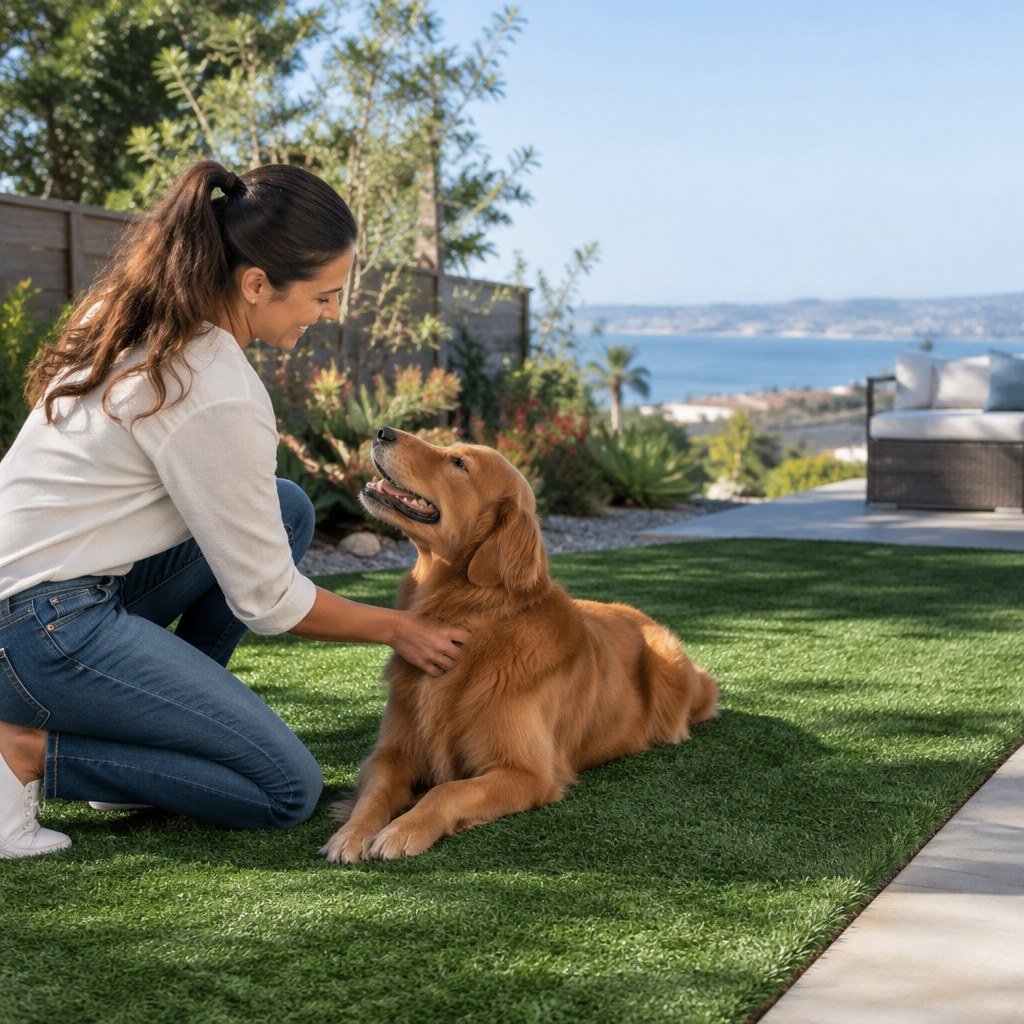
For dogs, fast drainage and easy pickup can be advantages of synthetic turf. However, urine can leave odor when residues accumulate in infill or below the surface. Regular solid-waste removal, rinsing, enzyme cleaning when appropriate, and a pet-specific drainage design are essential. Large dogs or frequent use may justify a designated relief area rather than treating the entire yard as one.
Natural grass is usually more comfortable underfoot in heat, but pet traffic can create worn paths and urine spots. It also needs recovery time. A mixed design often works well: durable paving or decomposed granite for circulation, planting beds for character, and a smaller lawn or turf zone where it earns its footprint.

Subbase, drainage, soil, and tree roots
A synthetic lawn is only as reliable as its base. The installer should establish proper slope, compact aggregate in appropriate lifts, protect drainage routes, and avoid trapping water against the house. A dense, poorly prepared base can lead to puddling, wrinkles, odor, or uneven areas. Drainage concerns deserve a site review before material is ordered.
Natural grass depends on living soil. Compaction, clay-heavy ground, poor grading, and damaged irrigation can limit success. Trees add another layer: roots need oxygen and water, while turf competes for both. Avoid aggressive excavation or impermeable construction over critical root zones. Under a mature canopy, a mulch-and-planting approach may be more practical than forcing either turf type to perform poorly.
Lifespan and a simple ten-year cost worksheet
Artificial turf has a finite service life. Foot traffic, ultraviolet exposure, pets, poor drainage, seam quality, and maintenance all influence when replacement becomes necessary. Include removal and disposal in your long-term plan, not just the first installation. Natural grass may need patching, reseeding, sod replacement, irrigation repairs, or periodic renovation, but it is not a single manufactured surface awaiting replacement.
Use this formula rather than assuming either option wins:
Ten-year total cost = initial installation + annual maintenance × 10 + water and irrigation costs + expected repairs + cleaning or lawn-care equipment + replacement reserve − verified incentives.
Enter your own utility history, service quotes, and likely use pattern. For a larger outdoor plan, explore backyard outdoor living ideas before committing the entire space to one surface.

Rebates: synthetic turf is not the conversion option
SoCal WaterSmart’s residential turf replacement rebate program is designed for replacing existing grass with approved organic, water-efficient landscaping. Synthetic turf is not an eligible conversion option. Do not remove lawn based on an assumed payment or a previous year’s program terms.
Before work begins, confirm current funding, rebate amount, eligibility, approved design requirements, documentation, and approval timing directly with the SoCal WaterSmart program FAQ. Also review the City of San Diego rebate and water conservation page for local information. Rebates can change, and pre-approval requirements are especially important.
When a project includes walls, drainage changes, electrical work, or substantial hardscape, review planning and permit considerations early. A landscape rebate does not automatically replace building, drainage, or neighborhood approval obligations.
Decision checklist and installer questions
- Will the area be used at midday during hot, sunny months?
- Do dogs, children, or sports create concentrated wear?
- Where will stormwater and pet-cleaning water drain?
- Are there mature trees, shallow roots, or persistent shade?
- Do you prefer regular lawn care or periodic synthetic cleaning?
- Can a smaller lawn zone meet the actual need?
Ask turf installers what base depth and compaction method they propose, how drainage is handled, which infill is specified, how seams are warranted, and who handles removal at end of life. Ask sod installers about soil testing, irrigation coverage, establishment care, turf selection, and the repair plan for shaded or high-traffic areas.
Frequently asked questions
Is artificial turf better for San Diego drought conditions?
It can remove routine lawn irrigation, but it is not eligible for the residential turf replacement conversion rebate. A water-wise planted landscape may better address both water demand and rebate eligibility.
Can artificial turf be installed over existing grass?
It should not be installed over living lawn. Existing turf and organic material should be removed so the base can be graded, compacted, and drained correctly.
Does natural grass always require more maintenance?
Natural grass needs regular care, but maintenance intensity varies with turf type, irrigation design, yard size, and use. A small, well-designed lawn can be manageable.
Discuss Your Yard at a Free Estimate Appointment
Schedule a free, no-obligation appointment to review the yard, drainage, intended use, turf or grass options, and broader landscape scope. A written project-specific quote can be prepared after the appointment.
Informational disclaimer: This article provides general planning information, not engineering, horticultural, permit, utility, or rebate advice. Confirm current program rules with the administering agency, and obtain qualified site-specific recommendations before construction. You can also organize early budget assumptions with our remodel cost calculator.
Discussion