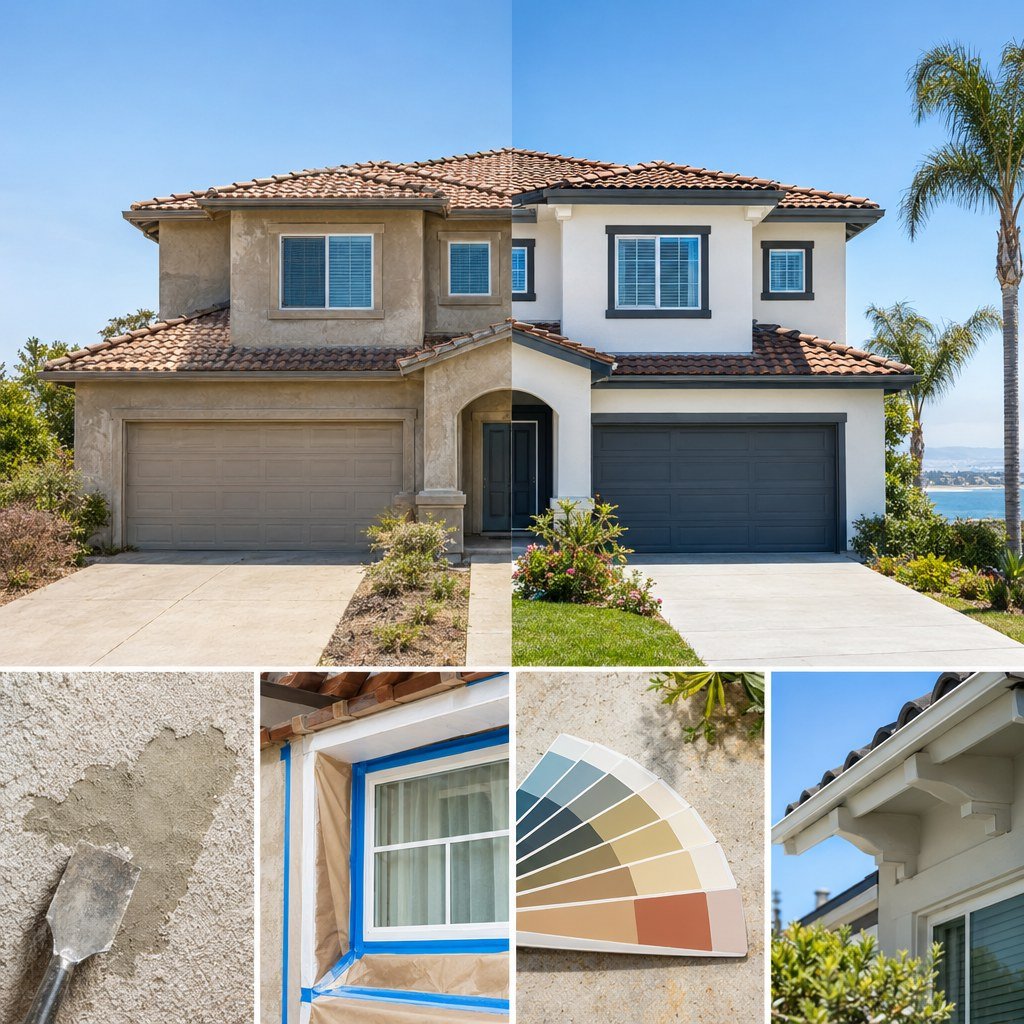
Exterior paint does more than change a home’s color. In San Diego’s sun, marine air and dry seasons, a sound coating helps protect stucco, siding and trim. If you are budgeting a repaint, the number depends less on the home’s indoor square footage and more on the amount and condition of the exterior surface.
Quick answer: A professional exterior house painting project in San Diego often falls around $5,000 to $17,000 for a typical home. A straightforward one-story repaint with limited repairs may land near the lower end; a larger two-story house with extensive prep, detailed trim or difficult access can cost more. Treat this as an early planning range, not a quote for your property.
Exterior house painting cost in San Diego
For many homeowners, a useful starting range is about $2.50 to $6 per square foot of paintable exterior wall area. Contractors may measure differently, so compare the included surfaces and preparation instead of relying on a single per-square-foot figure. A 1,800-square-foot home does not necessarily have 1,800 square feet of paintable wall. As a simple example, 2,000 square feet of measured wall area at that broad rate would suggest roughly $5,000–$12,000 before any unusually extensive repairs or access needs.
- Smaller, simple one-story home: roughly $5,000–$8,000 when the coating is in fair condition and access is easy.
- Typical two-story stucco home: roughly $8,000–$14,000, depending on wall area, trim, repairs and ladder or lift needs.
- Large or detail-heavy home: roughly $14,000–$17,000+, especially with multiple colors, extensive woodwork, peeling coatings or difficult access.
These are broad 2026 planning bands. An on-site review is needed to confirm how much surface needs work, what coating system is appropriate and whether repairs should be included.
What moves the price up or down?
Surface condition and preparation
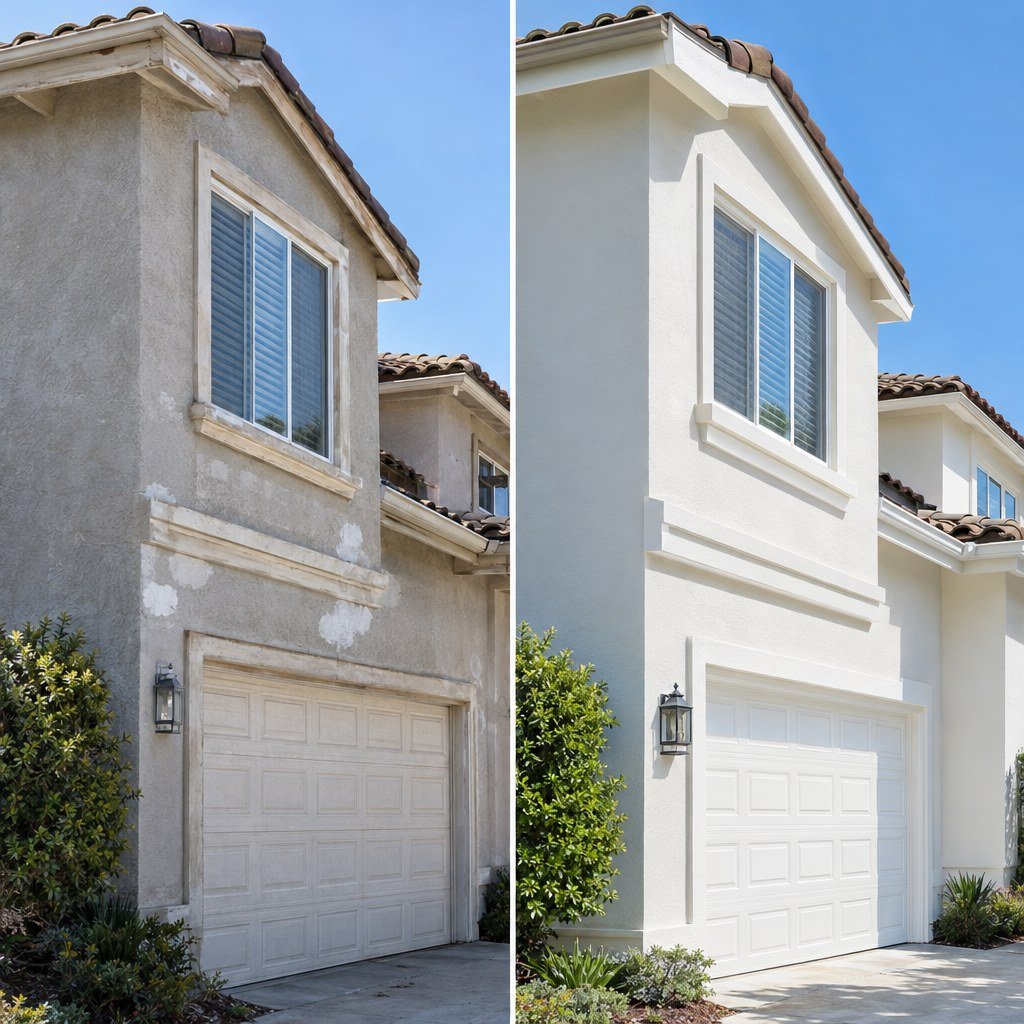
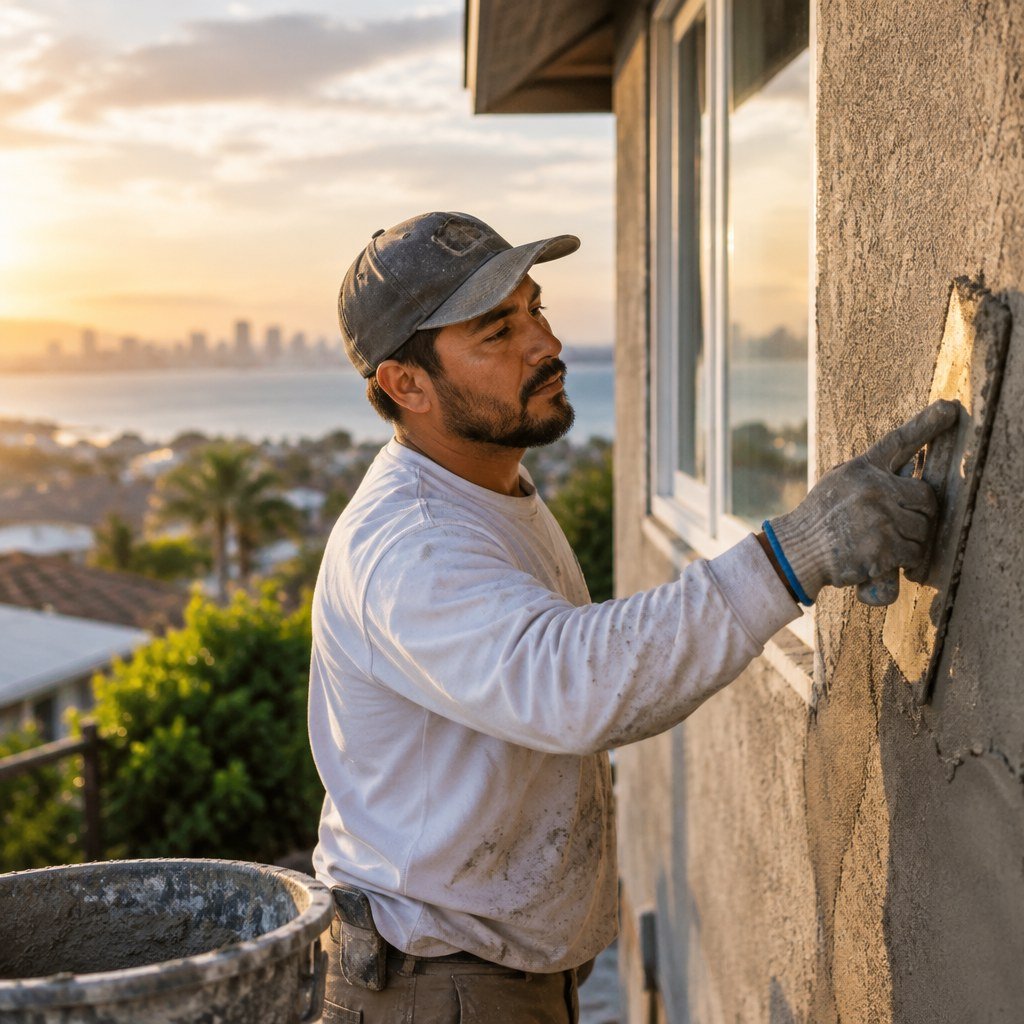
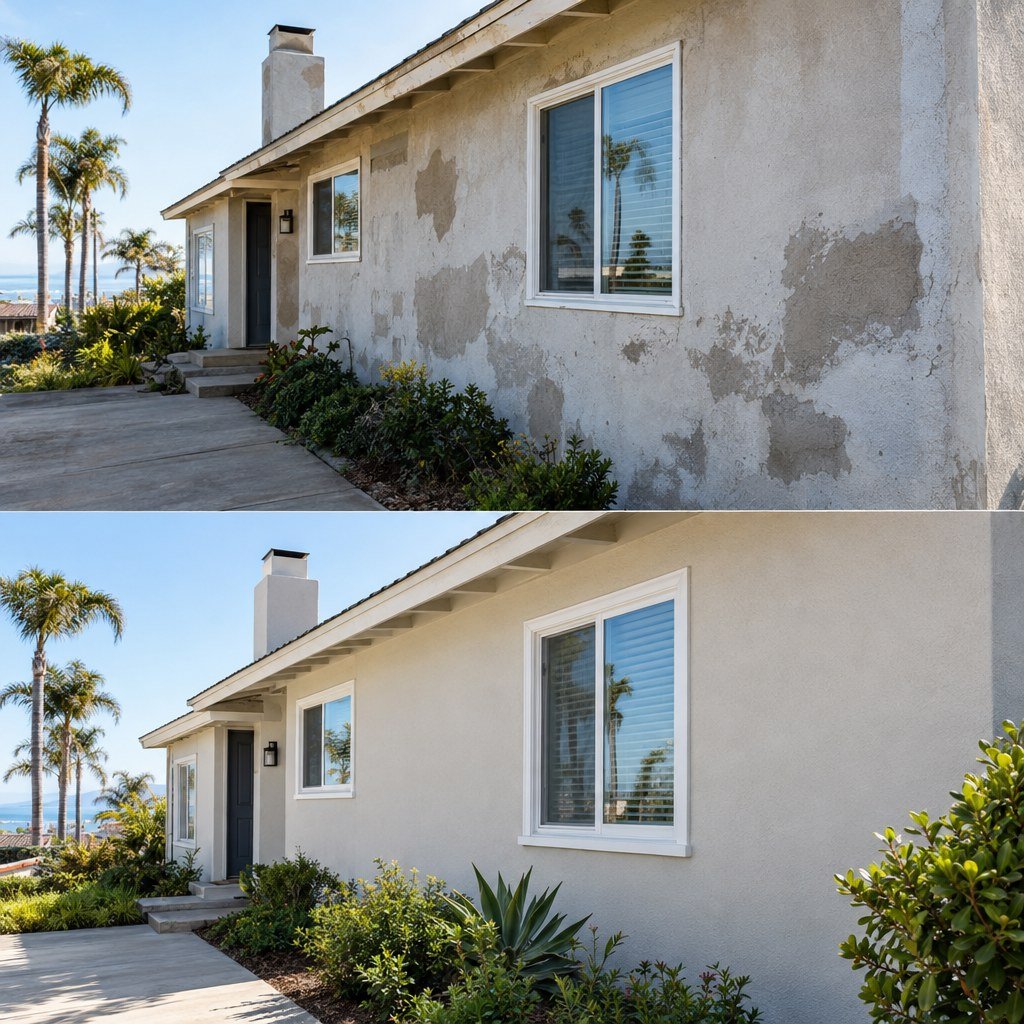
Preparation can take a substantial share of the job. A sound stucco wall may need washing, spot scraping, caulking and primer. Cracked stucco, failed sealant, peeling paint, exposed wood or water-damaged trim calls for additional repairs before new paint can perform well. Ask the estimator to identify repairs by location and price them clearly; our guide to stucco repair and resurfacing costs explains why that preparation is a separate part of the budget.
Exterior material and paint system
Stucco, wood siding, fiber cement and masonry absorb and hold coatings differently. The right primer and finish depend on the surface and its condition. A breathable masonry coating may be appropriate for one stucco home, while sound wood trim may need a different primer and enamel. The lowest-cost paint is not always the best value if it needs more coats or is not suited to the substrate.
Stories, access and architectural details
Second stories, steep grades, narrow side yards, balconies and complex rooflines slow the work and may require additional equipment. Fascia, eaves, shutters, decorative beams, gates and garage doors add labor. Confirm which of these areas are included rather than assuming “whole exterior” covers every painted surface.
Color changes and number of coats
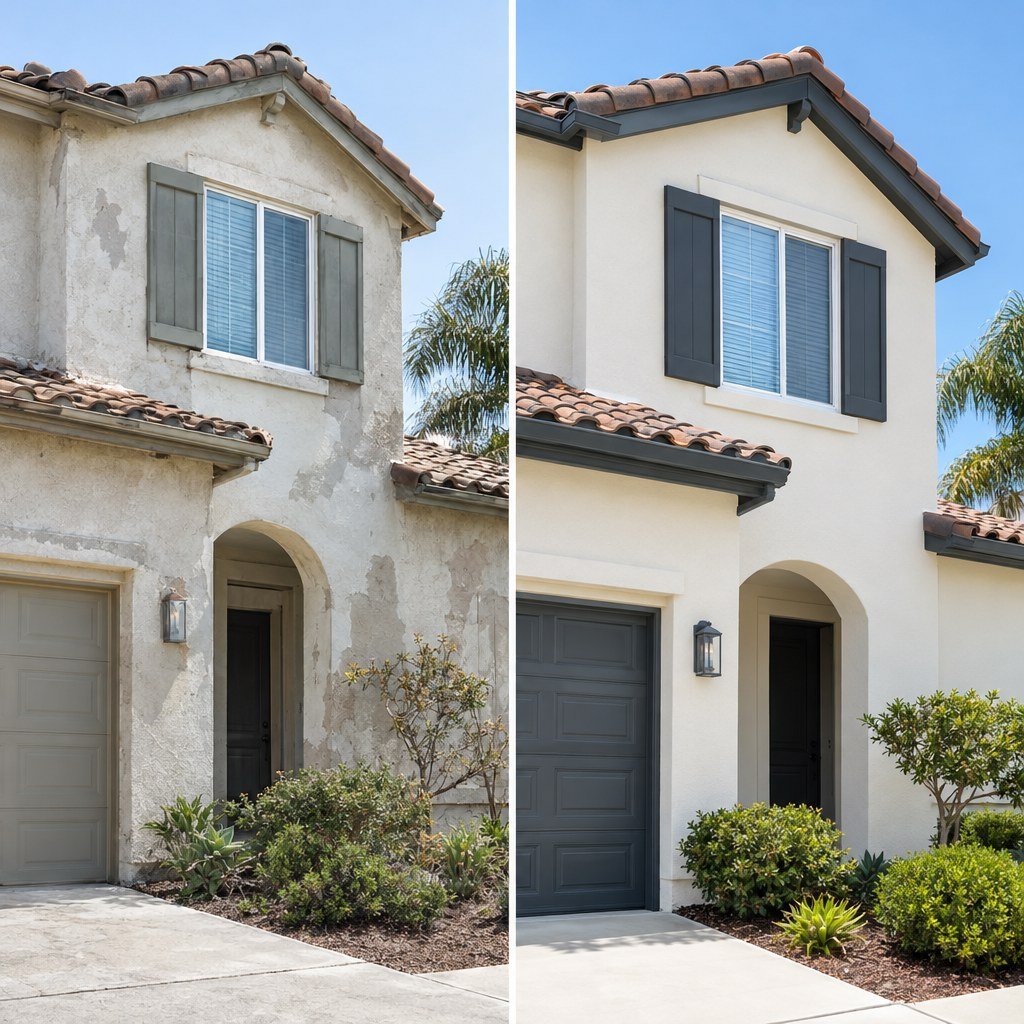
A similar-color refresh may cover more easily than a dramatic change, such as dark to light. The estimate should state the number of finish coats and how the contractor will handle spots where the old color shows through. If you are changing body, trim and accent colors, confirm whether the price includes each color and any sample testing.

How to compare painting estimates
Ask each contractor to price the same scope. A useful written estimate describes:
- Surfaces included and excluded, including stucco, siding, trim, doors, gates and detached structures.
- Washing, scraping, sanding, caulking, masking and primer work.
- Repairs, with allowances or separate prices for uncertain damage.
- Paint manufacturer and product line, finish, colors and number of coats.
- Access equipment, protection of landscaping and cleanup.
- Project schedule, payment milestones and workmanship warranty.
Check that the contractor is properly licensed for the work and ask who will perform it. California’s Contractors State License Board provides a license lookup. A repaint by itself often does not require a building permit, but repair or alteration work, historic-district rules and HOA requirements can change what approvals apply. Verify with the relevant local agency before work begins.
Can you save money by painting only part of the house?
Sometimes. Repainting trim, a weather-exposed elevation or a detached structure can address a specific need, but partial work can leave visible color differences as existing paint fades. Before choosing a smaller scope, ask whether the finish will blend and whether the underlying issue—such as loose stucco or failing caulk—will be corrected. Skipping needed prep usually creates a short-lived saving.
Frequently asked questions
How long does exterior house painting take?
Many residential projects take several days to about two weeks, depending on size, repairs, weather, access and crew size. Preparation and drying times affect the schedule as much as the painting itself.
How often should a San Diego home be repainted?
There is no single interval. Sun exposure, coastal conditions, surface type, product quality and maintenance matter. Walk the exterior periodically and address cracking, peeling, failed caulk or exposed wood before those issues spread.
Does exterior painting include stucco repair?
Not automatically. Some estimates include minor patching; larger cracks, damaged trim or moisture-related repairs may be excluded or priced separately. Get those assumptions in writing.
Plan your exterior painting project
A reliable budget starts with a walk-through of the home, a clear list of surfaces and an honest look at prep and repairs. To discuss your project, schedule an on-site appointment for a free project estimate. We’ll meet with you, review the conditions and prepare a written scope; this is an appointment, not an instant online quote.